
How does PRP work?
Platelets release growth factors activating skin regeneration, providing PRP's regenerative and healing properties.
Facially, PRP stimulates collagen and elastin, essential dermal components.
On the scalp, it stimulates follicular stem cells, improves circulation and creates conditions for regrowth.
What is a Vampire lift?
Vampire Lift uses PRP's regenerative power for rejuvenation and revitalisation. Its name reflects using the patient's blood: a small draw is centrifuged to isolate growth-factor-rich platelets and reinjected into the face.
This stimulates collagen, improves quality, reduces wrinkles and evens complexion.
Effective for younger, brighter skin, its lasting, natural approach has made Vampire Lift a popular rejuvenation method.
What are the indications for
PRP?
PRP stimulates regeneration and stem-cell differentiation and proliferation.
Aesthetic indications include:
- Skin rejuvenation: PRP features in Skin restore and Skin prevent protocols.
- Skin enhancement: 'Vampire lift' injects face, neck, décolletage and hands for revitalisation.
- Reduced wrinkles and fine lines.
- Improved quality and density.
- Effects on scars, particularly acne scars, are minimal.
- Increased skin density.
- Alopecia: stimulating growth and thickening and strengthening existing hair (hair PRP).

What are PRP contraindications?
PRP contraindications include:
- Pregnancy and breastfeeding.
- Autoimmune diseases.
- Skin lesions or active infection in treatment areas.
- Blood disorders, particularly platelet conditions.

What happens during a session
PRP session?
Dr Romano first discusses needs and expectations.
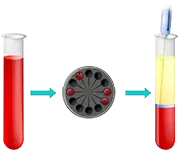
A small blood sample is taken from the arm as in a standard draw.
The tube is a certified medical device for Switzerland, Europe and the United States.
Centrifugation separates components to isolate platelet-rich plasma and growth factors.
PRP is collected and the area disinfected.
A mesotherapy gun delivers multiple painless dermal injections.
Initial treatment involves three monthly sessions; maintenance two annually.
Hair PRP results
Hair results are encouraging: reduced loss from early sessions and stronger, thicker regrowth. The long hair cycle means results become visible at three months and optimal at six. Effects may last a year or longer; maintenance preserves them. PRP particularly suits androgenetic alopecia or stress-related and other thinning.
Facial PRP results
After several rejuvenation sessions, patients describe smoother, softer, younger skin.
Benefits include elasticity, brighter complexion, fewer fine lines and denser facial, neck, décolletage and hand skin.
Initial results generally appear after weeks and improve over months. Maintenance is recommended.
What are PRP side effects?
Autologous PRP is drawn from and reinjected into the same patient, minimising effects and eliminating disease transmission risk.
Safe and well tolerated, it may nevertheless cause mild pain, sensitivity, redness, bruising or slight swelling, resolving within days.
Report all medicines, as reactions have occurred with certain products, particularly Roaccutane.
How much do PRP injections cost in Geneva?
In Geneva, PRP costs 600 CHF per session, including blood draw, centrifugation, concentrate preparation and reinjection.
Treatment uses the patient's growth factors extracted from blood.
Price is fixed regardless of site: scalp, face, neck or décolletage. Depending on hair loss, quality or moderate laxity, repeated sessions generally 3 to 4 weeks apart may be advised. Consultation defines a tailored protocol.
In Switzerland, nurses cannot perform PRP injections.
PRP vs mesotherapy: comparing techniques
Various solutions rejuvenate skin or stimulate hair. PRP and mesotherapy differ in approach and results.
PRP uses regenerative blood properties to stimulate collagen and elastin for quality and luminosity. Mesotherapy injects vitamins, minerals and revitalisers into the dermis for deep hydration.
PRP particularly treats ageing signs and promotes cellular regeneration.
Mesotherapy is preferred for immediate hydration and tone.
They can complement each other for optimal personalised results.
Patient feedback on hair PRP
Hair-loss feedback is positive: many report notably improved density and quality after several sessions and value their own blood being used.
Results vary and repeated sessions are often needed for significant improvement. Satisfaction is generally high.
Patient feedback on facial PRP
Rejuvenation feedback is also positive, with significantly improved quality and firmness and reduced wrinkles and fine lines. Patients value the natural, autologous approach. Results vary but most are highly satisfied with no downtime and gradual benefits.
Frequently asked questions about PRP in Geneva
Who is PRP for?
Patients seeking quality improvement, reduced ageing signs or stimulated hair growth. Consultation determines the appropriate protocol.
How many PRP sessions are needed?
Numbers depend on goals and response.
Initially, 3 sessions 6 weeks apart are recommended, followed by an annual session to maintain benefits.
Is PRP painful?
No, although mild discomfort or tingling may occur. Anaesthetic cream is possible but discouraged because it may interfere with PRP.
When will I see PRP results?
Gradually, with visible quality and hair growth improvement after weeks and optimal results after months.
Is PRP safe?
Yes, using the patient's blood. Consult a doctor for safety and effectiveness.
What are PRP benefits?
Improved quality, fewer wrinkles, stimulated hair growth and natural, lasting results.
Is PRP effective?
Yes, for rejuvenation, hair loss, wound healing and tissue repair.
Which doctor should perform PRP?
A trained, experienced doctor ensures effective, safe treatment. Any doctor trained in the procedure may perform it.
How is facial PRP injected?
Manually with a very fine needle or using a mesotherapy gun.
When can I wash my face after PRP?
Generally wait at least 24 hours for proper penetration and action.
How can I tell if PRP is working?
Responses vary. Skin quality and appearance first improve within weeks.
Reduced hair loss and regrowth appear after months.
Which cream after facial PRP?
Use gentle, fragrance-free moisturiser; hyaluronic acid creams are recommended. Avoid retinoids or exfoliants for at least one week.
How should I prepare for PRP?
Avoid NSAIDs such as ibuprofen, certain supplements and vitamin C a few days beforehand. Report all medicines and supplements.
How should I sleep after PRP?
Try sleeping on your back so surface product, absorbed fully overnight, is not taken up by pillowcases.
Which shampoo after PRP?
Use gentle sulphate-free shampoo. Wait at least 24 to 48 hours before washing to allow effective action.
Does PRP grow hair?
It stimulates growth through increased follicular blood flow and collagen. Many observe reduced loss and variable regrowth after repeated treatment.
Why does hair PRP not work?
Underlying conditions, advanced loss or poor individual response may limit results. Realistic expectations and medical discussion establish suitability.
Is recovery time needed after PRP?
Activities resume immediately. Avoid washing hair and sweating for 24 hours.