Differences between drainage mesotherapy, pressotherapy and
lymphatic massage
Drainage mesotherapy differs from pressotherapy or lymphatic massage by acting through active substances injected directly into tissues. Pressotherapy uses external pressure to mechanically stimulate lymphatic circulation. Drainage massage mainly improves superficial lymphatic circulation.
Mesotherapy acts from within, directly in tissues. It improves microcirculation, reduces inflammation and promotes oedema resolution. Other methods can complement mesotherapy, which alone delivers ingredients directly into the dermis where the circulatory disorder originates.
What are the signs of water retention?
Water retention is excessive fluid accumulation in tissues, mainly in the legs, ankles, abdomen or face. It results from an imbalance between fluid entering and leaving cells and interstitial tissue. Causes include venous or lymphatic insufficiency, hormonal fluctuations, inactivity, excessive dietary salt, stress or certain medicines. The lymphatic system, responsible for clearing waste and excess fluid, sometimes works less effectively, causing oedema, heaviness and localised swelling. Drainage mesotherapy specifically addresses this local dysfunction by improving microcirculation, strengthening venous walls and increasing stagnant fluid elimination.
It promotes a gradual return to balanced tissue hydration.
Indications for mesotherapy
for drainage in Geneva
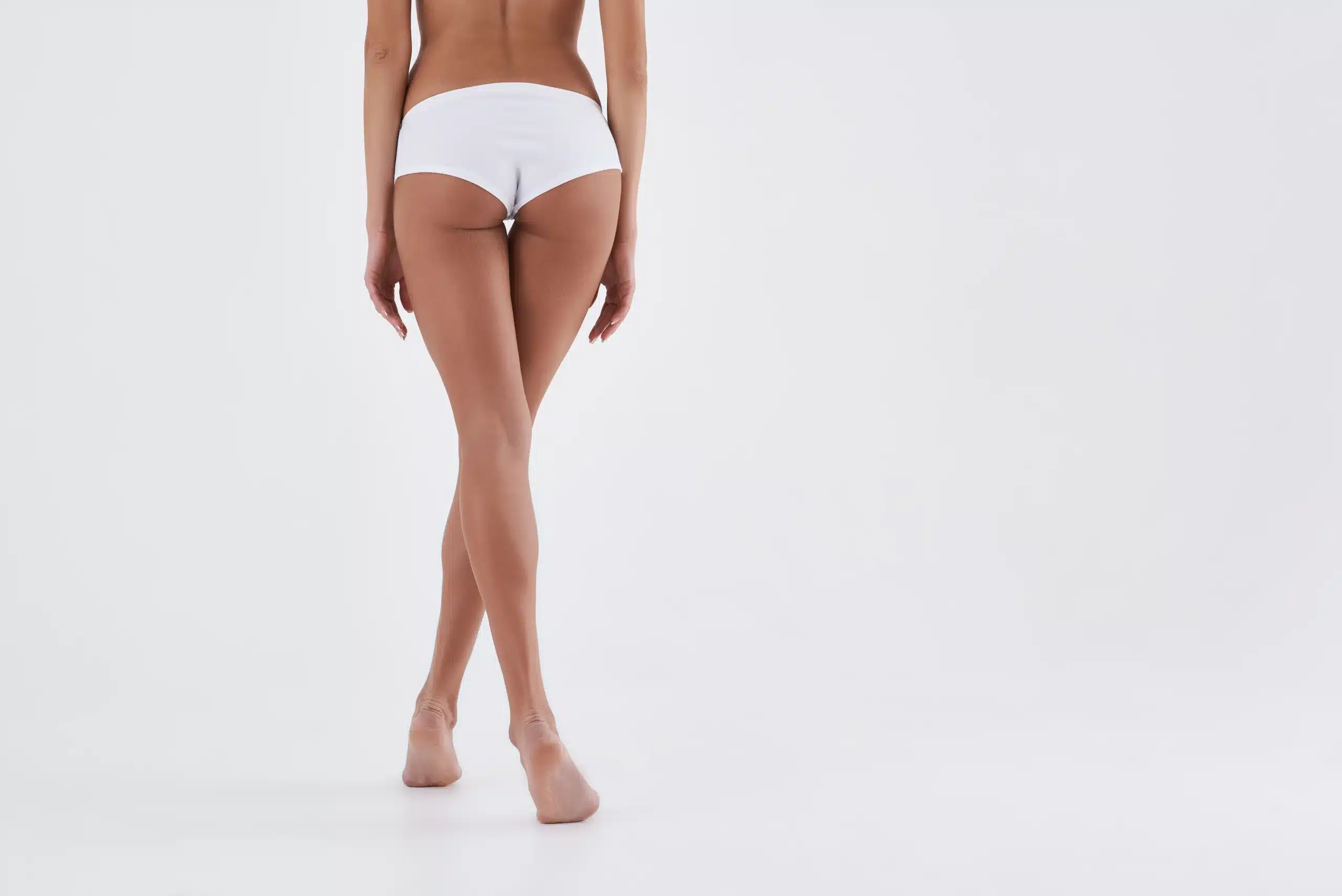
Drainage mesotherapy addresses recognised medical indications as well as aesthetic needs, including heavy legs, mild venous insufficiency, oedema after trauma or surgery and certain inflammatory pains caused by fluid stagnation. Aesthetically, it particularly suits fluid-related cellulite, localised thigh, knee, arm or facial swelling and irregularities associated with poor circulation. It also suits active people, whether athletic or not, seeking a gentle, gradual solution.
What happens during a session
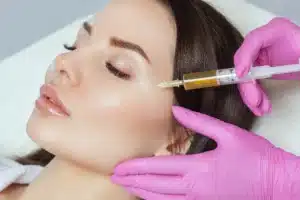
The session starts with a full medical assessment, examining the treatment area, venous and lymphatic circulation and factors promoting water retention, such as lifestyle, diet, hormones or medical history. Dr Romano then prepares a personalised ingredient mixture adapted to circulatory condition and skin quality. A mesotherapy gun provides precise, regular injections. These are superficial, almost painless and require no anaesthesia. Sessions generally last twenty to thirty minutes depending on the area. No social downtime is required: activities can be resumed immediately.
Active ingredients
Drainage mesotherapy ingredients are carefully selected for their circulatory and anti-inflammatory effects. Plant extracts such as horse chestnut, butcher's broom or sweet clover strengthen venous walls and stimulate lymphatic return. Caffeine helps reduce swelling. Vitamins, trace elements and amino acids improve microcirculation, skin quality and tissue regeneration. Combined in personalised mixtures, they reduce stagnant tissue water and fluid-related cellulite and restore skin vitality.
Number of sessions: protocol
The protocol depends on water retention severity and tissue response. Generally, three to six sessions spaced one to two weeks apart provide clear improvement. Effects appear gradually: less swelling, better drainage, greater circulatory comfort and a visibly refined figure. Maintenance every three to six months may follow.
Medical follow-up adapts treatment. Dr Romano can adjust doses, change products or modify session frequency to reflect natural bodily changes, such as hormonal fluctuations, seasonal effects (heat promoting swelling) or lifestyle changes, including resumed exercise or travel. Treatment therefore remains effective and precisely suited to patient needs.
Drainage mesotherapy within a
body contouring
protocol
Drainage mesotherapy can accompany other aesthetic treatments to improve skin quality, refine the figure or limit water retention. It combines effectively with tissue stimulation such as radiofrequency or with cryolipolysis, particularly when cellulite has a fatty or fibrous component. A balanced diet, regular exercise or supplements supporting microcirculation can enhance results. Combinations are determined at the initial consultation according to expectations and tissue characteristics.
Recovery and side effects
Drainage mesotherapy is safe when performed by a trained, experienced doctor. Side effects are rare and generally mild, such as minor redness, temporary sensitivity or small bruises. It is nevertheless contraindicated with skin infection, allergy to an injected product, severe coagulation disorders or pregnancy. An initial consultation is essential to exclude contraindications and ensure safety. Product choice, dosage and injection technique must be carefully personalised.
Results of drainage mesotherapy
Drainage mesotherapy activates microcirculation and reduces discomfort from water retention and heavy legs. By stimulating venous and lymphatic circulation, it promotes waste elimination and gradually contours the figure: legs, knees or ankles look slimmer.
Effects appear gradually: swelling decreases, legs feel lighter, the figure looks more harmonious and skin becomes firmer and more toned. Lymphatic drainage improves and fluid-related cellulite diminishes.
In certain cases, it may also improve sleep, posture or mobility, particularly when water retention causes pain or heaviness.
Prices of mesotherapy for water retention
A drainage mesotherapy session in Geneva averages 300 CHF per treated area. Session numbers depend on water retention severity and lifestyle. The initial phase generally includes 4 to 6 sessions spaced one to two weeks apart. Maintenance every four months then preserves drainage effects, improved skin quality and circulatory comfort. This gradual, personalised protocol provides visible, natural, lasting results while adapting to each patient's needs.
Patient feedback on mesotherapy for water retention
Medical literature describes measurable microcirculation improvement, reduced oedema and less fluid-related cellulite after drainage mesotherapy. Several studies support benefits for swelling and skin quality. A clinical study in Aesthetic Plastic Surgery ('Efficacy of intradermal mesotherapy in cellulite reduction', 2017) reports reduced hypodermal thickness and visibly improved cellulite grade after several sessions. Other work, such as 'Mesotherapy – The French Connection' in the Journal of Cutaneous and Aesthetic Surgery, describes improved tone and circulatory dynamics through dermal injections. The review 'Mesotherapy: What is new?' (Indian J Dermatol Venereol Leprol) confirms that regular, rigorous mesotherapy can improve skin quality and circulatory comfort. These publications highlight gradual benefits, particularly with a structured protocol performed by a trained, experienced doctor.
How many mesotherapy sessions are needed for water retention?
The initial phase generally includes 4 to 6 sessions spaced one to two weeks apart. Maintenance every four months preserves results.
Is drainage mesotherapy painful?
Injections are superficial and well tolerated. Most patients describe mild discomfort.
What results can be expected?
Patients notice less swelling, lighter legs, more toned skin and gradual refinement of the figure. Effects appear progressively across sessions.
Are there contraindications?
Drainage mesotherapy is contraindicated with skin infection, allergy to an injected ingredient, severe coagulation disorders or pregnancy. A full medical examination checks eligibility.
Can drainage mesotherapy be combined with other aesthetic treatments?
Yes. In Geneva, it is often combined with radiofrequency, cryolipolysis or ultrasound to optimise cellulite and skin quality results.