Home » Conditions » Wrinkles » Fine lines
Fine lines are thin superficial lines linked to the early signs of skin aging, mainly caused by skin dehydration and the progressive loss of collagen. They most often appear around the eyes, on the forehead and around the mouth, from the age of 25 to 30.
Unlike wrinkles, which are deeper and structural, fine lines remain reversible at an early stage. In Geneva, their management is based on a personalized approach combining prevention, appropriate care and treatments in aesthetic-oriented medicine such as Skinboosters, botulinum toxin or lasers. Early intervention allows a significant improvement in skin quality and helps slow down the appearance of established wrinkles.
Key data on fine lines
Data from clinical studies on the filling of fine lines
Fine lines correspond to very fine surface lines, initially visible under certain lighting conditions, before becoming permanent at rest. They involve the most superficial layers of the skin and are often linked to dehydration of the epidermis and a loss of dermal tone, rather than a true hollowing of the skin.
Fine lines are among the very first visible signs of skin aging. They sometimes appear as early as the thirties and worsen over time. When properly managed, they can be significantly reduced thanks to a combination of topical care, lifestyle measures and appropriate aesthetic-oriented medicine treatments.
Fine lines and wrinkles correspond to distinct phases of skin aging and do not reflect the same level of tissue alteration.
Fine lines correspond to thin superficial streaks, mainly involving the epidermis and the upper part of the dermis ; they give a slightly creased or crinkled appearance to the skin surface, without true deep hollowing. They often appear in areas of high mobility or skin fragility – around the eyes, cheeks, around the lips, sometimes the forehead – and represent, in a way, the early phase of visible aging.
Wrinkles are deeper. They reflect a more marked sagging of the tissues, a loss of collagen, elastin and volume within the dermis and underlying structures. They can be expression lines (linked to repeated movements) or static, meaning present even at rest, when the skin has truly hollowed.
Fine lines can still be improved through hydration, optimization of skin quality and certain light treatments. Established wrinkles most often require injections, such as hyaluronic acid or botulinum toxin injections, or laser sessions.

In practice, it is useful to distinguish two main categories of fine lines, as their mechanism and management are not exactly the same.
Fine lines result from both the natural aging of tissues, external aggressions, habits and the quality of skin care. The thinner, more dehydrated or more stressed the skin is, the earlier fine lines appear and the more permanently they settle.
Some people see their fine lines appear earlier or become more pronounced more quickly than others, even when they are the same age. This is linked to genetics and to aggravating factors that accelerate skin aging.
Understanding these mechanisms and aggravating factors makes it possible to offer truly personalized advice : adjust the skincare routine, correct certain behaviors, adapt aesthetic-oriented medicine protocols and intervene early enough to prevent simple fine lines from turning into established wrinkles.
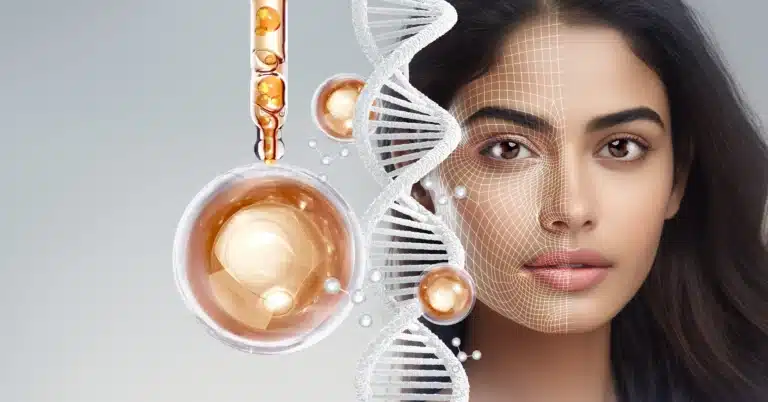
Fine lines do not appear uniformly on the face : they concentrate on areas where the skin is both thin, highly stressed by expressions and exposed to external aggressions. The first areas usually affected are the eye contour, the forehead, the cheeks and the area around the mouth.
The eye contour, where the skin is particularly thin and mobile, is often the initial area where fine lines appear.
On the forehead and between the eyebrows, fine lines are linked to repeated movements (surprise, concentration, concern).
The area around the mouth is also a risk zone : vertical fine lines located above the upper lip, sometimes referred to as perioral fine lines, are favored both by repeated movements (speech, smoking, certain facial habits) and by skin thinness.
In some people, fine lines are also observed on the neck and the décolletage, areas where the skin is often poorly protected from the sun and subject to repeated movements.
Prevention of fine lines relies on simple measures. Daily sun protection, with an appropriate SPF and reapplication in case of prolonged exposure, remains one of the most effective actions to slow down skin aging. Quitting smoking and limiting alcohol help preserve the quality and quantity of collagen fibers and the elasticity of the skin.
From a cosmetic perspective, a routine structured around gentle cleansing, hydration morning and evening and targeted active ingredients (antioxidants, low and high molecular weight hyaluronic acid, niacinamide, peptides) helps maintain more supple and better hydrated skin. Adequate water intake, a varied diet rich in fruits, vegetables and essential fatty acids, as well as good sleep quality, also contribute to the prevention of fine lines.
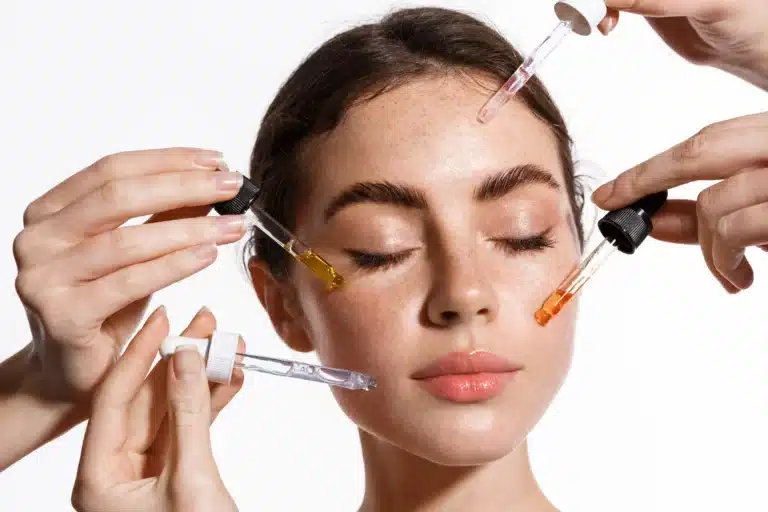
Making fine lines “disappear” actually consists of significantly reducing their depth and visibility, in order to restore smoother, more even and better hydrated skin. In aesthetic-oriented medicine, the objective is to act both on skin quality, on muscular movements and on the progressive sagging of the tissues. This management most often relies on the combination of several complementary techniques, rather than on a single approach.
Skinboosters are injections of very lightly cross-linked hyaluronic acid, intended not to create volume, but to hydrate and redensify the skin from within. Injected in micro-deposits into the superficial or mid dermis, they improve the skin’s ability to retain water, smooth the skin surface and reduce dehydration fine lines, particularly on the cheeks, neck and décolleté. Sessions are generally carried out as a course (several sessions close together), then as maintenance, with a progressive effect on radiance, suppleness and skin texture refinement.
Photorejuvenation lasers mainly target pigmentary and vascular irregularities and stimulate fibroblast activity. In practice, they even out the complexion, improve skin quality and contribute to dermal densification. On fine lines, the action is indirect but real : improving tone, radiance and overall skin quality helps reduce their appearance, particularly on the cheeks and around the eyes.
Fractional ablative lasers, such as certain CO₂ or Erbium fractional lasers, create micro-zones of vaporization within the skin, alternating treated and preserved areas in order to promote faster healing.
This controlled micro-ablation stimulates deep remodeling of the dermis and collagen fibers, providing a more pronounced smoothing effect than that obtained with non-ablative techniques.
Used with appropriate parameters, they significantly reduce fine to moderate fine lines, particularly around the eyes, the mouth and on the cheeks, by restoring thickness, firmness and regularity to the skin tissue.
Botulinum toxin acts on certain expression fine lines, that is to say those that appear during repeated movements (squinting, frowning, tightening of certain areas). By selectively reducing the contraction of the responsible muscles, it decreases the formation and worsening of these wrinkles. On the forehead, the glabella or crow’s feet, precise injections and moderate quantities make it possible to eliminate fine lines while preserving a natural expression. Indirectly, by allowing the skin time to “rest”, botulinum toxin limits the progressive transformation of expression fine lines into established wrinkles.
The aesthetic mesotherapy consists of injecting into the superficial layers of the skin small quantities of tailored mixtures (non cross-linked hyaluronic acid, vitamins, amino acids, antioxidants, trace elements). The main objective is to improve hydration, microcirculation and local metabolism.
Mesotherapy helps to plump the skin surface, improve skin suppleness and reduce fine lines, particularly those related to dehydration or to thin and dull skin.
The effects are progressive and require regular sessions, but the technique is valuable as a background treatment for skin quality.
When part of the fine lines is linked to tissue sagging (loss of support in the midface, early jowls, loss of cheekbone volume), injections of hyaluronic acid allow a true medical lift. By restoring deep volumes – cheekbones, temples, jawline, chin – the traction forces that pull the skin downward and create folds are corrected. By lifting and supporting the tissues, the tension exerted on the skin is reduced, which indirectly decreases certain fine lines. The benefit is twofold : correcting the mechanical cause (sagging) and not only the consequence (folds and fine lines).
Sculptra is a collagen stimulator based on poly-L-lactic acid, designed to progressively stimulate collagen synthesis within the deep dermis and subcutaneous tissues. Rather than providing immediate filling, it offers a gradual improvement in skin density, thickness and firmness over several months. In the management of fine lines, it is particularly useful in patients with generally thin or lax skin, where simple hydration is no longer sufficient.
By restoring a true dermal support structure, it allows a long-lasting smoothing of diffuse fine lines, particularly on the cheeks, the lower face and, in some cases, the neck.
Its effect is more global and more structural than that of classic fillers, with a progressive, homogeneous and natural result.
Peels help remove thickened corneous layers, dead skin cells and superficial impurities. They improve radiance, refine skin texture and reduce the finest lines, particularly those related to dehydration or mild sun damage. By promoting cell renewal, they allow the skin to better absorb hydrating and repairing treatments, thereby enhancing their effectiveness.
In Geneva, the price of anti-wrinkle treatment with Skinboosters is CHF 400 per syringe, mesotherapy costs CHF 300 per session, photorejuvenation laser treatment costs CHF 500 per session, fractional ablative laser treatment costs CHF 900 for the full face, Sculptra® injections cost CHF 900 per vial, hyaluronic acid injections cost CHF 600 per syringe, chemical peels range from CHF 200 to CHF 250 per session, and botulinum toxin injections cost CHF 300 for one treatment area in women and CHF 350 in men, CHF 450 for two treatment areas in women and CHF 500 in men, and CHF 600 for three treatment areas in women and CHF 650 in men.
The pricing of fine line treatments depends on the type of procedure, the products used, the required quantities and the personalized plan established during the consultation.
For Skinboosters, the price of one syringe is 400CHF, two to three syringes are used, most often with an initial course of several sessions spaced a few weeks apart, followed by maintenance sessions depending on skin quality and objectives.
The price for one mesotherapy session is 300CHF.
A photorejuvenation laser session is billed at 500CHF, and a fractional ablative laser session (for the full face) is billed at 900CHF.
One vial of Sculptra costs 900CHF, one syringe of hyaluronic acid 600CHF and one peeling session 200-250CHF, depending on the type of peeling performed.
Botulinum toxin injections are billed per area : 300CHF for one area for women (350CHF for men), 450CHF for two areas for women (500CHF for men), 600CHF for three areas for women (650CHF for men).
They can appear from the age of 25 to 30, particularly in areas where the skin is thin such as the eye contour.
Can fine lines disappear ?
They can be significantly reduced, especially if they are managed early.
Yes, UV rays are the primary cause of skin aging.
Fine lines can be treated as soon as they become visible and bothersome, often from the thirties, by first favoring hydration and prevention techniques, then more structural treatments if fine lines tend to turn into wrinkles.
Yes, fine lines can reappear over time, as the skin continues to age and be exposed to external aggressions ; hence the importance of regular maintenance (home care, follow-up sessions) and an appropriate lifestyle to prolong the results.