
Facial expressions are a language in their own right. Without a word, they convey valuable information about our emotions, intentions and state of mind. This form of communication, both conscious and involuntary, plays a central role in personal and professional relationships.
The face is undoubtedly our richest and most nuanced communication tool. Through the coordinated activation of numerous muscles just beneath the skin, it can produce a multitude of expressions. A simple eyebrow movement, a subtle smile or tension in the lips is enough to convey a clear message to the person we are speaking to.
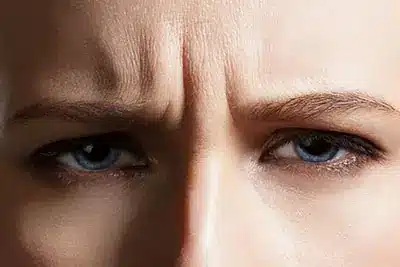
Universal expressions
Among all possible expressions, some are recognised as universal. They correspond to the main human emotions and are observed across all cultures : joy, sadness, anger, fear, surprise, contempt and disgust.
These expressions were described as early as the nineteenth century by Guillaume Duchenne de Boulogne and later studied more extensively by Charles Darwin. They rely on shared muscular patterns, although their intensity or appearance may vary slightly according to facial structure or individual factors.
Their analysis now uses scientific tools such as the Facial Action Coding System (FACS), developed by Paul Ekman, which precisely describes the muscular movements involved in each expression.
Voluntary and involuntary expressions
There are two main categories of facial expression.
Voluntary expressions : these are consciously controlled and used for social purposes. They involve brain areas associated with thought and communication, allowing expressions to be adjusted to the context.
Involuntary expressions : these result from a spontaneous emotional reaction. Faster and more automatic, they largely escape conscious control and more faithfully reflect the person's actual emotional state.
Understanding and interpreting expressions
Being able to read facial expressions helps us better understand the person we are speaking to. This skill supports smoother communication, improves emotional intelligence and facilitates social interactions.
In professional settings, it can also be a useful analytical tool. For example, during a discussion or negotiation, observing facial reactions can provide clues about how a proposal is perceived or the other person's emotional state.
An aesthetic consideration too
In aesthetic medicine, these concepts take on particular significance. Repeated muscular contractions or certain facial imbalances can give a resting expression perceived as severe, tired or worried.
Modern treatments aim to preserve natural expressions while correcting excessive tension rather than freezing them. The aim is to maintain an expressive face while ensuring that the emotions others perceive genuinely reflect those we wish to convey.
Various techniques are used, including injections of hyaluronic acid, botulinum toxin, Sculptra and Skinboosters, mesopeel and fractional ablative laser sessions.
Medical references on facial expressions
- Facial expressions result from the coordinated action of numerous facial muscles, whose balance contributes to non-verbal communication and each person's identity, an anatomical organisation described in resources from the National Library of Medicine.
- Emotions and facial expressions play an essential role in social interactions, a field extensively studied by researchers at The Paul Ekman Group, an international reference in the study of human expressions.
- In aesthetic medicine, understanding facial muscle dynamics helps address ageing while preserving spontaneous expressions, an approach developed in publications from Facial Plastic Surgery & Aesthetic Medicine.
- Current knowledge of functional facial anatomy allows treatments to be adapted to each patient's facial structure and movement, principles regularly discussed in Plastic and Reconstructive Surgery Journal.
- International aesthetic medicine recommendations now favour harmonious results that respect natural facial expressions, a philosophy supported by The Aesthetic Society.