Initial consultation for hyaluronic acid wrinkle filling
The initial consultation is an essential medical step before any hyaluronic acid wrinkle-filling injection. It precisely assesses wrinkle type, origin and progression to determine whether filling is relevant and appropriate.
Dr Romano carefully examines the face at rest and in movement. This dynamic observation distinguishes wrinkles caused by lost skin support from those primarily caused by muscle contraction. Depth, location and impact on overall facial harmony are also assessed.
Skin quality is carefully evaluated. Thickness, elasticity, laxity and hydration directly influence the care strategy. Some superficial or very pronounced wrinkles may require combined treatment or gradual correction, discussed at this first consultation.
A full medical history covers previous conditions, current medication and any earlier aesthetic procedures. This rules out contraindications and adapts treatment to the patient.
The consultation is also a time for discussion and information. The doctor explains wrinkle-filling principles, limitations and temporary effects. A personalised proposal can then be made based on rigorous, realistic medical assessment.
Indications for hyaluronic acid wrinkle filling
Hyaluronic acid is indicated for wrinkles reflecting permanent loss of tissue support. These are mainly static wrinkles, visible at rest, resulting from gradual changes in skin and subcutaneous structure independently of muscle activity.
Treatment is indicated for a true skin depression linked to dermal thinning, reduced collagen or loss of underlying support volume. Here, hyaluronic acid restores structure and skin surface without changing natural facial dynamics.
Certain deep wrinkles or established folds are also particularly suitable. When a pronounced crease is worsened by time or repeated environmental factors, hyaluronic acid supports the area and durably reduces the fold.
It can also treat wrinkles linked to facial volume loss and reduced firmness. Injection then rebalances the surrounding area rather than simply filling the wrinkle, tightening skin more naturally.
However, it is not indicated for wrinkles caused exclusively by muscle contraction or fine lines resulting from altered skin quality. Precise indication is decisive : hyaluronic acid filling addresses identified structural depressions needing targeted, measured support.
Advantages of hyaluronic acid injections for wrinkle filling
Hyaluronic acid injections correct wrinkles by directly addressing their cause. A wrinkle forms when skin lacks support and becomes depressed. Injecting this area restores support beneath skin, naturally smoothing the fold.
An important advantage is precise adaptation to each wrinkle. Different hyaluronic acids vary in density; Dr Romano chooses according to depth and location. Injection is tailored while respecting facial shape and natural movement.
Results are gradual and adjustable. The aim is to soften rather than entirely erase every wrinkle. This preserves expression and avoids a frozen or artificial appearance.
Hyaluronic acid is also reversible and adjustable over time. Treatment can be supplemented or adapted as the face evolves, offering considerable flexibility.
When injected by an experienced doctor, it is well tolerated, gradually integrates into tissues and is naturally absorbed.
In summary, wrinkle filling gives natural, personalised and adaptable results while respecting facial identity and expression.
Instructions before hyaluronic acid wrinkle filling
Preparation aims to optimise skin condition for the best possible circumstances before wrinkle filling.
Certain medicines or supplements favour bruising. Where possible, avoiding them beforehand is preferable. All current treatments, even occasional ones, must be reported to Dr Romano at consultation.
Skin must not be irritated. Avoid peels, scrubs, certain intensive aesthetic treatments or irritating products on the relevant areas in preceding days.
The day before and on treatment day, limit alcohol, rest well and drink enough water. Skin must be clean, ideally without make-up or cream on treatment areas.
Report any recent skin abnormality, including redness, infection, inflammatory spots or herpes. Treatment may sometimes be postponed for safety.
Following these instructions contributes directly to a smooth procedure and natural, safe results.
What happens during a hyaluronic acid wrinkle-filling session
The procedure begins with comfortable positioning to observe wrinkles in their natural position, both at rest and during facial expressions.
The area is carefully prepared. Skin is cleansed, then disinfected.
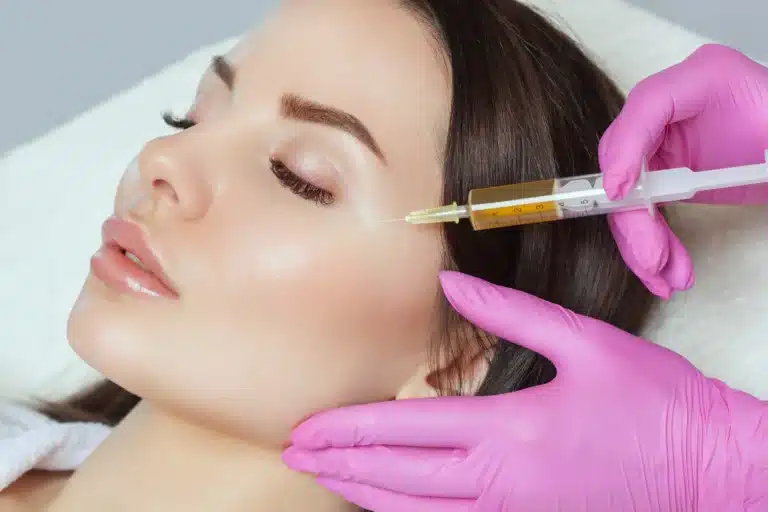
Injection proceeds gradually. Hyaluronic acid is placed directly beneath the wrinkle or fold at an appropriate depth. Placement is precise, measured and controlled, with particular attention to even distribution to avoid irregularities. Dr Romano continually adjusts injection according to immediate tissue response.
The wrinkle is not filled with a single injection. Product is added gradually to avoid overcorrection.
This avoids a swollen or frozen appearance, keeping the face natural and expressive.
Which hyaluronic acid should be injected for wrinkle filling ?
Product choice relies on precise assessment of each wrinkle rather than using a single product. A wrinkle is a localised structural skin change whose depth, width and dynamics directly determine the hyaluronic acid required.
For superficial wrinkles or fine creases, the gel should be soft and minimally cohesive. This integrates evenly into the dermis without excess thickness or surface visibility.
Deeper wrinkles or pronounced folds require stronger support. Appropriate cohesion and elasticity restore the underlying structure responsible for the depression. This support smooths the wrinkle while respecting facial dynamics.
Tissue integration is decisive. Wrinkle-filling hyaluronic acid must distribute evenly without nodules or surface irregularities. An overly rigid gel would look artificial, while an excessively fluid product would provide insufficient or short-lived correction.
Product choice is personalised, considering skin thickness, age, wrinkle location and its evolution. This rigorous selection is central to result quality : correction depends not on quantity, but on the precise match between gel, wrinkle, receiving tissue and medical technique.
Instructions after hyaluronic acid wrinkle filling
After wrinkle filling, tissues begin adapting. Precautions preserve result quality during this period. In the hours afterwards, limit excessive activity of injected areas to avoid disturbing initial product distribution.
The first twenty-four hours need particular care. Avoid heat exposure, marked temperature changes and activities increasing skin vasodilation, which may temporarily worsen local reactions and affect stabilisation.
In following days, postpone facial aesthetic treatments involving mechanical or thermal stimulation. This allows tissues to regain balance and product to integrate evenly.
Monitor injected areas carefully. Mild redness, tenderness or small bruises may occur and resolve spontaneously.
Following aftercare contributes directly to stable filling and final result quality.
Medical injection protocol for wrinkle filling
The protocol begins with choosing the correct injection depth for wrinkle type.
Fine wrinkles receive product just beneath skin; deeper wrinkles require deeper support. This avoids visible product, ensures even results and supports durability.
Correction is always gradual. Small amounts are distributed evenly beneath the wrinkle, supporting skin without excessive thickness or noticeable relief. Volume management is deliberately cautious.
The wrinkle is assessed at rest and in movement. Dr Romano checks expression to ensure correction follows it without freezing it. A well-treated wrinkle remains supple and natural.
The protocol is also measured over time. Any adjustment is made at a later session once results have stabilised. This ensures safe, adaptable treatment respecting facial anatomy.
What results can be expected from hyaluronic acid wrinkle filling ?
Hyaluronic acid filling softens established wrinkles without blocking facial expression.
The wrinkle becomes shallower and less visible. It does not disappear abruptly and the face does not look transformed. Skin becomes more even while staying supple and mobile when smiling or speaking.
Improvement appears quickly and continues afterwards. Final results are obtained two weeks after injection.
Treatment is successful when the wrinkle is visibly reduced without complete erasure and the face retains expression and identity.
Duration of hyaluronic acid effects for wrinkle filling
Hyaluronic acid wrinkle-filling effects last an average of 9 to 18 months, varying with wrinkle, facial area and product.
Fine, superficial wrinkles tend to return sooner.
Deeper wrinkles or folds generally retain results longer because denser hyaluronic acid is injected more deeply.
Product choice also influences durability.
Very soft products for fine lines give subtle but shorter-lasting results.
Slightly denser products for pronounced wrinkles last longer.
Personal factors also matter : age, skin quality, lifestyle, sun exposure and smoking may affect absorption speed.
In all cases, effects diminish gradually. Wrinkles do not suddenly return, allowing natural, controlled maintenance planning if needed.
Recovery after hyaluronic acid wrinkle filling
After wrinkle filling, skin needs a short adaptation period. Recovery is mild and temporary in most cases.
Immediately afterwards, the area may be slightly sensitive. Mild redness, slight swelling or tenderness are common, normal reactions usually disappearing within hours to days.
Bruises may sometimes occur, especially in thin-skinned areas, and gradually fade.
Some people feel slight firmness or notice temporary unevenness; these generally resolve within a week.
Over following days, skin gradually softens and regains even texture. Recovery does not prevent rapid return to daily and social activities.
Hyaluronic acid wrinkle filling : patient experience
Patient follow-up shows wrinkle filling does more than simply fill a line. The most frequent change is an overall improvement in facial appearance, with the wrinkle no longer drawing attention.
It is no longer visible at rest or conveying tiredness or severity. It may still appear slightly during expression, which is normal and natural.
At follow-up, patients do not always mention the treated wrinkle directly. Instead, they describe a more relaxed, less lined or simply fresher face. Correction that cannot be identified as an aesthetic procedure indicates success. Medically, this satisfaction rests on respect for expression.