What are crepey eyelids and lower eyelid wrinkles ?
Over time, the very thin, fragile skin of the eyelids changes. Crepey eyelids develop when eyelid skin starts losing elasticity, causing creases and fine lines. These changes can create an impression of constant tiredness.
Eyelid wrinkles often develop because of several factors, such as ageing, sun exposure, dehydration or genetics. These are generally among the first facial wrinkles to appear and may be aggravated by repeated facial expressions, such as smiling.

What types of wrinkles develop under
the eyes ?
Two types of wrinkles can develop under the eyes.
• Dynamic eye-area wrinkles : caused by repeated facial muscle movements, such as smiling or frowning. These wrinkles are more visible when the face moves.
• Static eye-area wrinkles : result from declining collagen, elastin and hyaluronic acid in the skin. They are visible even when the face is at rest.
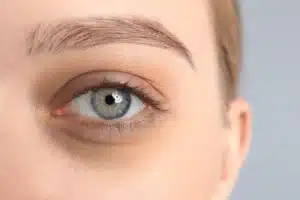
It is also essential to distinguish lower eyelid wrinkles from dark circles (darker or hollow areas beneath the eyes) and bags (swelling or fat deposits). These concerns may coexist with wrinkles and require specific treatments.
Why do eyelids
become crepey ?
Several factors cause wrinkles and fine lines to develop on the upper and lower eyelids.
- Natural ageing : with age, collagen and elastin production declines, causing loss of skin firmness and elasticity. This reduction in structural support leads to wrinkles.
- Volume loss : fat loss and bone resorption in this area reduce malar support, causing tissues to sag.
- Sun exposure : UV rays cause skin photoageing, particularly in sensitive areas such as the eye contour. Prolonged sun exposure accelerates collagen breakdown and leads to premature skin laxity.
- Heredity : some people are genetically predisposed to develop eyelid wrinkles earlier.
- Tiredness and insufficient sleep : insufficient sleep can impair lymphatic drainage, contributing to bags and dark circles and accentuating wrinkles.
- Repeated facial expressions : repeated muscle movements around the eyes, such as blinking or smiling, can encourage dynamic wrinkles that become permanent over time.
- Dehydration : the skin around the eyes is particularly thin and vulnerable to dehydration, which accentuates fine lines.
How can eyelid wrinkles be prevented ?
Although the natural ageing process is difficult to counter, certain habits can prevent or delay crepey eyelids and eyelid wrinkles. These measures are easy to follow and can help protect and nourish eyelid skin.
- Use sunscreen daily : UV protection is essential to prevent photoageing and protect delicate skin around the eyes.
- Moisturise regularly : applying a moisturising eye cream morning and evening maintains good hydration and prevents dehydration lines.
- Eat an antioxidant-rich diet : antioxidants in fruit, vegetables and certain fats (omega-3) help protect the skin against free radical damage.
- Get enough sleep : insufficient sleep encourages fluid retention beneath the eyes, contributing to bags and wrinkles.
- Avoid smoking : smoking accelerates skin ageing by destroying collagen and depriving the skin of oxygen.
- Perform lymphatic massage morning and evening.
- Remove make-up remover residue with a spray of thermal spring water.
Which treatments smooth eyelids without surgery ?
Crepey eyelids and lower eyelid wrinkles can affect the face, making it look older or tired. Fortunately, effective, non-invasive and personalised medical solutions are available to treat these signs of ageing.
Treatment is personalised, and consulting an experienced doctor is recommended to guide you towards the treatment best suited to your specific needs.
Ablative laser to rejuvenate the
eye area without surgery
The ablative laser stimulates the formation of a thicker dermis through heating and ablation. After-effects and results differ according to the treatment mode chosen.
Fractional mode improves fine lines rather than eliminating them. The protocol involves 4 sessions two months apart. Downtime is short, around 3-5 days.
This is the only possible treatment for the upper eyelid.
With continuous mode, wrinkles disappear. One session is sufficient. Downtime is around 7-10 days. Afterwards, the skin remains pink for around 3 months.


Medium-deep peel to smooth
the eyelids
Dr Romano performs a TCA or light phenol peel to reach the middle dermis. Depending on the severity of wrinkles and laxity, the doctor performs a medium-depth peel.
One session is sufficient. Sometimes a second is needed, particularly for very thin skin that would not tolerate intensive treatment in one session.
The principle is the same as continuous ablative laser treatment : ablating dermal layers to produce denser new skin. The after-effects are identical.
However, Dr Romano prefers a laser peel to a chemical peel because laser treatment increases skin density much more.
Hyaluronic acid injections for
eyelid wrinkles
Bone and fat volume loss around the eyes and temples is treated with hyaluronic acid injections. The aim is to create traction on the skin, stretching out wrinkles.
Results are visible immediately after the session, with noticeable wrinkle tightening and a reduction in crepey eyelid appearance. This treatment is quick, virtually painless and involves no downtime, offering natural results.
Hyaluronic acid cannot be injected directly into eyelid skin. Around the eyes, this product can only be placed deeply against the bone. Superficial injection causes complications : permanent swelling, surface irregularities and the Tyndall effect.


Botulinum toxin injections for
eyelid wrinkles
Botulinum toxin is used to block the outer part of the orbicularis oculi muscle (treating crow's feet), improving eyelid wrinkles but not skin laxity.
Lower eyelid wrinkles are not themselves an indication for botulinum toxin ; however, their appearance can improve indirectly by treating crow's feet.
Botulinum toxin effects are visible after a few days and last around 4 to 6 months.
Before / after results : what you need to know
Results depend on the technique used.
Laser treatment gradually improves skin quality, while injections produce a quicker effect.
The duration of results varies by treatment :
- Hyaluronic acid : 6 to 12 months.
- Botulinum toxin : 4 to 6 months.
- Laser and medium-depth peel : several years.
How much do crepey eyelid treatments cost in Geneva ?
In Geneva, several medical techniques can smooth and reduce crepey eyelids. Prices vary according to the chosen method. Hyaluronic acid injections cost CHF 700 per syringe, while botulinum toxin treatment costs CHF 600. Fractional ablative laser treatment is offered to effectively stimulate cell renewal. It costs CHF 400 per session, and the protocol involves four sessions. A continuous ablative laser session costs CHF 1200, with only one session needed. Finally, a medium-depth peel, also performed in a single session, costs the same price of CHF 1200. The technique and treatment(s) required are determined during the medical consultation according to the type of skin laxity and skin quality.
Indicative prices
- Hyaluronic acid : CHF 700 per syringe
- Botulinum toxin : CHF 600
- Fractional laser : CHF 400 / session (4 sessions)
- Continuous laser : CHF 1200
- Medium-depth peel : CHF 1200
Frequently asked questions about crepey eyelids in Geneva
How can eyelids be tightened naturally ?
Natural methods such as cold compresses, aloe vera gel or cooled tea bags can temporarily firm eyelid skin. However, their effects are limited and vary between patients.
How can I apply make-up to crepey eyelids ?
For crepey eyelids, using a smoothing primer, avoiding shimmery eyeshadows that accentuate creases and choosing matte shades is recommended. A fine eyeliner line can also define the eyes without making the eyelid look heavy.
How can eyelids be rejuvenated ?
Non-surgical treatments such as photorejuvenation laser (only an erbium laser can be used for this indication ), which uses plasma energy to tighten eyelid skin, produce visible improvements. This treatment has no significant side effects apart from redness for a few days.
What is the best non-surgical eyelid lift ?
Non-fractional Erbium laser is a non-invasive technique for treating excess upper eyelid skin without surgery. This method offers visible, consistent and variable results, suited to people with moderate skin laxity. Erbium Glass laser does not produce results and is dangerous on the eyelids.
Does laser treatment for eyelid wrinkles hurt ?
Laser treatments for eyelid wrinkles can cause warmth or tingling but are generally well tolerated. Anaesthetic cream is often applied before the procedure to improve patient comfort.
At what age do eyelids start showing signs of ageing ?
The first signs of eyelid ageing generally appear from the age of 25, with fine lines and wrinkles around the eyes. This is due to the thin skin in this area, making it more vulnerable to ageing. However, factors such as genetics, sun exposure and lifestyle can influence the appearance and progression of these signs.