What skin signs are associated with pollution ?
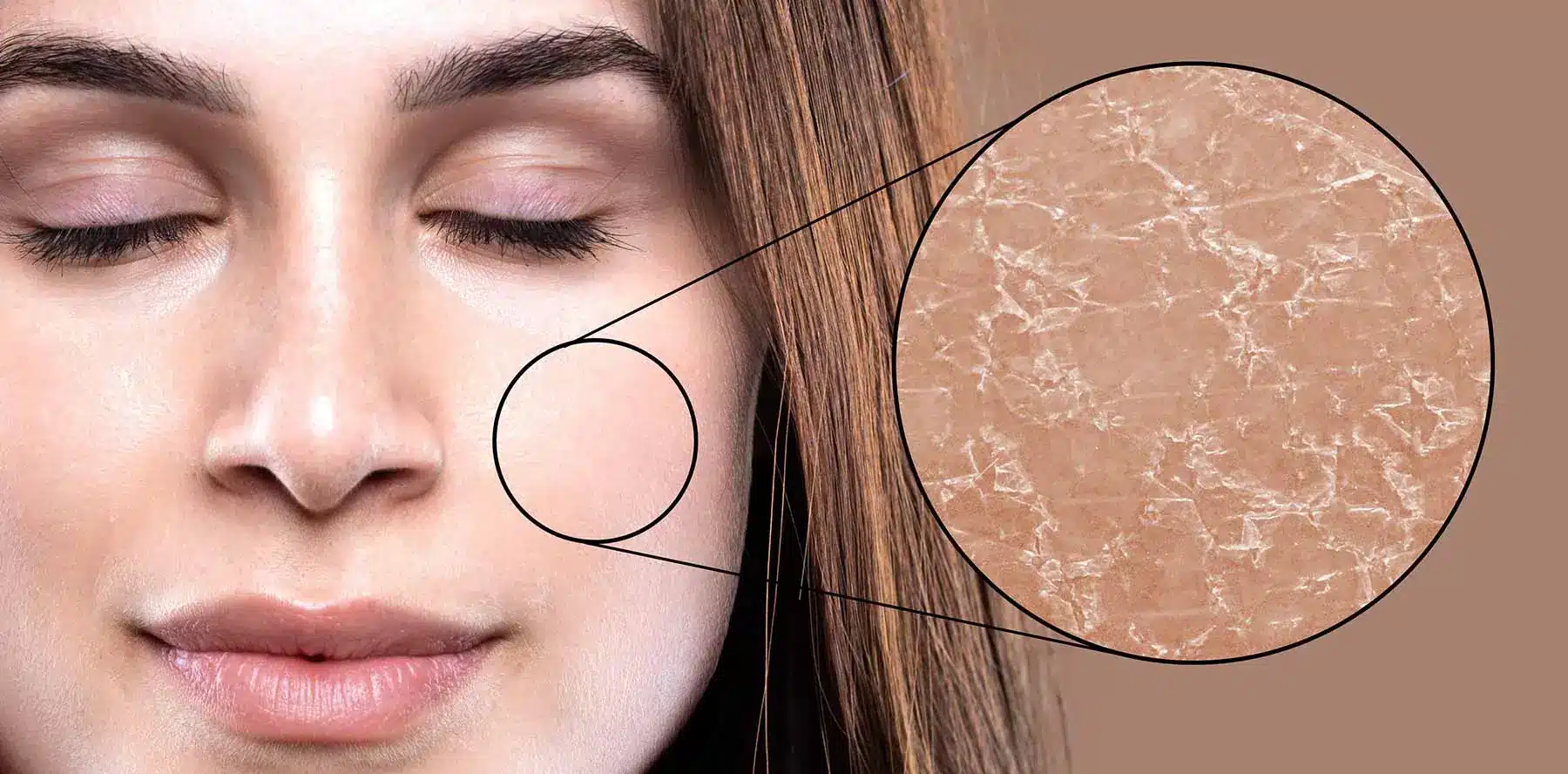
Chronic pollution exposure causes characteristic clinical signs, often developing gradually :
- A dull complexion and loss of radiance.
- Impurity build-up and enlarged pores.
- Irregular pigmentation.
- Dehydration and changes in skin texture.
- Skin sensitisation with diffuse redness.
- Early wrinkles and fine lines.
- Gradual skin laxity.
- Worsening of certain skin conditions (acne, rosacea).
These signs can appear even in young patients, particularly with prolonged exposure.
Pollution and skin ageing
Pollution is now considered an important factor in extrinsic skin ageing, alongside sun exposure and smoking. It accelerates collagen breakdown and promotes wrinkles.
When combined with ultraviolet radiation, its harmful effects intensify. This interaction promotes free radical production and increased oxidative stress, worsening skin damage and contributing to pigmentation irregularities.
Over time, skin becomes thinner, less resilient and gradually loses its ability to regenerate.
How does pollution affect the skin ?
Pollution affects the skin through several mechanisms.
Pollutant particles penetrate or settle on the skin barrier, causing excessive free radical production.
These free radicals damage cell structures, including membranes, DNA and dermal proteins such as collagen and elastin. This gradually degrades the extracellular matrix, essential for skin firmness and elasticity.
Pollution also impairs skin barrier function, increasing permeability and promoting dehydration. It causes chronic low-grade inflammation, accelerating ageing.
Finally, certain pollutants activate specific receptors (particularly AhR receptors), disrupting normal skin cell function and encouraging pigmentation disorders.
Aesthetic medicine techniques for combating the effects of
pollution
Aesthetic treatment takes a comprehensive approach to detoxify the skin, strengthen its natural defences and stimulate regeneration.
Treatments are selected according to skin type, degree of damage and the patient's expectations.
Restoring complexion radiance and improving
skin quality
Revitalising techniques are central to comprehensive management of skin quality. They aim both to correct visible changes and to restart biological mechanisms essential for healthy skin function.
Mesotherapy delivers revitalising substances — vitamins, amino acids and antioxidants — directly into the dermis. This targeted action stimulates cell activity and repair and actively combats oxidative stress.
Skinboosters, lightly cross-linked hyaluronic acid formulations specifically designed to improve skin quality, deeply hydrate the skin. They restore suppleness, improve texture and give skin a brighter, more even appearance.
Superficial to medium-depth chemical peels exfoliate the epidermis's surface layers, unclog pores and improve complexion evenness.
Correcting signs of ageing associated
with pollution
When wrinkles and skin laxity are present, targeted treatments are offered.
Botulinum toxin smooths certain expression lines and prevents their worsening. It is indicated for forehead lines, frown lines and crow's feet.
Hyaluronic acid injections restore volume and fill established wrinkles.
Collagen stimulators stimulate natural collagen production and improve skin density.
Technologies such as radiofrequency or ablative lasers increase skin density and improve laxity.
Treating pigmentation induced
by pollution
Pigmentation disorders are particularly common in patients chronically exposed to pollution, which disrupts melanin regulation.
In this context, a laser peel can brighten the complexion and reduce pigmentation.
Daily use of suitable sun protection is essential to prevent recurrence.
Strengthening the skin barrier
Restoring the skin barrier is fundamental to maintaining healthy, resilient skin. It determines the skin's ability to protect itself from external stressors and preserve its biological balance.
Regular medical protocols are particularly appropriate for this purpose. These may combine mesopeel sessions — generally twice yearly — with an annual Skinbooster session.
Strengthening the skin barrier also requires a rigorous, suitable dermocosmetic routine. It should include effective protection against environmental stressors, topical antioxidants — such as vitamins C and E or niacinamide — and cleansing that is both effective and respectful of skin balance.
Results
Aesthetic treatments significantly improve skin quality and reduce pollution-related changes. However, because exposure is chronic, lasting results require regular, careful follow-up.
A gradual approach tailored to each patient's specific needs is therefore essential. It provides harmonious, natural and lasting results while respecting skin balance and physiology.
Frequently asked questions about pollution's effects on the skin
Can pollution really damage the skin ?
Yes. Fine particles and air pollutants generate oxidative stress that damages skin cells, weakens the skin barrier and accelerates ageing.
Does pollution accelerate skin ageing ?
Yes. It promotes collagen and elastin breakdown, contributing to skin laxity and early wrinkles.
Can pollution's effects on the skin be corrected ?
Their effects can be reduced through suitable aesthetic treatments and targeted dermocosmetic skincare.
Which aesthetic treatments are most effective against pollution ?
Peels, mesotherapy, Skinboosters and certain skin stimulation technologies improve skin quality and restore radiance.
At what age should skin treatment against pollution begin ?
When the first signs appear, or preventively in patients with chronic exposure.
Are results lasting despite daily pollution exposure ?
They can be maintained with regular maintenance, as pollution remains an ongoing stressor.
Are peels suitable for pollution-exposed skin ?
Yes, provided they are adapted appropriately. They improve complexion radiance and stimulate cell renewal.
Can Skinboosters improve pollution-related dull skin ?
Yes, they provide deep hydration and improve skin quality.
Are there preventive treatments against pollution's effects ?
Yes, particularly revitalisation protocols and antioxidants.
Are antioxidants really useful for protecting the skin ?
Yes, they neutralise free radicals and help protect the skin.
Does pollution affect men and women in the same way ?
Generally yes, although effects can vary with lifestyle and skin type.