In aesthetic-oriented medicine, the management of stress is not limited to correcting visible signs : it aims to restore a global, lasting and physiological cutaneous balance.
In Geneva, where the pace of life can be intense, many patients seek consultation for skin alterations directly related to stress. A rigorous medical approach makes it possible to identify these manifestations and to propose appropriate solutions.
Stress activates the neuro-endocrine axis, leading to the release of cortisol, often called the stress hormone. A chronic elevation of cortisol has deleterious effects on the skin.
It leads to a decrease in the production of collagen and hyaluronic acid, which are essential for the structure and hydration of the skin. Moreover, stress promotes the production of free radicals, responsible for oxidative stress that accelerates skin ageing.
Stress also disrupts the barrier function of the skin, increasing water loss and skin sensitivity. It can also stimulate sebum production, explaining the appearance or worsening of certain conditions such as acne.
Finally, it alters microcirculation, which has a direct impact on the radiance of the complexion.

The cutaneous manifestations of stress are varied and often multifactorial. They can appear quickly or develop progressively :
These signs can coexist and evolve depending on the intensity and duration of stress.
Stress plays a direct role in the appearance and worsening of wrinkles, through both biological and mechanical mechanisms. From a physiological perspective, the chronic increase in cortisol leads to a decrease in the synthesis of collagen and elastin, two essential components for the firmness and elasticity of the skin. At the same time, stress promotes the production of free radicals, responsible for oxidative stress that accelerates the degradation of dermal fibres. This progressive alteration of the skin structure makes the skin thinner, less resistant and more prone to the formation of wrinkles. From a mechanical perspective, stress is often accompanied by repeated and involuntary muscle contractions, particularly in the forehead, the glabellar region and the eye contour. These tensions promote the appearance of expression lines, which become permanent over time.
Thus, stress acts as an aggravating factor of skin ageing, by altering both the quality of the skin and the muscular dynamics at the origin of wrinkles.
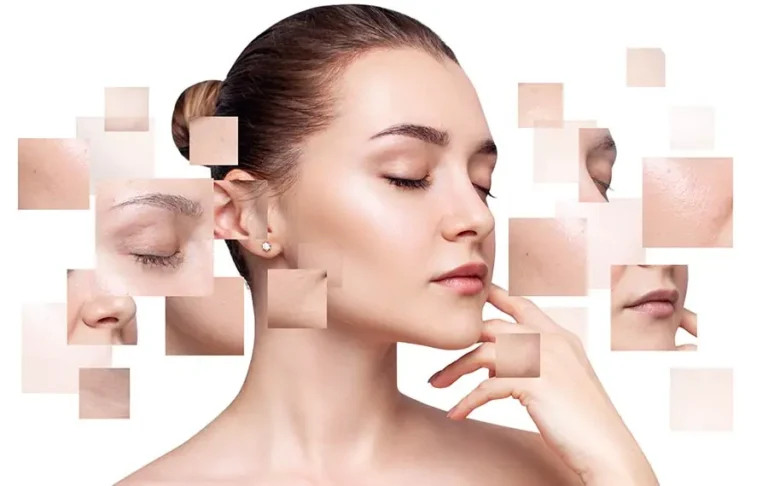
Chronic stress is a major factor in premature ageing. By reducing collagen production and increasing the degradation of dermal fibres, it promotes the appearance of wrinkles and loss of firmness.
Moreover, low-grade chronic inflammation induced by stress contributes to altering the overall quality of the skin. The skin’s repair capacity is also reduced, which slows down healing.
In the long term, the skin loses density, elasticity and radiance.
The aesthetic-oriented management of stress is based on a global approach including physical activity, sleep and relaxation techniques. It aims to restore skin quality, to correct the signs of ageing linked to prolonged tension, to strengthen the skin’s defence capacities and to reduce the tired appearance of the eye area.
The techniques used are :
The Skinboosters play an essential role in the treatment of skin weakened by stress. Their principle is based on injecting a lightly cross-linked hyaluronic acid into the dermis to restore deep and long-lasting hydration.
Unlike topical skincare products, Skinboosters act directly where the imbalances caused by chronic stress develop. This delivery method helps restore skin suppleness, enhance radiance, reduce fine dehydration lines and, more broadly, improve overall skin quality.
Over time, the skin appears stronger and less reactive. The results develop naturally, with particularly noticeable improvement in patients with tired, dull, or stress-weakened skin.
The mesopeel is a complementary approach of choice to stimulate skin regeneration. It combines a superficial chemical peel with mesotherapy injections, thus making it possible to act both on the surface and in depth.
The peel induces a controlled exfoliation of the epidermis : it removes dead cells, refines the skin texture and promotes cell renewal. Mesotherapy, on the other hand, consists of delivering directly into the dermis active substances — vitamins, antioxidants and amino acids — that are essential for proper skin function.
The combination of these two techniques improves the radiance of the complexion, evens out the skin texture and contributes to strengthening the skin barrier, often altered by stress. The mesopeel is particularly suited to patients whose skin appears dull, uneven or devitalised.
Poly-L-lactic acid, Sculptra, has particular value in the management of skin weakened by stress. Under the effect of cortisol and oxidative stress, the skin tends to become thinner, dehydrated and to lose density.
This treatment is a collagen stimulator, it progressively stimulates the production of dermal fibres. This new collagen production makes it possible to restore skin thickness, to improve skin resistance and its overall quality.
The results appear progressively and naturally, with a visible gain in firmness and density. This approach is particularly suitable for patients presenting thin, fragile skin or skin marked by accelerated ageing related to stress.
When the face shows the signs of stress, hyaluronic acid is an essential tool for restoring harmonious facial volumes and a balanced appearance. It is particularly indicated for correcting hollow areas, especially dark circles and the tear trough, which are often accentuated by chronic fatigue.
However, its action is not limited to a simple filling effect. Hyaluronic acid is also an integral part of comprehensive non-surgical facial rejuvenation strategies.
Thanks to deep injection techniques designed to support the tissues, it is possible to restore structural support points, redefine facial contours, and reduce the signs of skin laxity (medical lifting technique).
This comprehensive approach provides subtle and harmonious results while respecting the patient's natural facial features. It is particularly suitable for individuals with still moderate signs of ageing whose appearance is often amplified by the effects of stress.
Botulinum toxin is indicated in the treatment of certain expression lines, often intensified by muscle tension related to stress. Repeated contractions, particularly in the forehead, the glabellar region and at the corners of the eyes, promote the progressive development of wrinkles that become permanent over time.
By acting in a targeted way on muscle activity, botulinum toxin helps to reduce these wrinkles while preserving natural expressions. Beyond its corrective effect, it also contributes to preventing their worsening.
In patients subjected to significant stress, this treatment helps to soften facial features and to restore a more rested and relaxed appearance to the face.
Treatments make it possible to significantly improve skin quality and to reduce the visible signs related to stress.
However, when stress persists, the results may remain limited over time. Regular follow-up and maintenance sessions are then often necessary in order to maintain the benefits achieved.
Yes. Chronic stress disrupts the skin balance by increasing cortisol levels, which reduces collagen production, weakens the skin barrier and promotes premature ageing.
Yes. It acts both on skin quality and on repeated muscle contractions, promoting the appearance and fixation of expression lines.
Yes. An appropriate management, combining aesthetic-oriented treatments and daily care, makes it possible to significantly improve skin quality.
Skinboosters, mesotherapy, peels, collagen stimulators and botulinum toxin are particularly suitable depending on the needs.
Yes. They make it possible to restore deep hydration and to improve the overall quality of the skin.
Yes. It delivers essential nutrients directly into the dermis and stimulates cellular activity.
Yes, provided they are adapted. They make it possible to improve the radiance of the complexion and to stimulate cell renewal.
Yes. It reduces the muscle tensions responsible for certain expression lines and softens facial features.
Yes. It makes it possible to restore volumes, to reduce dark circles and to give a more rested appearance.
Yes. An appropriate routine, the use of antioxidants and preventive treatments make it possible to limit its impact.