How does smoking affect the
skin?
Smoking affects the skin through a series of well-established harmful biological mechanisms. These effects alter skin cells, the dermis's supporting fibres and microcirculation. This chronic stress gradually damages skin quality and accelerates ageing.
The main mechanisms involved are :
- Nicotine-induced vasoconstriction, reducing the supply of oxygen and essential nutrients.
- Reduced skin microcirculation, causing a dull complexion and poor tissue oxygenation.
- Increased oxidative stress, producing free radicals that damage cells.
- Accelerated breakdown of collagen and elastin, fibres essential for skin firmness and elasticity.
- Reduced synthesis of new collagen, limiting the skin's ability to regenerate.
- Impaired cell renewal, leading to dead cell accumulation on the surface.
- Skin dehydration associated with an impaired skin barrier.
- Chronic low-grade inflammation, contributing to premature ageing.
- Impaired healing with an increased risk of scarring and pigmentation.
- The repetitive mechanical action of smoking, promoting perioral lines.
These mechanisms act cumulatively, explaining the gradual but pronounced progression of skin changes in smokers.
What are the effects of smoking on
facial skin ?
Smoking has a direct, profound impact on facial skin quality. The skin gradually loses its ability to regenerate effectively, leading to visible premature ageing.
Clinically, several characteristic signs are seen in smokers :
- A dull, greyish or yellowish complexion caused by poor tissue oxygenation.
- Loss of radiance and an uneven complexion.
- Early wrinkles, particularly around the mouth and eyes.
- Vertical perioral lines, often called smoker's lines.
- Reduced skin elasticity with gradual laxity.
- Skin thinning, making it more fragile and dry.
- Chronic skin dehydration.
- Slower healing.
- More pronounced dark circles and tired-looking eyes.
- Overall deterioration of skin texture, which becomes rougher.
Together, these signs give the face a tired, aged and less harmonious appearance.
Smoking and skin ageing
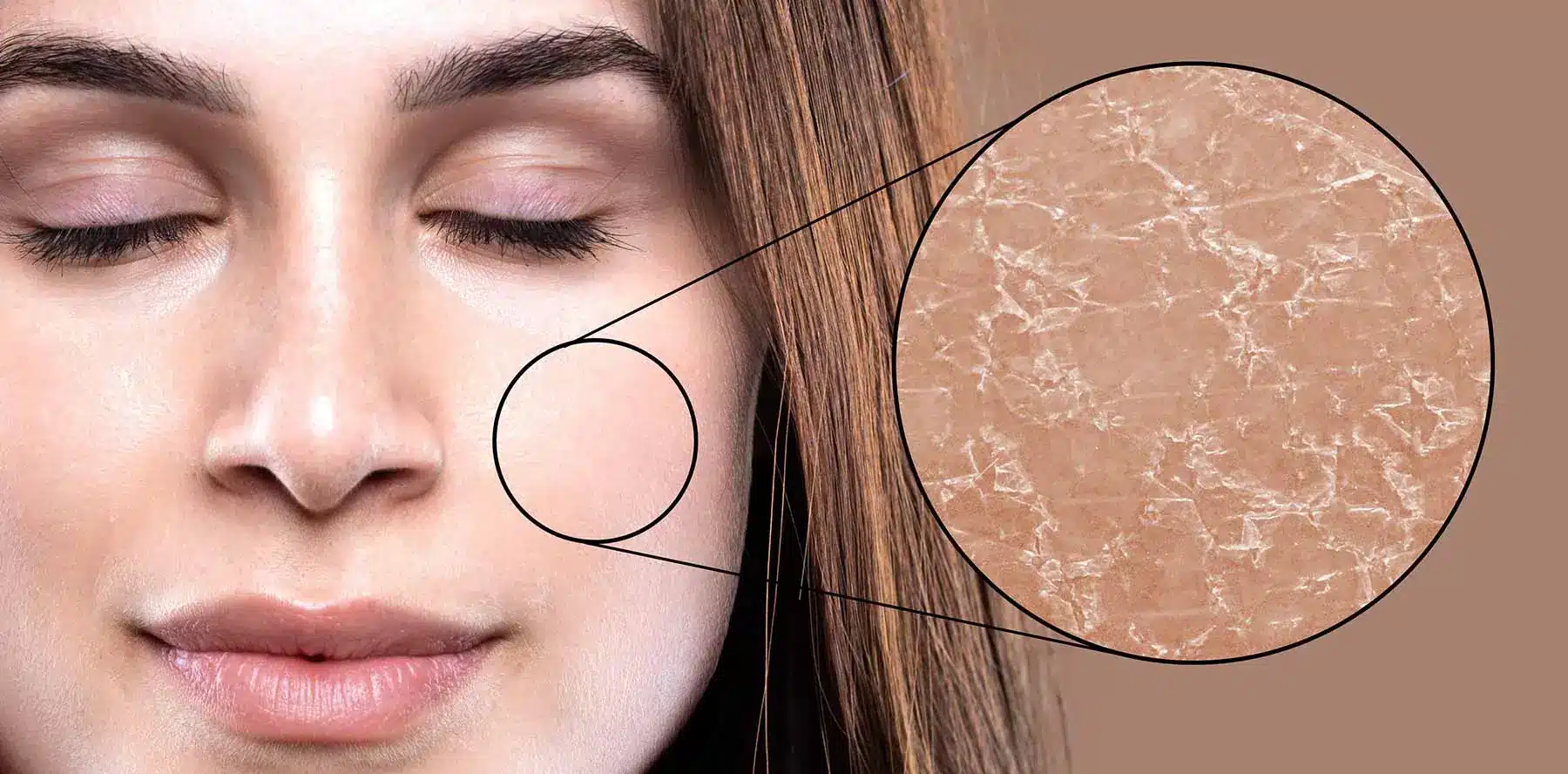
Smoking is recognised as one of the main causes of premature skin ageing, alongside chronic sun exposure.
Its impact involves several harmful mechanisms that profoundly alter skin structure and function. alongside this, toxic substances in smoke generate significant oxidative stress, producing free radicals that degrade collagen and elastin fibres.
Clinically, this causes :
- Early wrinkles and fine lines.
- More pronounced perioral lines (“smoker's lines”).
- Skin laxity and loss of firmness.
- Reduced skin elasticity.
- Skin thinning (thinner skin).
- Complexion changes (a dull, greyish complexion).
- Accelerated overall facial ageing.
- Tired, sagging features.
- Loss of skin density.
Aesthetic medicine solutions for repairing smoking's effects on the
ageing
Aesthetic treatment of smoking's effects takes a comprehensive approach to restore skin quality, correct visible signs of ageing and reactivate skin regeneration. No single technique can compensate for all smoking-induced changes ; a considered combination of treatments provides harmonious, lasting results.
Treating smoker's lines
Perioral lines are among the most typical signs associated with smoking. They result from both repeated sucking movements and gradual deterioration of the skin's supporting structures.
These fine vertical lines around the mouth tend to deepen over time and become harder to treat once established. They are frequently accompanied by thinning lips and a less defined lip contour.
Medium-depth peels are currently the most effective corrective approach. However, this treatment requires approximately ten days of social downtime during peeling and healing.
Other techniques can provide significant improvement without complete correction.
Superficial injections of lightly cross-linked hyaluronic acid into fine lines help visibly reduce them.
Fractional ablative laser is another effective option, improving skin quality and reducing wrinkle depth.
Dull, poorly oxygenated skin :
restoring skin radiance
A smoker's complexion is often characterised by diminished radiance and uneven colouring.
Several complementary approaches can be considered.
Skinboosters, lightly cross-linked hyaluronic acid, help deeply rehydrate the skin and refine its texture. They are particularly suitable for dull, devitalised skin.
Mesotherapy involves intradermal administration of complexes combining vitamins, minerals and antioxidants. It stimulates cell activity and helps revive complexion radiance.
Chemical peels, whether superficial or medium-depth, remove damaged surface cells, even out the skin and restart skin renewal.
Finally, tissue-stimulating treatments such as radiofrequency or collagen stimulators help improve skin firmness and prevent laxity.
Skin laxity treatment
Smoking significantly accelerates loss of skin firmness and causes gradual laxity, particularly visible in the lower third of the face.
Treatment uses techniques that stimulate collagen production and restore volume.
Hyaluronic acid injections are mainly performed using the medical facelift technique.
Tissue stimulators such as Sculptra restart new collagen formation. They work gradually to improve skin density and quality.
Thermal stimulation technologies, such as fractional ablative laser or photorejuvenation, also offer promising skin firming results.
Each treatment should be selected following a precise assessment of skin quality and the patient's expectations.
Botulinum toxin in smokers
Botulinum toxin plays a central role in rejuvenation strategies for smokers, whose skin is particularly affected by repeated contractions and premature ageing. It selectively relaxes muscles responsible for expression lines, both smoothing them and preventing their gradual deepening.
Several areas are treated for this indication : the forehead, the glabellar area where frown lines form, and the eye contour where crow's feet appear.
The aim is to rebalance facial muscle activity while preserving expression.
Results in smokers
Aesthetic procedures can substantially improve skin quality in smokers. However, effectiveness varies according to factors including smoking duration and intensity, age, initial skin condition, and consistency of follow-up and recommended skincare.
In people who continue smoking, benefits tend to fade if skin damage continues, often warranting a maintenance protocol.
Conversely, people who have stopped smoking generally respond better, with more visible and lasting results.
Frequently asked questions about smoking's effects on the skin
Which aesthetic medical procedures are most effective for correcting smoking's effects ?
Treatment takes a comprehensive, personalised approach based on each patient's specific needs. It involves a considered combination of techniques acting complementarily at different levels of skin ageing.
Botulinum toxin relaxes muscle tension responsible for certain expression lines, while hyaluronic acid injections aim to restore volume, correct hollows and deeply rehydrate the skin. Alongside these, Skinboosters and mesotherapy improve skin tissue quality by increasing hydration, suppleness and radiance.
Chemical peels and stimulation technologies such as radiofrequency complete the protocol by stimulating cell renewal and collagen production, improving skin firmness and luminosity.
Is botulinum toxin indicated in smokers ?
Yes, botulinum toxin is particularly indicated in smokers for certain expression lines : forehead lines, frown lines and crow's feet. It reduces the muscle activity responsible for expression lines while preserving natural expression. In smokers, it is often included in a comprehensive treatment plan.
Are hyaluronic acid injections suitable for smoking-damaged skin ?
Yes, hyaluronic acid injections are particularly suitable for replacing lost volume, improving hydration and smoothing wrinkles. In smokers, they also help restore some skin density and give the face a more rested appearance.
Which treatments improve a smoking-related dull complexion ?
A dull complexion can be improved with revitalising treatments such as mesotherapy and Skinboosters, which deliver vitamins and hyaluronic acid directly into the dermis. Chemical peels are also highly effective for restarting cell renewal and evening out the complexion.
Is radiofrequency effective for skin laxity in smokers ?
Yes, radiofrequency is a useful technique for stimulating collagen production and improving skin firmness. It is particularly indicated for moderate skin laxity, common in smokers.
Are results lasting in someone who continues smoking ?
Treatments visibly improve skin quality, but their effects often last less long in people who continue smoking. Smoking continues to damage skin tissues. Regular maintenance is generally needed to preserve results.
Are there specific contraindications in smokers ?
Smoking is not a contraindication to aesthetic medical procedures, but it can affect results and healing. A prior medical assessment is essential to adapt treatments and inform the patient. In particular, medium-depth peels are not performed in smokers.