Home » Conditions » Wrinkles » Smile lines
Les rides du sourire sont des rides qui apparaissent progressivement autour de la bouche, principalement au niveau des sillons nasogéniens, des commissures labiales et de la lèvre supérieure. Elles résultent à la fois des mouvements répétés du visage lorsque l’on sourit et du vieillissement progressif de la peau. Avec le temps, le derme s’appauvrit en collagène, en élastine et en acide hyaluronique.
Elles traduisent également le relâchement des tissus du visage et la perte de soutien des volumes profonds.
Ainsi, les rides qui étaient d’abord temporaires deviennent permanentes.
Ces rides peuvent modifier l’expression du visage, donnant parfois une impression involontaire de fatigue, de sévérité ou de tristesse, notamment lorsque la commissure des lèvres s’affaisse. Leur correction nécessite une approche médicale personnalisée, qui prend en compte la qualité de la peau, la perte de volume, la dynamique musculaire et l’anatomie de chaque visage.
En médecine esthétique, leur traitement est toujours personnalisé : les injections d’acide hyaluronique permettent de restaurer le soutien des tissus, tandis que les inducteurs de collagène, les Skinboosters, le laser et la radiofréquence améliorent durablement la qualité de la peau.
Données clés sur les rides du sourire
Données issues des études cliniques sur les rides du sourire

Smile lines deepen first under the repeated effect of facial expressions, especially smiling, then set in as the skin loses its elastin and collagen fibers over time. However, certain factors accelerate their appearance.
The nature of the skin plays a decisive role. Thin, dry or dehydrated skin marks more easily because it has less support and recovers less well after facial movements. Conversely, thicker and better-lubricated skin is more resistant to wrinkle formation.
Lifestyle also influences skin condition. Smoking, alcohol, lack of sleep or chronic stress alter skin quality and accelerate aging. Finally, external aggressions — sun, pollution, hormonal variations — weaken the skin tissue by generating oxidative stress.
Maintaining hydration, protecting the skin from UV rays and adopting a balanced lifestyle help slow the appearance of these wrinkles.
Smile lines are not all caused by the same mechanisms nor located in the same areas. Some are linked to tissue sagging, others to repeated expressions or even to mechanical compression of the skin.
The nasolabial folds, located between the nasal wing and the corner of the mouth, deepen over time due to the descent of the mid-face tissues and the loss of bone and ligament support. They give the face a tired appearance.
The marionette lines, which descend from the lip corners, pull the corners of the mouth downward and can give a sad look.
The perioral fine lines, often vertical, are located above the upper lip. They are caused by repeated movements of the orbicularis oris muscle (talking, smiling, smoking) and are accentuated by thin skin, smoking and photoaging.
The crow’s feet lines, at the outer corner of the eyes, appear when smiling due to the contraction of the orbicularis muscle. First dynamic, they become permanent when the skin loses elasticity.
The fine lines of the cheek result from repeated compression of the skin when smiling. When the skin folds in the same places and its ability to recover decreases, the wrinkles become permanent.
Smile lines do not all have the same cause : some result from loss of facial volume, others from natural skin laxity, repeated smiling movements or skin crinkling. Since each wrinkle forms differently, there is no single treatment. Management must therefore be personalized and combine several techniques to act on all mechanisms involved.
Over time, collagen and elastin fibers deteriorate, reducing the skin’s elasticity. The dermis becomes thinner, less hydrated, and loses its ability to withstand pressure or return to its initial shape after facial expressions. The subcutaneous fat tissue, particularly in the malar and cheek areas, gradually diminishes. This phenomenon causes the facial tissues to shift downward, thus accentuating the nasolabial folds and marionette lines. At the same time, repeated contractions of the smile muscles, the zygomatic muscles and the orbicularis oris contribute to progressively marking the skin’s surface. Skin aging is therefore both structural and dynamic, which justifies a multidimensional therapeutic strategy.

The medical evaluation of smile lines begins with an observation of the face at rest and then in motion. Dr. Romano analyzes the quality of the skin, its thickness, its elasticity and the presence of photoaging. The doctor observes muscle dynamics and the intensity of muscle contractions. Volumetric analysis is essential, as smile lines are often worsened by the loss of structural support in the cheeks, cheekbones or chin. The diagnosis must take into account the entire mid and lower third of the face in order to propose a harmonious treatment that respects the uniqueness of each face.
L’apparition des rides du sourire résulte de plusieurs mécanismes. Le traitement repose donc sur une analyse précise de leur origine.
Selon l’examen clinique, plusieurs traitements peuvent être proposés, seuls ou associés :
Dans la majorité des cas, l’association de plusieurs techniques permet d’obtenir un résultat plus harmonieux qu’un traitement unique. Le choix dépend de l’anatomie du patient, de la sévérité des rides, de la qualité de la peau et des attentes exprimées lors de la consultation.
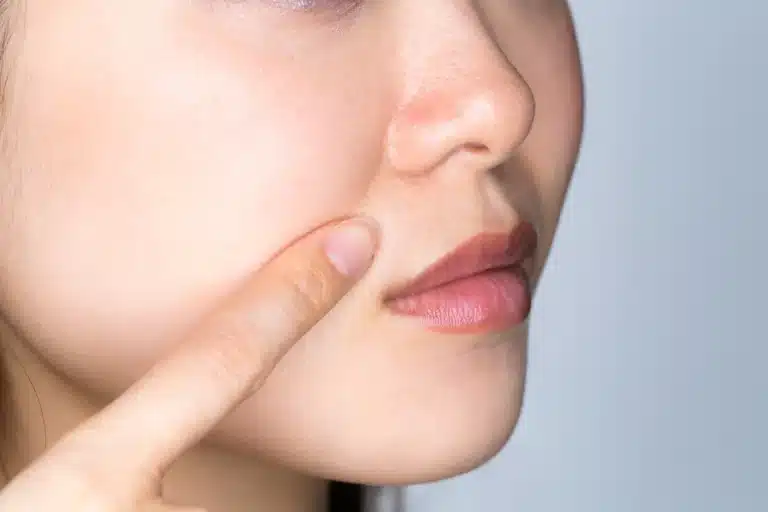
Even if smile lines are partly unavoidable, certain actions can help slow their appearance and soften their look. The first step is to preserve skin quality with suitable skincare. Well-hydrated, supple and elastic skin wrinkles less easily. Products containing hyaluronic acid or restructuring agents help maintain good hydration and strengthen the dermis, especially when the skin begins to thin.
Hydration is not limited to topical care ; internal hydration is also important. A regular intake of water supports skin balance, cellular functions and the skin’s ability to regenerate.
Sun protection is another essential element. UV radiation accelerates the degradation of collagen and elastin, weakens the skin and promotes the appearance of wrinkles around the mouth and eyes. Even on cloudy days, using sunscreen helps delay skin aging.
Maintaining a healthy lifestyle also helps preserve skin quality : avoiding smoking, limiting stress, getting restorative sleep and following an antioxidant-rich diet all contribute to wrinkle prevention.
Finally, certain gestures, such as massages or gentle facial mobility exercises, can improve blood circulation, stimulate skin tissues and help the skin recover after movements.
Smile lines are part of the natural aging of the face, but by strengthening skin quality and protecting cutaneous structures, it is possible to reduce their formation and delay their fixation.
À Genève, le tarif d’une injection d’acide hyaluronique pour les rides du sourire est de 600 CHF la seringue, celui d’un Skinbooster est de 400 CHF la seringue et celui d’un laser ablatif fractionné débute à 600 CHF la séance.
Smile lines appear in areas engaged with each expression : around the mouth, at the corners of the eyes or sometimes on the cheeks. They often follow a regular pattern and first deepen when you smile, before becoming visible at rest. Wrinkles caused by aging are more diffuse, linked to the overall loss of elasticity, and do not necessarily follow expression lines.
It is not smiling that creates wrinkles, but the repetition of movements on skin that loses elasticity over time. It is therefore not the expression itself that is responsible, but the skin’s ability to tighten again after a movement. The thinner, drier or more dehydrated the skin is, the more easily wrinkles form.
The depth of the nasolabial folds depends on several factors : facial structure, skin quality, genetics, loss of cheek volume and tissue sagging. Even in young people, thin skin or limited bone support can make these lines visible early.
Recent or very superficial wrinkles can fade if the skin is well-hydrated, dense and elastic. However, once they are fixed, they do not disappear spontaneously and require aesthetic or medical treatment.
A cream can improve skin quality, but it cannot correct an already deep wrinkle. It helps hydrate, strengthen the skin barrier and prevent worsening, but it does not replace medical treatments such as Skinboosters, hyaluronic acid or laser.
There is no single solution, because each wrinkle does not have the same origin. Volume loss is treated rather with hyaluronic acid, skin fragility with Skinboosters, dehydration with mesotherapy, and deep wrinkles with medium peel or ablative laser. The approach is often combined.
Facial massages do not correct an established wrinkle, but they can improve circulation, soften tissues and help the skin recover better after expressions. They are useful for prevention, but do not replace a medical treatment.
You cannot completely prevent the appearance of smile lines, because they are part of the natural aging of the face. However, you can significantly delay their formation and reduce their depth by preserving the quality of the skin : well-hydrated skin, protected from the sun and maintained with appropriate skincare or treatments, is more resistant.
There is no specific age. Treatment is initiated as soon as the wrinkles no longer disappear at rest or when the skin begins to lose density. Starting early often helps prevent the wrinkle from becoming permanent.