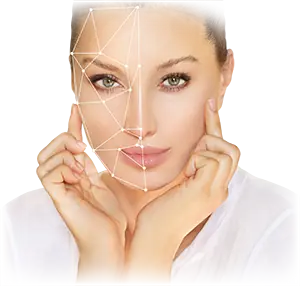
Why do I look worried?
Muscles, skin and deep structures interact to create a worried appearance.
- Muscular overactivity: muscles expressing concentration or worry contract increasingly, producing static wrinkles.
- Eye compensation: heavy upper eyelids trigger forehead contraction to open the eyes, causing horizontal forehead lines.
- Volume loss: ageing reduces volume, particularly lips and midface.
- Impaired quality: less toned, less luminous skin reflects light poorly and accentuates fatigue.

What gives a face a
worried appearance?
Characteristic signs mainly reflect muscular overactivity combined with volume and quality changes.
- Horizontal forehead lines reflect overuse of the frontalis, often compensating for heavy eyelids, creating concern and tension.
- Frown lines between the eyebrows directly create worry through repeated corrugator and procerus contractions.
- Under-eye circles and tear troughs.
- Thin lips: age-related volume loss makes expression more closed and less relaxed.
- Overall tension: widespread muscle tension creates a fixed, closed, constantly concerned expression.
How can a worried appearance be corrected effectively?
Correction requires a comprehensive approach, rebalancing the whole face rather than one wrinkle.
Treatment combines:
- Botulinum toxin injections.
- Hyaluronic acid injections.
- Skinbooster and Sculptra injections.
- Mesopeel sessions.
Botulinum toxin injections
Botulinum toxin is the reference for excessive contraction and tension.
It relaxes expression-line muscles, particularly frontalis for horizontal lines and corrugators for frown lines.
Eyes soften and concern diminishes while retaining natural expression.
Hyaluronic acid injections
Hyaluronic acid restores volume and corrects hollows responsible for worry. Particularly relevant for under-eye hollows and tear troughs, filling depressions reduces shadows and fatigue and brightens eyes.
It also restores moderate volume and harmonious shape to thinning lips, relaxing lower-face expression.
Precise, restrained treatment discreetly corrects responsible signs rather than transforming features.
Improving skin quality
Skin quality directly affects expression. Dull, dehydrated or uneven skin reflects light poorly and reinforces fatigue and worry.
Skinboosters deeply hydrate and improve texture for supple, brighter skin and softer features.
Sculptra progressively stimulates collagen to restore density and diffuse firmness naturally.
Mesopeel protocols even complexion, smooth texture and restore radiance, particularly in dull or uneven skin.
These complement injections by improving overall quality and directly helping correct worry.
In a study involving 391 participants with forehead and frown lines, botulinum toxin injections were compared with placebo. At thirty days, forehead lines had improved by at least two grades on the assessment scale in 61.4% of treated patients, compared with none in the placebo group. These results concern lines caused by upper-face muscle contractions, which can give a worried appearance.
In a study involving seventy patients, researchers assessed frown lines and distress associated with appearing tired, stressed or angry. Patients treated with botulinum toxin reported a greater improvement than those receiving placebo. These results concern how patients perceive their face. They do not demonstrate an effect on stress itself.
In a study involving 142 Japanese participants with frown lines, two botulinum toxin doses were compared with placebo. At four weeks, physicians observed an improvement meeting the study criteria in 86.4% and 88.6% of patients, depending on the dose received, compared with none in the placebo group. These results show a reduction in lines between the brows with the doses and protocol studied.
Frequently asked questions about a worried appearance
What is the best treatment for a worried appearance?
It depends on the face. Usually botulinum toxin relaxes muscles, combined with hyaluronic acid for under-eye hollows and lips.
Why do my under-eye hollows make me look worried?
Shadows under the eyes immediately create fatigue and concern, even when rested.
Can a worried appearance be corrected without surgery?
Yes, aesthetic treatments provide natural, progressive correction without surgery.
At what age can a worried appearance be treated?
Treatment depends on signs, from early wrinkles or fatigue, sometimes from 30.