Key points
Heart-shaped face in Geneva
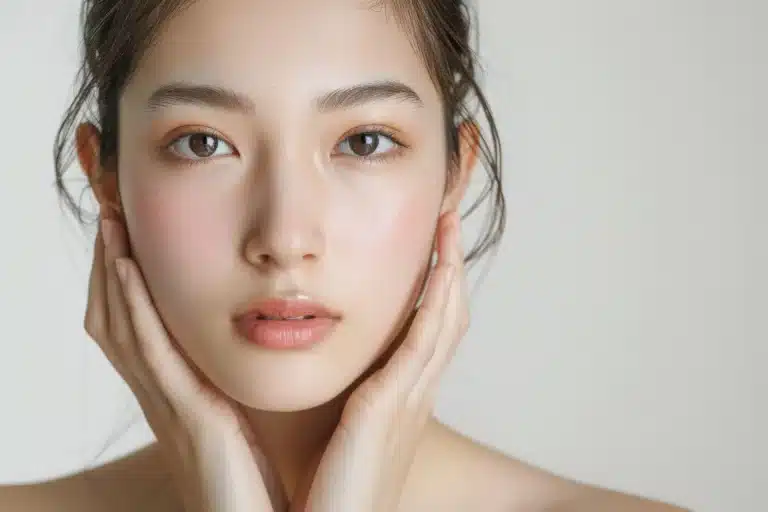
A heart-shaped face is a highly sought-after beauty standard, particularly in Asian aesthetic medicine. With soft features, a slim chin and well-defined cheekbones, this facial shape evokes gentleness, youth, elegance and harmony.
Non-invasive techniques such as hyaluronic acid injections, facial contouring, and lifting with injections now make it possible to sculpt and enhance the face to achieve this delicate structure. The result is natural and harmonious, preserving the distinctive features of the Asian face.
Why is a heart-shaped face prized in Asian cultures ?
In Asian countries, facial aesthetics are strongly influenced by cultural ideals. A heart-shaped face represents softness, femininity and balance. This beauty model is often promoted in media, fashion and cinema, reinforcing its appeal. Many people seek to refine their jaw and enhance their cheekbones for a younger, more sophisticated face.
The Asian face has unique characteristics that must be understood before aesthetic treatment.
• Cheekbones : cheekbones are often prominent and can be enhanced to give the face more curves.
• Chin and jaw : Asian patients have a squarer, more developed jaw, giving the face a more angular, less delicate appearance.
• Skin thickness : patients of Asian origin may have slightly thicker skin, influencing reshaping techniques and creating a less soft overall impression.
Understanding these differences allows aesthetic treatments to be adjusted to define the face and give it a heart shape that remains harmonious and respects these patients’ characteristic features.
How can I tell if I have a heart-shaped face ?
A heart-shaped face is first recognised from the front. Its widest area is at the forehead and temples, then it gradually narrows through the cheekbones to a slimmer, delicate chin, forming an inverted triangle. The side contours are not angular : they follow a gentle line curving slightly inwards, creating an overall impression of softness rather than pronounced angles.
To check whether your face resembles this shape, stand before a mirror and place your fingers successively on three areas : first the temples, then the outer cheekbones and finally the jaw. If width decreases progressively and the chin is the narrowest region, your face is probably heart-shaped. The same harmony appears in profile : the forehead curves smoothly towards the nose, the area below the cheekbones narrows gently, and the chin appears slimmer and often slightly recessed, reinforcing the heart-shaped impression.
Hyaluronic acid to define the jawline
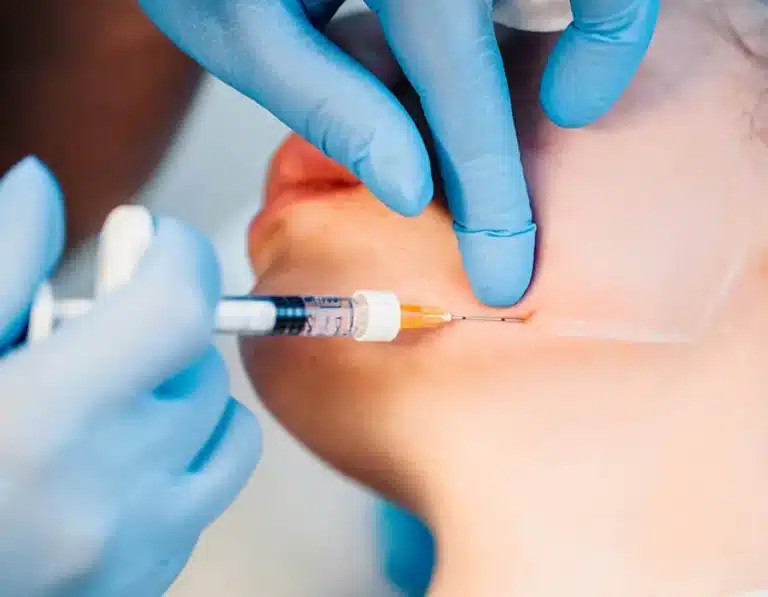
Hyaluronic acid injections redefine the jawline, adding structure and clarity to lower facial contours. The aim is to create an elegant, balanced line rather than heaviness, highlighting the chin while improving the transition between lower face and neck. Through personalised analysis and skilled injection, insufficient definition and asymmetry can be corrected while preserving a natural appearance perfectly suited to the patient’s facial structure.
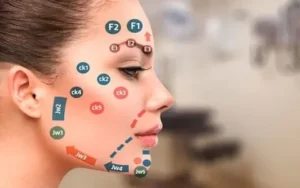
Jawline contouring and 7/9 points shape techniques are used.
Hyaluronic acid injections for a heart-shaped face
Hyaluronic acid injections are the cornerstone of treatment.
Through a comprehensive approach, the face naturally takes on a heart shape, with well-defined contours and harmonious results without the social downtime caused by surgical techniques.
Cheekbone volume can be subtly restored or added. Their gentle fullness naturally raises the upper facial third, creating a lifting effect that contributes to the heart shape. Structured in this way, the cheekbones play a key role in overall facial balance, although care must be taken to preserve a natural, harmonious face.
Non-surgical techniques to soften a pointed chin
In the chin, hyaluronic acid injections refine, project and lengthen it for a more pointed effect characteristic of a heart shape. Sculpting this area rebalances facial proportions, adding elegance without surgery.
Facial lifting with hyaluronic acid
Hyaluronic acid lifting, or “liquid facelift”, a variation of MD Codes, involves injecting small quantities of hyaluronic acid at strategic facial points to raise tissues. This method restores volume and also creates subtle contouring, refining features and redefining facial contours.
Abeille lift is another lifting technique suitable for certain facial types. An experienced doctor will choose the technique best suited to the patient’s anatomy.
Perfect skin
Several aesthetic medical treatments are particularly effective for enhancing the skin and providing radiance that harmoniously complements a heart-shaped face.
The PRX-T33 peel, a biorevitalising peel without visible exfoliation, increases skin density. By stimulating skin synthesis, it boosts radiance and firmness for a luminous, even complexion.
Hydrafacial
Hydrafacial is a procedure used to intensely hydrate and gently exfoliate the skin. It removes impurities, tightens pores and improves skin quality for smooth, radiant skin from the first session.
Retinol peel
The retinol peel, recognised for its anti-ageing effects, is ideal for reducing imperfections and smoothing superficial lines. By stimulating cell renewal, it gives the skin a younger, revitalised appearance.
Skinboosters
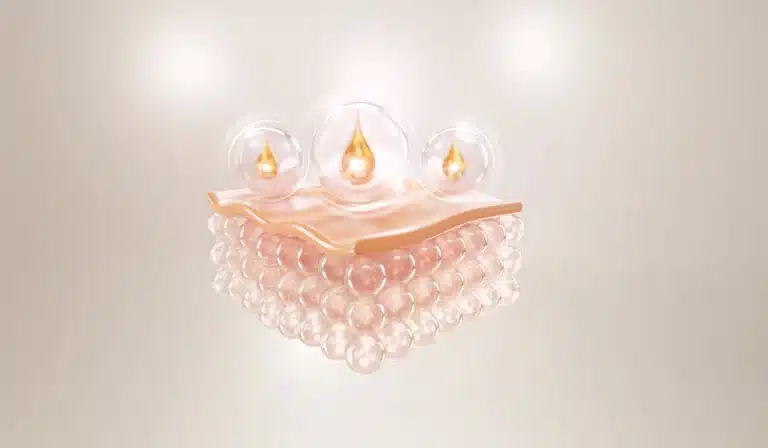
Skinboosters, injections of hyaluronic acid designed exclusively for the skin, hydrate the skin and improve elasticity. This treatment acts as a hydration reservoir, providing lasting radiance and a plump appearance.
Sculptra
Sculptra enhances Skinbooster effects, progressively and durably increasing skin density, boosting radiance and subtly restoring facial volume.
How does a heart-shaped face age ?
The way a heart-shaped face changes with age clearly illustrates the classical “ageing pyramid”, in which the youthful triangle, initially pointing downwards with full cheekbones and a slim chin, gradually inverts. Over time, the triangle’s base shifts towards the jawline while its tip moves towards the midface : volumes descend, contours blur and facial outlines become heavier and lose definition.
Anatomically, this results from several combined processes : deep fat pads supporting the midface shrink and move, the maxillary bone resorbs, the skin loses elasticity and thickness, and supporting ligaments loosen. From the forties, and more noticeably in the fifties, the area above the cheekbones that formed the centre of the heart shape loses volume and tone. With less support, the skin is drawn downwards, causing soft tissues to slide towards the lowest, narrowest area : the jawline.
Sagging tissues concentrate precisely along this jawline : jowls form, the lower facial third appears broader and squarer, and facial contours lose the delicacy and slenderness characteristic of the heart shape. The aesthetic contrast between high cheekbones and a slender chin diminishes, then disappears : the face looks heavier and less radiant, with an overall expression tending towards fatigue or severity.
In this context, aesthetic medicine aims precisely to counter the progressive inversion of the facial pyramid. The goal is not to freeze time but to restore the youthful triangle’s orientation as far as possible : support deep structures, recreate a more projected, harmonious midface, visually lighten the jawline and redefine a chin consistent with overall facial contours. In practice, all modern treatment strategies – whether volumetric or focused on skin quality – aim to correct tissue migration and restore a more open, dynamic and radiant face while respecting each face’s individual structure.
Why does a heart-shaped face photograph well ?
A heart-shaped face has inherently photogenic qualities linked to its harmonious volume arrangement. The subtly pronounced width of the forehead and cheekbones, combined with a slimmer, delicate chin, creates lines and curves that catch light particularly favourably. This architecture highlights the midface and naturally creates subtle shadows, reinforcing depth, structure and symmetry in photographs.
This facial structure also lends itself particularly well to beauty techniques. Highlight areas (forehead, nasal bridge, upper cheekbones, Cupid’s bow) and shadow areas (cheek contours, jawlines) are easily identified, allowing precise correction and enhancement through make-up. Highlighter and contouring naturally suit this facial type, partly explaining why heart-shaped faces are frequently chosen for beauty campaigns and professional photography.
Is a heart-shaped face the most beautiful ?
Neither aesthetic medicine nor psychology recognises an absolute “most beautiful facial shape”. Every facial structure has its own strengths, and beauty perception remains strongly influenced by culture, personal history and individual preferences.
However, a heart-shaped face is often perceived as particularly harmonious because it combines a more open, luminous upper third with a slimmer, delicate lower face. This balance creates a youthful, feminine appearance, with eyes enhanced by temple and cheekbone width while the narrower chin softens facial contours.
In terms of perception, slightly broader upper features combined with a less developed chin are spontaneously associated in many social psychology studies with faces considered more approachable, gentle or kind. This may partly explain why heart-shaped faces attract considerable attention in media and beauty campaigns without constituting a universal beauty standard.
What are the aesthetic characteristics of a heart-shaped face ?
A heart-shaped face has a broad forehead, high, prominent cheekbones and a slim, pointed chin. Its facial outline has a narrow base while the upper face is broader. This shape often creates a soft, elegant appearance.
Which areas should be harmonised to balance a heart-shaped face ?
To balance a heart-shaped face, the aim is to soften a pointed chin and reduce forehead width if necessary. Hyaluronic acid injections can round the chin, while temple filling or cheekbone refinement softens angles and creates overall harmony.
What are the advantages and disadvantages of a heart-shaped face ?
Advantages include naturally prominent cheekbones, often considered a sign of youth and elegance, and a delicate chin that slims the face. However, a heart-shaped face can sometimes look unbalanced if the chin is too pointed or the cheekbones too pronounced. Excess volume in the upper facial third may also accentuate this effect.
What beauty criteria are associated with a heart-shaped face in different cultures ?
In many Western and Asian cultures, a heart-shaped face is considered feminine and harmonious, symbolising gentleness and youth. High cheekbones and a slim chin are often regarded as aesthetic assets. However, some cultures prefer a more balanced face with a slightly rounded chin, highlighting the value of suitable aesthetic treatments to soften features.