Why does my face look tired even when I am not?
A tired face rarely has one cause. Small changes accumulate to alter expression.
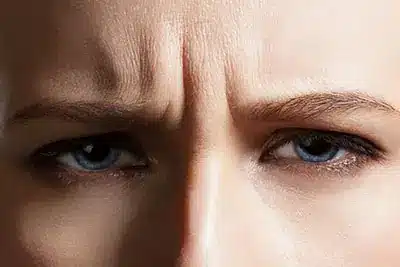
Skin becomes thinner and less luminous. Volume shifts, some areas hollow and others become heavier. Constant muscle activity eventually imprints expressions.
These combined mechanisms create tiredness.
Signs of a tired face
Signs mainly affect eyes and complexion radiance. Often reflecting insufficient rest, dehydration or lifestyle, they can disrupt overall harmony.
Common signs include:
- Marked under-eye circles and bags that darken the eyes.
- Dullness and lack of radiance.
- Drawn features suggesting fatigue or tension.
- More visible fine lines, particularly with dehydration.
- Puffy eyelids.

What causes a
tired face?
Anatomical, skin and muscular mechanisms create tiredness.
- Natural ageing: reduced collagen and elastin, thinning and reduced tone cause laxity and dullness.
- Volume loss: fat loss in cheekbones, temples and under-eyes creates hollows and shadows.
- Skin and ligament laxity.
- Muscular overactivity: repeated contraction causes frown lines, forehead lines and crow's feet.
- Quality changes: dullness, dehydration, reduced elasticity and uneven texture.
- Lifestyle: poor sleep, stress, smoking, sun and an unbalanced diet.
- Genetics: predisposition to under-eye circles, thin skin or early laxity.
Tired face: solutions
Restoring radiance requires comprehensive treatment of expression, volume, quality and eyes for a natural, harmonious result.
- Botulinum toxin (muscle relaxation, indicated for certain expression lines): relaxes muscles behind frown lines, forehead lines and crow's feet, softens features and opens the eyes.
- Hyaluronic acid (restoration and medical lifting): restores volume, raises sagging tissues with medical lifting and fills hollows, particularly under-eye hollows and tear troughs.
- Eye treatment: addressing under-eye hollows and early laxity substantially affects overall appearance.
- Skin quality: Skinboosters, mesotherapy, peels and lasers hydrate and restore radiance.
- Facial light correction: reduced shadows and improved reflection create a healthy glow.
- Combined approach: botulinum toxin, hyaluronic acid and skincare provide natural, balanced, lasting results.
How can I revitalise my face?
Medical treatments are effective but results also depend on suitable lifestyle.
- Quality sleep supports regeneration.
- Adequate hydration improves appearance and preserves elasticity.
- Balanced nutrition preserves quality and radiance.
- Daily sunscreen prevents ageing.
These prolong results and limit new fatigue signs.
When should I consult a doctor in Geneva about a tired face?
Consultation in Geneva is recommended from early fatigue signs. Tiredness, dullness, hollows or wrinkles are common reasons.
Medical diagnosis identifies volume loss, laxity, overactivity or quality changes for suitable, natural treatment.
Doctor choice matters: experience determines injection safety, diagnostic precision and result quality. The aim is rested, luminous, natural skin without transformation.
In a clinical trial of under-eye hollows, an improvement was observed at three months in 87.4% of patients treated with hyaluronic acid, compared with 17.7% in the control group. Patients also reported that their eyes looked less tired. These results concern correction of under-eye hollows and do not apply to every type of dark circle.
A review of fifty publications examines different causes of tired-looking eyes: under-eye hollows, pigmentation, visible blood vessels or skin laxity. Treatment depends on the cause identified. Injections can correct certain hollows, while other techniques can address skin or pigmentation spots. Medical examination is therefore essential to select an appropriate treatment.
In a study involving thirty people, non-cross-linked hyaluronic acid was injected into one half of the face and placebo into the other. After three sessions, measurements showed improvements in skin hydration, firmness and radiance on the hyaluronic acid-treated side. These results concern skin quality and may explain a brighter face, giving a less tired appearance.
Frequently asked questions about a tired appearance
Why do I look tired even after sleeping well?
Usually, causes include:
- under-eye hollowing
- cheekbone volume loss
- marked muscular expressions
- less luminous skin
These create shadows and change expression, suggesting fatigue even when rested.
At what age does the face start looking tired?
No fixed age. Some develop signs in their thirties, particularly under-eyes or expressions.
Factors include:
- genetics, lifestyle, sun exposure
- skin quality
Ageing is progressive, but certain areas show signs earlier.
Does botulinum toxin help a tired face?
Yes, it is among the most effective treatments for some causes.
It relaxes muscles behind negative frown, forehead and crow's-feet expressions.
Appropriate dosing creates a relaxed face and more open eyes without freezing.
How can I remove a tired appearance quickly?
The fastest aesthetic medical solutions are:
- botulinum toxin
- hyaluronic acid to correct hollows
- certain radiance-restoring skin treatments
Initial results may appear within days according to indication.
Can a tired face be treated without injections?
Yes, sometimes. Treatments such as:
- mesotherapy
- Skinboosters
- peels
- lasers
improve quality and radiance. However, hyaluronic acid injections often remain most effective for volume loss or laxity.
Does treating a tired face make you look younger?
Indirectly, yes.
Correcting fatigue creates a fresher, brighter, more dynamic face, often suggesting rejuvenation without changing features.
What is the best treatment for a tired face?
There is no standard treatment.
The most effective approach combines:
- botulinum toxin for certain expression lines
- hyaluronic acid for volume
- skin treatments for quality
Everything depends on the initial diagnosis.