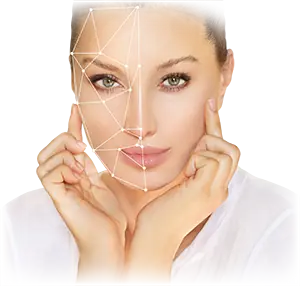
How does the chin influence the shape of the face ?
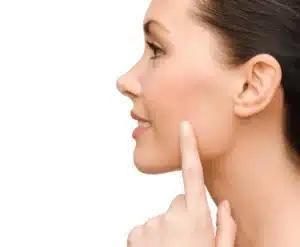
From the front, the width, height and symmetry of the chin contribute to the proportions of the lower third of the face. In profile, its projection contributes to the balance between the nose, lips and neck.
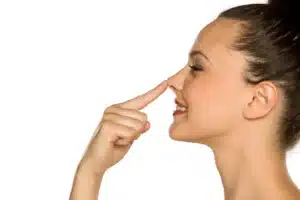
A recessed chin can give the impression of a more prominent nose. A wide chin visually broadens the lower third of the face, while a highly projected chin appears prominent in profile. The examination distinguishes what is due to bone structure, the position of the jaws or the tissues covering them.
There is no ideal chin shape for every face. Correction must respect each person’s own proportions and take the patient’s preferences into account, without seeking to reproduce a photographic model exactly.

Why does the chin change with age ?
With age, changes in bone, fat, muscles and skin gradually transform the lower third of the face. The chin can lose volume and definition, and the crease below the lower lip can deepen.
Jowls and neck laxity can also change its appearance, even when its bone structure has changed little. The examination distinguishes several causes :
- Volume loss : it can create hollows and justify filling.
- Contraction of the chin muscle : it can accentuate folds and give the skin a dimpled appearance.
- Skin laxity : it makes the facial contour less defined and may be accompanied by jowls.
Chin injections alone are not enough to correct it. - A fat deposit under the chin : it contributes to a double chin.
Treatment must therefore target the cause of the change, whether it concerns the chin itself, the facial contour or the neck.
What are the different chin concerns ?
Chin features may be congenital, appear with ageing or follow an injury. The most common are :
Receding or underdeveloped chin
The chin appears recessed when it projects little in relation to the lower lip and the rest of the profile. The term retrogenia is used when the retrusion concerns the chin. Retrognathia refers to retrusion of the lower jaw : the two situations must be distinguished.
A moderate lack of projection can sometimes be compensated for by adding volume. If the retrusion is accompanied by dental misalignment or difficulty chewing, an orthodontic or maxillofacial opinion is necessary.
Overly prominent or protruding chin
A chin may appear too far forward, too long or too wide. The examination must determine whether this impression comes from the bone, muscles, superficial tissues or facial proportions.
A filler adds volume : it does not reduce excess bone. When bone reduction or repositioning is necessary, correction requires a surgical assessment.
Asymmetrical chin
Asymmetry may involve the volume on each side, the tip of the chin or the position of the jaw. It may be congenital or develop after an injury or procedure.
A small difference in volume can sometimes be reduced medically. A significant bony deviation requires another approach. Recent or worsening asymmetry must be examined before considering aesthetic treatment.
Chin dimple
A chin dimple is a small depression in the centre of the chin, which may take the form of a rounded hollow or a short vertical cleft. It must not be confused with the labiomental crease, the horizontal fold below the lower lip.
A hyaluronic acid injection can soften the dimple by filling the depression. The result depends on its depth and the structure of the tissues. If muscle action contributes to the hollow, filling alone may be insufficient. The examination determines how to soften a chin dimple and what the limitations of correction are.
Uneven skin or an orange-peel appearance
An orange-peel appearance may develop when the chin muscle contracts. It must be distinguished from blackheads, microcysts or visible pores, which concern the skin itself.
An injection of Skinbooster-type hyaluronic acid improves these irregularities.
How is the chin assessed ?
Dr Romano examines the face from the front, in profile and at a three-quarter angle, at rest and then during movements of the lips and chin. She assesses the shape of the chin, its proportions and its role in balancing the lower third of the face.
The examination assesses :
- Chin projection : its position further forward or back in profile.
- Its height, width and symmetry.
- Its proportions in relation to the nose and lips.
- The depth of the labiomental crease, situated between the lower lip and chin.
- Skin thickness, the distribution of volume and any jowls or double chin.
- Lip closure and dental occlusion, meaning the contact between the upper and lower teeth when the mouth is closed.
You explain the changes you would like. Photographs taken from several angles document the shape of the chin and help discuss the possible corrections.
This assessment determines whether aesthetic treatment is suitable or whether a specialist assessment is necessary.

How can the shape of the chin be changed without surgery ?
Medical genioplasty changes the shape and projection of the chin through injections, without surgery. Other treatments can improve chin skin affected by fine lines, irregularities or laxity. The choice depends on the concern to be corrected : volume and skin quality require different approaches.
Hyaluronic acid injections in the chin
Hyaluronic acid injections can bring a recessed chin forward, change its proportions, reduce certain asymmetries or fill hollows. Correction aims to harmonise the lower third of the face and balance the profile. It relies on adding volume, without changing the bone or the position of the jaws.
The procedure, results, after-effects and prices are described on the page about hyaluronic acid chin injections.
Skinboosters to smooth the skin of the chin
Skinboosters can improve hydration and reduce certain fine lines or superficial irregularities of the chin. They aim to make the skin smoother and more supple, without changing chin projection.
However, these irregularities must be distinguished from a true orange-peel appearance caused by contraction of the chin muscle. Skinboosters do not act on this contraction and therefore cannot, on their own, correct muscle-related dimpling.
Treatments for skin imperfections and laxity
Blocked pores, acne scars and laxity require targeted treatments. Depending on the examination, skincare, a peel or a laser may be offered to improve the skin surface. Laxity is assessed separately to determine the treatment suited to its severity; a medical lifting technique is most often offered.

When should a surgical or maxillofacial opinion be sought ?
A specialist opinion is necessary when the desired correction involves bone structure or is accompanied by functional difficulty. This is particularly the case when there is :
- A significant discrepancy between the jaws or poor contact between the upper and lower teeth.
- Difficulty closing the lips without effort.
- Difficulty chewing.
- Marked bony asymmetry.
- A wish to reduce chin projection, width or height.
Surgical genioplasty changes the shape or position of the chin bone. When the problem concerns the position of the jaws and how the teeth fit together, jaw surgery may be considered, sometimes combined with orthodontic treatment.
Injections add volume, but do not correct a jaw discrepancy or a dental occlusion problem.
Are an underprojected chin and a double chin the same thing ?
No. An underprojected chin is a chin positioned further back, whereas a double chin corresponds to fullness under the chin. This may be related to a fat deposit, skin laxity, a recessed chin or several associated factors. A recessed chin makes it more visible in all cases.
When a lack of projection contributes to a double chin, hyaluronic acid injections can improve the profile and better define the chin in relation to the neck. However, they do not remove fat or correct significant skin laxity.
If a fat deposit is also present, a targeted treatment, such as cryolipolysis when appropriately indicated, may be considered as a complement. This combination is not systematic : it depends on the cause of the double chin and the condition of the skin.
The page about a double chin explains the causes and possible treatments.
What is the price of chin correction in Geneva ?
The price of a chin injection will mainly depend on the type of product used (particularly its firmness and degree of cross-linking) and the amount needed to achieve the desired result. In general, the cost of a chin injection in Geneva is 600 CHF per syringe, with an average of 1 to 4 syringes used depending on the desired level of correction and definition and the patient’s anatomy.
The total cost of medical genioplasty through injections is therefore determined after a precise assessment during the consultation, according to the aesthetic goals and the patient’s anatomical characteristics.
In one study, profile photographs were altered to vary chin projection. Patients, practitioners and people without medical training assessed these images. Profiles with a very recessed or very prominent chin were judged less attractive. These results show that chin projection influences perception of the profile. They concern altered images, not treatment outcomes.
A study compared three-dimensional jaw scans in 120 adults divided into three age groups. In older people, certain bone dimensions were reduced and the jaw angle was more open. These observations show that ageing of the lower third of the face does not involve skin alone : bone changes also contribute.
In a study involving 65 patients with lower jaw asymmetry, researchers analysed three-dimensional images. Chin deviation was associated with differences in the dimensions of several parts of the jaw. These results highlight the importance of examining the whole mandible when a chin is asymmetrical. A deviation does not always correspond to a simple lack of volume on one side of the chin.
Frequently asked questions
How can the chin be rejuvenated ?
- Use aesthetic medical treatments to reduce wrinkles and fine lines on the chin.
- Use aesthetic medical techniques to treat loss of chin volume or firmness.
- Assess the need for non-surgical lifting techniques to reshape and rejuvenate the chin.
- Adopt a skincare routine.
At what age can chin injections be performed ?
From age 18, subject to a medical assessment and an appropriate aesthetic indication.
Does a receding chin always need treatment ?
No. A chin shape can be a natural feature without functional consequences. Aesthetic treatment can be discussed if the shape bothers you and a correction would be beneficial. However, difficulty closing the mouth or chewing requires an assessment.
Should the nose and chin be treated at the same time ?
Not systematically. Profile examination considers both, but chin correction alone may be enough to change their proportions. Profile enhancement involves studying these relationships before choosing the areas to treat.
Is the desired shape different for men and women ?
Some people want a wider, more angular chin; others prefer a finer shape. The choice depends on each person’s anatomy and preferences. Sex alone is not enough to define the correction.
Can exercises change the shape of the chin ?
Exercises do not move the chin bone or correct a jaw abnormality. They therefore do not replace the examination needed to understand retrusion, deviation or excess projection.
Further reading
How to tell whether your chin warrants aesthetic correction
Understand the factors assessed before treatment is proposed.
The difference between medical genioplasty and chin surgery
Distinguish added volume from changes to the bone.
The relationship between the chin and the appearance of the jaw
Understand what chin correction can change in the contour of the lower third of the face.