
The décolletage is a particularly delicate area where the skin is thin, poorly protected and has few sebaceous glands. Unlike facial skin, it produces less collagen, elastin and hyaluronic acid, making it more vulnerable to dryness, laxity and the early appearance of wrinkles. The décolletage is also heavily exposed to external stressors, particularly the sun, pollution and friction from clothing. These factors accelerate skin ageing and gradually damage the dermal structure. Over time, the skin loses elasticity, density and radiance, and vertical or fan-shaped wrinkles develop, sometimes alongside uneven pigmentation. Décolletage rejuvenation techniques aim to correct these visible signs of ageing and restore the skin's biological quality.


Why does décolletage skin age faster than facial skin ?
Décolletage skin has anatomical characteristics that make it particularly vulnerable to ageing. Thinner and less dense than facial skin, it naturally contains fewer supporting fibres, particularly collagen, elastin and hyaluronic acid. Its more limited blood supply also reduces its ability to regenerate effectively, slowing cell repair and increasing the loss of firmness.
This area is also highly exposed to ultraviolet rays, especially UVA, which penetrate deep into the dermis. They gradually degrade collagen fibres and promote free radical production, causing oxidative stress. The result : skin laxity, wrinkles and pigmentation.
After 50, hormonal changes make matters worse : the skin becomes drier, loses elasticity and is less resistant to external stressors. Finally, sleeping on the side or stomach repeatedly creates mechanical creases that eventually become permanently imprinted in the skin.
Décolletage ageing is therefore not solely age-related, but results from a combination of hormonal, mechanical and environmental factors to which this fragile area is particularly sensitive.
Signs of décolletage ageing
Décolletage ageing is marked by several signs of gradually declining skin quality. In its early stages, fine lines and vertical wrinkles develop because of lost elasticity and repeated movements (particularly side sleeping). The thinner, less hydrated skin in this area can quickly appear crumpled or crepey, especially upon waking.
Over time, these changes become more established. Wrinkles become permanent and deeper, reflecting a substantial reduction in collagen and hyaluronic acid. The skin loses firmness, becoming drier, less plump and less even.
Photoageing — skin damage caused by sun exposure — intensifies these changes. It causes brown spots, diffuse redness, small visible veins or telangiectasias, and a dull, uneven complexion. The skin becomes fragile, rougher, less supple and more sensitive to external stressors.
Recognising these signs as soon as they appear is essential : the earlier the intervention, the more natural, lasting and harmonious the results of treatments (topical, aesthetic or preventive).
Aims of décolletage rejuvenation
Décolletage rejuvenation techniques do more than reduce visible wrinkles : they aim to restore the skin's essential biological functions. The main goal is to strengthen the dermal structure, stimulate natural collagen and elastin production, and improve skin hydration and quality.
According to individual needs, treatments target several aspects : correcting folds and fine lines, improving skin firmness and density, reducing pigmentation and evening out skin tone. The intended result is smoother, more radiant skin, strengthened from within and more resistant to the effects of time — while maintaining a natural, harmonious appearance.
Restoring an attractive décolletage with aesthetic medicine techniques
The décolletage is a fragile area that often shows early signs of ageing and requires tailored care. Several aesthetic medicine treatments may be offered individually or in combination, depending on skin quality, tissue condition and the desired goals. No two people's skin ages alike, and individual differences are particularly visible on the décolletage. Some patients mainly have dehydration-related fine lines, while others have deeper wrinkles, pigmentation problems or skin laxity. A detailed clinical assessment examines skin quality, wrinkle depth, skin density, elasticity, past sun exposure and even sleeping habits. This analysis guides a personalised, often combined treatment plan that addresses several factors simultaneously : quality, radiance, hydration, density and firmness.
The décolletage should not be treated in isolation. It is part of an aesthetic whole that includes the face and neck. If only the face is corrected, the décolletage may appear more aged, crumpled or lax, creating an unattractive contrast. A comprehensive approach maintains visual balance while respecting the characteristics of each area.
Hyaluronic acid : an ally in décolletage rejuvenation
Hyaluronic acid plays an essential role in décolletage rejuvenation by deeply hydrating the skin, improving suppleness and reducing the crumpled appearance characteristic of this delicate area. Naturally present in skin tissue, its levels gradually decline with age, leading to chronic dehydration, loss of elasticity and increasingly pronounced vertical wrinkles.
Targeted injections of a lightly crosslinked formulation suited to thin décolletage skin restore its ability to retain water, smooth irregularities and visibly improve skin quality without adding volume. Hyaluronic acid also acts as a cellular stimulator by reactivating fibroblasts, promoting natural collagen production and helping improve the skin's intrinsic quality.
This treatment gives natural, harmonious and lasting results and can be combined with other techniques to optimise décolletage rejuvenation care.
Skinboosters for the décolletage
Skinboosters are particularly indicated for the décolletage because they restore deep hydration, improve skin suppleness and smooth irregularities without changing volume. Formulated with lightly crosslinked hyaluronic acid, they strengthen the dermal matrix, stimulate natural collagen synthesis and improve water retention.
They are recommended for skin that looks dry, crepey, crumpled or dull. The injections provide lasting hydration and make the skin smoother, more radiant and visibly healthier. Results remain subtle and natural.
Regenerative mesotherapy for the décolletage
Aesthetic mesotherapy is a useful option for revitalising the décolletage when ageing is early or moderate. It involves superficial injections of a personalised cocktail of non-crosslinked hyaluronic acid, vitamins, minerals, amino acids and antioxidants. This mixture stimulates microcirculation, supports fibroblast activity and helps restore a healthier skin environment.
By improving hydration, radiance and skin quality, mesotherapy provides regenerative care ideal for preventing deterioration and maintaining décolletage skin quality.
Collagen stimulators to increase décolletage skin density
Collagen stimulators, such as calcium hydroxyapatite or polylactic acid, aim to stimulate natural collagen and elastin production in the dermis. Unlike fillers, they do not fill wrinkles but act in depth to regenerate the skin from within, restructure dermal tissue and improve firmness.
This approach is particularly suited to décolletages with lost skin density, laxity or thin, fragile skin. Results develop gradually, with a visible long-term improvement in skin quality, support and overall condition.
Radiofrequency to tone and firm the décolletage
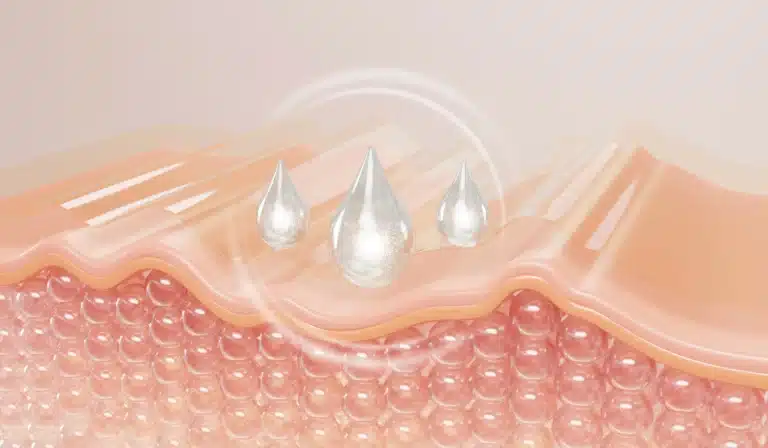
Radiofrequency uses controlled thermal energy to heat the deeper skin layers and stimulate collagen and elastin production. It improves tone, increases tissue density and effectively treats moderate décolletage skin laxity.
This painless treatment requires no social downtime and particularly suits patients seeking gradual tightening. Sessions provide progressive, natural firming, leaving skin firmer, smoother and better structured.
Radiofrequency can be used alone or as part of a combined protocol, particularly with collagen stimulators or Skinboosters.
Laser photorejuvenation to even out décolletage skin
Laser photorejuvenation is particularly suited to early signs of skin ageing, such as dullness, diffuse redness, sun spots or uneven pigmentation. It acts at the surface, improves skin quality and gently stimulates cellular activity.
This treatment is recommended when décolletage skin is not very lax but shows visible signs of photoageing.
Fractional ablative laser to remodel the décolletage
Fractional ablative laser is particularly indicated for décolletages with pronounced wrinkles, a crumpled appearance or impaired skin quality. By creating microscopic regeneration zones, it intensely stimulates collagen production and promotes deep skin remodelling.
This treatment improves firmness, smooths irregularities and restarts the tissues' natural repair mechanisms. Its targeted, gradual action restructures the skin, reduces visible signs of ageing and provides lasting results.
Peels to improve décolletage skin
A peel helps remove dead cells, refine skin texture and improve the evenness of the décolletage. Acting on the superficial layers of the epidermis, it reduces fine lines, pigmentation and uneven skin tone.
By stimulating cell renewal, it restores a smoother, brighter and visibly more even appearance. Peels can be used as maintenance to preserve skin quality or alongside another treatment to enhance its results.
Laser peeling for targeted exfoliation of the décolletage
Laser peeling offers a more precise, controlled alternative to chemical peeling. It exfoliates the skin using light energy while gently stimulating collagen production. This technique is particularly suited to décolletages with fine lines, sun spots or uneven texture.
By smoothing the skin surface and evening out the complexion, laser peeling provides a more harmonious, natural and lasting result. It also helps gradually improve overall skin quality over the long term.
What precautions help prevent décolletage wrinkles ?
To keep skin supple and smooth and preserve a youthful décolletage, a few simple habits can help :
- Protect the skin from the sun : when temperatures rise and clothing becomes lighter, cover the décolletage or regularly apply high-factor sun protection. The thin, fragile skin in this area is particularly sensitive to photoageing.
- Choose a healthy lifestyle : eat a balanced diet rich in fruit and vegetables, get enough sleep and take gentle, regular exercise. Reduce stress, limit sugary foods, avoid smoking and include antioxidants to combat skin ageing.
- Correct your posture : keep your back straight and your shoulders slightly back to open the chest. When using a screen, avoid leaning forwards and position it at eye level. Take the same care with your phone : avoid lowering your head to limit the appearance of “smartphone wrinkles”.
- Sleep in the right position : side sleeping creates creases and tension across the chest, encouraging asymmetrical décolletage wrinkles. Prefer sleeping on your back to limit these wrinkles.
- Provide adequate breast support : without proper support, the weight of the breasts places tension on décolletage skin. Choosing underwear suited to your body shape is essential from a young age. Extra support during sport is vital to protect the skin.
How can décolletage skin be smoothed and firmed ?
From a certain age, décolletage skin can lose elasticity. To help keep it smooth, supple and toned, follow this simple routine :
- Exfoliate gently occasionally to remove dead cells and promote skin regeneration. This also improves the penetration of skincare products.
- Wash your neck and décolletage with a gentle cleanser without rubbing, then pat the skin dry to avoid irritation.
- Apply a plant oil suited to your skin type with gentle circular massage movements to nourish, soften and help smooth fine lines.
- Massage your décolletage with a natural stone tool using slow, upward movements to stimulate circulation, firm the skin and encourage collagen production.
- Finish with a hydrating, plumping cream containing active ingredients such as vitamins, plant oils or moisturising agents to maintain suppleness and firmness.
A review examines treatments for décolletage wrinkles, laxity, pigmentation spots, redness and uneven skin associated with sun exposure. It explains when to propose injections, a peel or laser treatment. Treatment should be selected according to the problem to correct and tailored to the thin skin of this region.
A multicentre randomised trial involving 192 participants assessed an injectable hyaluronic acid gel for décolletage wrinkles. At twelve weeks, 73.6% of treated patients showed improved wrinkle scores, compared with 18.8% of controls. Assessments remained favourable for up to thirty-two weeks. These results concern the product and protocol studied.
A study compared two décolletage treatments: intense pulsed light and a fractional thulium laser combined with other targeted lasers. Both protocols improved the signs assessed: wrinkles, skin irregularities, pigmentation spots and small visible blood vessels. These results help select treatment according to the signs present, without establishing that the same technique suits every patient.
What are the first signs of décolletage ageing ?
The first signs are : thinner, less elastic and slightly crumpled skin. Fine lines appear in the morning or after a prolonged sleeping position, followed by vertical or fan-shaped wrinkles that gradually become permanent.
What is the best treatment to rejuvenate the décolletage ?
There is no single treatment. The choice depends on the condition of the skin, wrinkle depth and degree of laxity. Skinboosters, mesotherapy, collagen stimulators, radiofrequency and lasers can be used alone or in combination.
Is hyaluronic acid suitable for treating the décolletage ? How does radiofrequency work for neck rejuvenation ?
Yes, using lightly crosslinked hyaluronic acid formulations suited to the thin skin in this area. They improve skin quality, deeply rehydrate and reduce superficial wrinkles without adding volume.
How many sessions are needed for décolletage rejuvenation ?
This depends on the chosen treatment. Generally, three to four mesotherapy sessions, one to two sessions for certain lasers, Skinboosters or collagen stimulators, followed by annual maintenance tailored to the skin.
Are results visible quickly ?
Results from hydrating treatments are visible within the first few weeks. Stimulating techniques such as collagen stimulators or laser provide gradual results that continue to improve in the months following the session.
Are décolletage treatments painful ?
Treatments are generally well tolerated. Some may cause a mild sensation of heat or tingling. If necessary, an anaesthetic cream can be applied for optimal comfort.
Should social downtime be expected after treatment ?
Most treatments involve no social downtime, particularly mesotherapy, radiofrequency and Skinboosters. Fractional lasers may sometimes require a few days of recovery, depending on the intensity used.
How can treatment results be maintained ?
Maintenance involves good daily hydration, regular sun protection and maintenance sessions once or twice a year, depending on the method used. Gentle stimulating or hydrating treatments can prolong the benefits.
Can the face, neck and décolletage be treated together ?
Yes, treating all three areas is often recommended to maintain visual harmony.