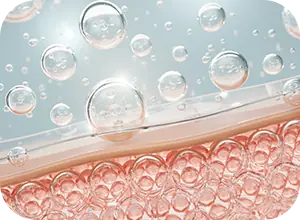
Hyaluronic acid is now one of the most widely used products in aesthetic-oriented medicine. This treatment, widely performed and very well tolerated, makes it possible to enhance and rejuvenate without surgery.
But although this product has now become widely democratized, the multiplication of injections, sometimes performed outside a medical setting, also raises questions : is hyaluronic acid really safe ? Can there be side effects ? Are there risks associated with repeated injections ?
When injected under the right conditions, by an experienced physician, using a certified product, hyaluronic acid is a reliable, safe, and very well tolerated treatment. However, outside of this rigorous framework, the risks increase considerably.
Why is hyaluronic acid so well tolerated ?
Hyaluronic acid is a molecule naturally present in our body, particularly in the skin, joints, and eyes. It acts like a biological sponge, capable of retaining up to 1,000 times its weight in water, thereby ensuring deep tissue hydration and maintaining tissue elasticity.
Injectable hyaluronic acids used in aesthetic-oriented medicine are non-animal in origin, purified, and designed according to strictly regulated processes. Their structure is similar to the one naturally found in the body, which explains their excellent tolerance profile.
It has been used for more than 20 years in medicine, including rheumatology, ophthalmology, dermatology, and aesthetic medicine, with an excellent safety profile.
Is hyaluronic acid toxic ?
Hyaluronic acid is not a toxic product, but its injection must always be carried out with absolute medical rigor. By nature, any product injected into the body can provoke a reaction, but hyaluronic acid has a very low complication rate compared with other filling substances.
It is neither a permanent foreign body nor a dangerous product. It is progressively degraded by the body without leaving traces or altering tissue structure in the long term.
The risks therefore do not come from the product itself, but from the way it is injected. An unsuitable choice of hyaluronic acid type, an injection that is too superficial or too deep, an excessively large injected dose, or a poorly executed procedure may lead to undesirable effects.
This is why complications may occur even with a high-quality product, which highlights the importance of entrusting the treatment to an experienced physician.
What are the possible side effects after an injection ?
Mild side effects are common after a hyaluronic acid injection, particularly during the hours following the treatment. They reflect a normal skin reaction to the micro-perforation and to the presence of the injected product. Among the most frequent manifestations are :
- Localized redness at the injection sites.
- A temporary sensation of warmth or tightness in the treated area.
- Small bruises, especially on thin or sensitive skin.
- Mild to moderate swelling, which resolves naturally.
These reactions are temporary and disappear spontaneously within 24 to 72 hours. They do not present any danger and are part of the normal after-effects of a medical procedure. To promote recovery, it is recommended to avoid heat (sauna, steam room, intense physical activity), sun exposure, and alcohol consumption within the 24 hours following the session. Proper hydration and the application of a soothing cream also help accelerate the disappearance of these effects.
Complications rares, mais possibles des injections d'acide hyaluronique
More rarely, certain adverse effects may occur after a hyaluronic acid injection. It is important to be aware of them, not to worry about them, but in order to react quickly if they occur.
Nodules or irregularities under the skin may appear when the gel is poorly distributed, injected too superficially, or placed in a low-mobility area. These small lumps are most often temporary and resolve spontaneously.
The Tyndall effect corresponds to the appearance of a bluish reflection when hyaluronic acid is injected too close to the skin surface, particularly in the under-eye area. This phenomenon is not dangerous, but reflects an injection that is too superficial or a product unsuited to the area.
Inflammatory or granulomatous reactions, which are very rare, are linked to individual sensitivity or a delayed immune response.
Finally, the most serious complication, although extremely rare, is vascular occlusion. It occurs when the product is accidentally injected into a blood vessel, causing a local interruption of circulation. This possibility highlights the importance of entrusting this type of procedure to an experienced physician trained in safe injection practices and in the mastery of vascular anatomy.
Are there any contraindications to hyaluronic acid injections ?
Certain situations require postponing or avoiding an injection :
- Active skin infection (herpes, abscess, dermatitis) in the area to be injected.
- Pregnancy and breastfeeding (as a precautionary principle).
- Autoimmune diseases.
- Known allergy to one of the components, particularly lidocaine.
- Anticoagulant treatment (relative contraindication).
- Hepatitis C.
A serious physician always carries out a preliminary consultation to ensure the absence of contraindications and establish a personalized diagnosis.
The dangers of injections not performed by a physician
The real danger of hyaluronic acid does not come from the product itself, but from its trivialization. More and more patients are buying products online or turning to low-cost injections performed by non-physicians.
Illegal offers are now being seen on social media, as well as at-home injections carried out outside any hygienic or aseptic framework.
This type of practice exposes patients to counterfeit products, sometimes dangerous or even non-resorbable, injected by individuals who are neither trained nor authorized to perform injections. The consequences can be serious : infections, necrosis, irreversible asymmetries, or even ocular complications (blindness).
Only a qualified physician, trained in facial anatomy and complication management, can guarantee a safe procedure in a properly regulated medical environment.
In Switzerland, only physicians and nurses working under direct medical supervision are authorized to inject hyaluronic acid.
A safe medical procedure begins with choosing the right practitioner.
Hyaluronic acid : a safe treatment
Hyaluronic acid is not a dangerous treatment. This biocompatible and resorbable product is very well tolerated when used within a strict medical framework. As with any medical procedure, the safety and quality of the result depend on several factors : a proper indication, a mastered injection technique, the choice of the appropriate product for each area, a precise aesthetic diagnosis, and rigorous follow-up after the session.
In expert hands, hyaluronic acid is a reliable and precise tool, capable of enhancing without transforming. However, when used without skill or discernment, it may lead to undesirable effects. Safety therefore does not depend on the product itself, but on the expertise and experience of the physician performing the treatment.