How does
laser photorejuvenation work ?
Laser photorejuvenation uses light energy to penetrate deep into the skin.
The heat generated as light passes through accelerates collagen production and promotes cell renewal.
The aim is to stimulate the skin deeply without altering the surface. Patients benefit from rejuvenation without social downtime : there is no redness or peeling after treatment.
However, with the patient's agreement, Dr Romano may use fairly high settings that cause intense redness lasting two days.

Who is laser photorejuvenation suitable for ?
Laser photorejuvenation is indicated for patients wishing to treat signs of skin ageing. It is an anti-ageing treatment without social downtime.
This method is particularly effective for :
• Firming the skin.
• Reducing wrinkles and fine lines.
• Treating pigmentation spots and sun-related skin damage.
• Improving skin quality and evening the complexion.
Any body area can be treated, but treatment is most often performed on the face, neck, décolletage and hands.
Which laser is most effective for
laser photorejuvenation ?
Non-ablative erbium laser is considered the most effective for photorejuvenation. Compared with other lasers or technologies such as IPL, radiofrequency or NdYag laser, erbium laser acts more deeply and intensely to stimulate collagen production. It provides lasting results, with visible improvement in skin quality after just one session.
Differences between erbium laser and other lasers
Although several types of laser can be used for photorejuvenation, non-ablative erbium laser stands out for its effectiveness. Other technologies, including NdYag laser, Erbium Glass, radiofrequency and IPL, also stimulate the skin, but their effects are often less pronounced and less lasting.
Comparison with NdYag laser : NdYag laser is often used for vascular concerns or pore tightening. However, its results in stimulating collagen synthesis are less substantial. NdYag laser acts less deeply; the light beam stops more superficially.
Comparison with IPL : IPL (intense pulsed light) is another photorejuvenation method, but mainly acts on the skin surface. Although effective for pigmentation spots and complexion radiance, its effects on firmness and skin quality are mild.
Contraindications to
laser photorejuvenation

Although laser photorejuvenation is non-invasive and safe, certain conditions may prevent treatment.
• Epilepsy : laser light could trigger a seizure.
• Skin conditions in the treatment area : inflammatory or infectious lesions.
• Pregnancy : as a precaution.
• Very sensitive skin or skin prone to severe reactions.
• Photosensitising medication : some medicines make skin more sensitive to light, increasing the risk of burns.
• A history of keloid or hypertrophic scars.
• Autoimmune diseases affecting skin or compromising healing.
• Recent sun exposure : tanned skin carries a high burn risk.
• A history of cancer in the treatment area.
• Skin exfoliation during the three weeks before treatment : chemical exfoliation (peels, retinol creams, fruit acids or topical acne treatments) or mechanical exfoliation.
• Conditions causing healing disorders, such as diabetes.
What happens during a
laser photorejuvenation
A laser photorejuvenation session is preceded by an initial consultation to define the treatment areas and expected results and select laser settings best suited to the patient's skin type and needs.
Treatment generally begins with gentle cleansing to remove impurities and ensure safe, effective penetration of the light beam.
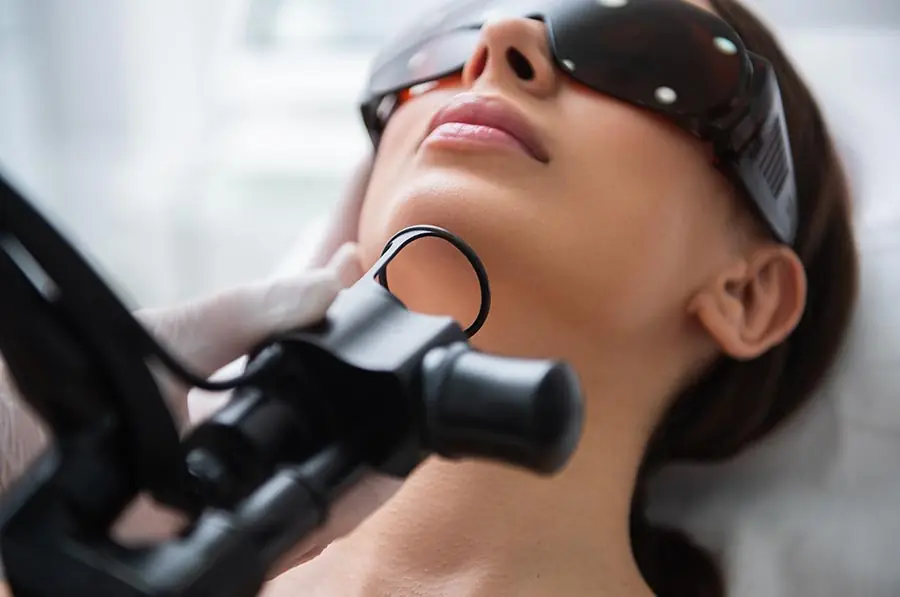
Once the eyes are protected with goggles, the session begins. The laser beam is swept over the entire treatment surface. The session is painless but slightly uncomfortable because the patient feels heat.
Treatment lasts around ten minutes, depending on the surface treated. Daily activities can be resumed immediately afterwards.
What should you do before
a session of
laser photorejuvenation work ?
Certain precautions are needed before photorejuvenation.
Avoid sun exposure (or tanning beds) during the 3 weeks before the session, as the skin must not be tanned to avoid burns or loss of pigmentation.
Stop retinoid-based products or exfoliating acids a few days before treatment to avoid sensitising the skin.
Finally, tell your doctor about all current medication, as it may include photosensitising substances.
Instructions to follow after
laser photorejuvenation
After laser photorejuvenation, follow instructions to protect the skin and prevent complications. Avoid all direct sun exposure for at least 2 weeks and use high-protection sunscreen (SPF 50+). Hydrate the skin intensively with gentle, non-irritating products to promote healing. In the following days, avoid saunas, hot baths and activities causing excessive sweating, which could irritate the skin. Avoid harsh products (chemical exfoliants, retinol and acne creams) during the three weeks after treatment.
How many sessions are
needed ?
The number of sessions depends on the initial skin condition and desired results. Generally, 2 to 3 sessions spaced 6 weeks apart are recommended for visible, lasting results. However, improvement in skin quality and firmness is visible from the first session, with optimal results 3 months after each session.
What are the advantages of
laser photorejuvenation work ?
• Lasting results : stimulation of collagen synthesis ensures results that endure over time.
• No social downtime : treatment is non-invasive, allowing an immediate return to daily activities without visible embarrassment.
• Gradual improvement : results improve over time because skin synthesis is gradual. Optimal results are achieved three months after the session.
What are the results of photorejuvenation ?
Photorejuvenation gives visible results while remaining gentle.
It improves skin elasticity by stimulating collagen production, helping reduce signs of laxity. Laser-induced dermal densification also reduces superficial wrinkles and fine lines, giving skin a smoother, younger appearance. Treatment also addresses pigmentation spots and discolouration, evening the complexion and increasing radiance. Finally, new collagen synthesis makes skin firmer and denser and visibly improves its quality.
How much does laser photorejuvenation cost in Geneva ?
Laser photorejuvenation in Geneva costs approximately 500 CHF per session. This corresponds to treatment performed by a doctor with latest-generation equipment to improve overall skin quality and reduce fine lines and irregularities. The cost may vary with laser type, the number of sessions required or specific needs identified during consultation.
A personalised quotation is always provided at the initial consultation.
The price reflects equipment quality, the safety of a medical setting and the doctor's expertise.
Frequently asked questions about laser photorejuvenation in Geneva
Is photorejuvenation effective ?
Yes, photorejuvenation is a non-invasive technique that improves skin quality, reduces pigmentation spots and softens fine lines by stimulating collagen production.
Can photorejuvenation be performed in summer ?
Photorejuvenation is generally not recommended in summer because increased sun exposure may raise the risk of complications, particularly hyperpigmentation.
Is photorejuvenation suitable for all skin types ?
Photorejuvenation is mainly recommended for phototypes I to IV. Tanned or very dark skin may carry an increased risk of pigmentation disorders.
At what age can photorejuvenation sessions begin ?
There is no specific starting age. However, photorejuvenation is generally considered from age 30, when the first signs of skin ageing appear.
Can photorejuvenation eliminate scars ?
Photorejuvenation can reduce the appearance of superficial scars, particularly acne scars, by stimulating collagen production.
What is the difference between photorejuvenation and other laser treatments ?
Photorejuvenation uses intense pulsed light (IPL) to treat several imperfections simultaneously, while other lasers are more specific and often more invasive, requiring longer recovery.
Can photorejuvenation treat the hands or décolletage ?
Yes, photorejuvenation is effective on areas such as the hands and décolletage, helping reduce pigmentation spots and improve skin quality.
Articles about laser photorejuvenation
- Photorejuvenation : at what age ?
- Why choose laser rejuvenation ?
- How should I prepare for a photorejuvenation session ?
- Is photorejuvenation suitable for all skin types ?
- What is photorejuvenation ?
- Laser photorejuvenation : reviews
- Laser photorejuvenation before and after : what results can be expected ?
- Laser photorejuvenation prices : how much does treatment cost ?