How does laser work for
vaginal treatment ?
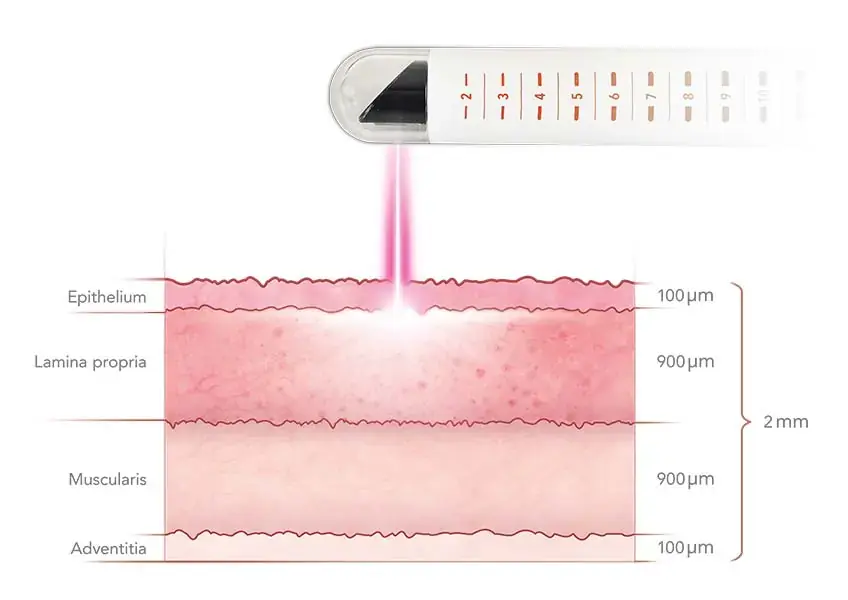
Vaginal laser is an ablative laser emitting light beams that penetrate vaginal tissues.
It removes microscopic columns of vaginal mucosa to stimulate synthesis of thicker, denser tissue. This process, called tissue remodelling, triggers a natural healing response in treated tissues.
In addition, laser heat contracts vaginal wall muscles and existing collagen fibres and stimulates new collagen production, improving vaginal tissue elasticity and firmness.
The vagina becomes more toned and its walls thicker.
Vaginal tissues are revitalised, improving patients' comfort and quality of life.

What are the appropriate
indications for vaginal laser ?
Vaginal laser is a non-invasive procedure with multiple indications.
- Vaginal dryness : laser stimulates collagen production and increases natural hydration of the vaginal mucosa.
- Vaginal atrophy : common in menopausal women, this condition benefits from laser restoring vaginal tissue elasticity and firmness.
- Vaginal laxity : laser strengthens the vaginal walls, helping restore firmness after childbirth or when tissues become lax.
- Mild stress urinary incontinence : laser strengthens vaginal and periurethral tissues.
- Pain during intercourse (dyspareunia) : laser improves vaginal tissue lubrication and elasticity.
- Vaginal relaxation syndrome : often described as reduced sensation during intercourse, this condition improves with laser.
Vaginal laser and prolapse
Vaginal laser is not a treatment for prolapse.
Vaginal prolapse occurs when the muscles and tissues supporting pelvic organs become lax and requires particular attention.
Vaginal laser may benefit mild to moderate prolapse. It helps strengthen and tone vaginal tissues, reducing symptoms and improving support of vaginal structures. It is therefore a comfort treatment that slightly reduces the discomfort caused by this condition.
However, for severe prolapse, where pelvic organs are significantly displaced, vaginal laser is not a solution and surgery may be necessary.
Consulting an experienced doctor is important to determine the degree of prolapse and potential benefit of vaginal laser.
Contraindications
Vaginal laser is minimally invasive and requires no social downtime. Nevertheless, there are contraindications.
- Pregnancy and breastfeeding.
- Current genital bleeding (including menstruation).
- Active vaginal inflammation or infection.
- Malignant or precancerous lesions : a gynaecological examination and cervical smear must precede the laser session.
- Severe prolapse : laser is not the appropriate therapeutic option.
- Clotting disorders or anticoagulant use.
- A history of epilepsy.
What happens during a session
of vaginal laser ?
Treatment is preceded by an information consultation during which Dr Romano assesses the patient's concerns and performs a gynaecological examination to evaluate the nature and severity of the condition or conditions.
Before treatment, the patient must have a cervical smear less than one year old and a urine culture less than one week old. These tests rule out cancerous lesions or infection.
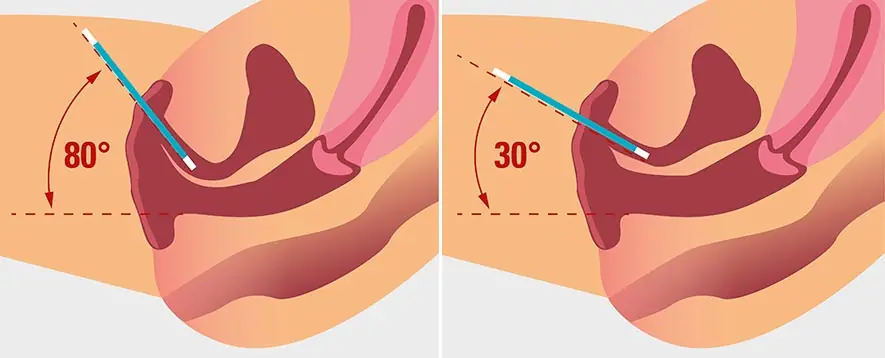
A gynaecological laser session has three stages and uses a single-use laser speculum.
The first pass vaporises tissue and creates small ablation channels in the vaginal wall. This stimulates collagen and elastin production within the vaginal mucosa.
The second pass intensely heats tissue and creates a coagulation injury. This increases vascularisation of the vaginal mucosa and improves pelvic muscle tone, strengthening their supporting ability.
The third pass treats the vulva and vaginal opening in fractional ablative mode.
A gynaecological laser session lasts between 15 and 30 minutes.
The patient can resume usual activities immediately afterwards.
How many vaginal laser sessions are needed ?
The protocol was developed to offer optimal results while ensuring patient comfort and safety.
For initial treatment, three sessions one month apart are recommended. For maintenance, one session per year should be planned.
Recommendations before and after vaginal laser
Following recommendations before and after the session is essential for treatment effectiveness and safety.
Preparing for vaginal laser treatment
Avoid sexual intercourse, vaginal douching and tampons for at least 48 hours before the session to minimise irritation.
Tell your doctor about any vaginal infection or inflammation, as these must be treated before laser treatment.
Follow-up after vaginal laser
Avoid sexual intercourse, hot baths, swimming pools and hot tubs for five days to allow tissues to heal properly.
Dr Romano will recommend intimate care products for two weeks and ask you to avoid intense physical activity for a few days to minimise complications.
Gynaecological laser side
effects

Treatment is well tolerated and safe, but like any medical procedure, it has some mild, temporary side effects.
Report any unusual or persistent symptoms to your doctor.
Recovery after vaginal laser treatment
During healing, certain symptoms may occur :
- Warmth or mild burning : this usually disappears within a few hours.
- Irritation or swelling.
- Light bleeding.
- Increased vaginal dryness during healing due to mucosal regeneration.
- Changes in vaginal discharge, particularly an increase in normal discharge.
Pain and gynaecological laser

Treatment is well tolerated, but concern about potential pain is normal. During the session, most patients feel warmth or tingling.
This sensation is well tolerated and short-lived.
After treatment, slight discomfort or mild irritation is common. These symptoms last from a few hours to a few days. Severe or prolonged pain is rare.
Follow aftercare advice to minimise discomfort and accelerate healing.
What is the difference between
vaginal laser and injections
of hyaluronic acid ?
Vaginal laser and hyaluronic acid injections are both used for intimate concerns, but differ in effects and indications.
- Duration of results : hyaluronic acid injections for vaginal dryness give temporary results. Maintenance every eight months is needed.
Vaginal laser effects last longer because this method naturally stimulates collagen production in vaginal tissues. - Treatment of vaginal laxity : hyaluronic acid does not treat vaginal laxity. Vaginal laser, by contrast, firms vaginal tissues and improves tone.
- Stress urinary incontinence : hyaluronic acid injections are not effective for stress urinary incontinence. Vaginal laser is particularly indicated because it strengthens vaginal walls and improves pelvic floor support.
- Overall improvement in intimate health : vaginal laser is a comprehensive solution because it improves several aspects of women's intimate health. Hyaluronic acid is only used to improve hydration in vaginal dryness.
In summary, vaginal laser stands out by treating not only vaginal dryness but also laxity and urinary incontinence, with more comprehensive, lasting results than hyaluronic acid injections.
Which laser should be chosen for
vaginal rejuvenation ?
When choosing the type of vaginal laser for vaginal and intimate rejuvenation, several options are available.
Monnalisa is a CO2 laser frequently used for vaginal rejuvenation. Although effective, it may sometimes cause significant, troublesome side effects such as swelling and fairly intense burning sensations.
Dr Romano prefers erbium laser, a latest-generation laser with considerable advantages. It allows stronger settings while minimising side effects. Its precision and more controlled tissue targeting optimise results and improve patient comfort.
Vaginal rejuvenation after
childbirth
The vaginal rejuvenation procedure after childbirth is increasingly popular with women wishing to restore vaginal tone and elasticity after childbirth-related tissue stretching.
This laxity may reduce sexual satisfaction, cause discomfort during daily activities or lead to stress urinary incontinence.
Vaginal laser stimulates collagen production and tones vaginal tissues non-invasively.
This procedure restores intimate comfort and quality of life. Results are lasting and natural.
It is an effective solution for intimate consequences of childbirth without surgery.
Vaginal laser before / after results
Benefits are felt soon after the procedure.
Patients describe significant improvements in several aspects of daily life, wellbeing and intimate comfort.
Results include :
- Improvement in vaginal dryness.
- Restoration of vaginal elasticity : strengthening and tightening of vaginal tissues.
- Reduction in stress urinary leakage.
- Reduced dyspareunia (pain during intercourse) through improved lubrication and tissue elasticity.
- Increased sexual satisfaction and self-confidence.
Results are lasting and gradual. Treatment benefits continue to improve during the three months after the session.
Benefits are demonstrated by histological examinations showing a significant increase in collagen synthesis and new blood vessel formation one month after laser treatment.
Gynaecological laser prices
Gynaecological laser treatment in Geneva generally costs 600 CHF per session. This may vary with the indications treated (vaginal dryness, genitourinary syndrome of menopause, laxity or intimate discomfort), technology used (fractional CO₂, Er:YAG, etc.) and sessions recommended for significant, lasting results. Generally, three sessions spaced 6 weeks apart are recommended, possibly followed by annual maintenance.
Although painless and non-surgical, this treatment requires specialised medical care. The cost includes the session, initial consultation, gynaecological assessment, medical expertise and follow-up. It is not standard cosmetic skincare, but a medically supervised procedure using a laser specifically designed for intimate indications.
The price of vulval laser mainly reflects the cost of the single-use laser speculum used during the session.
Each protocol is personalised after a confidential discussion and assessment adapted to the patient's needs.
Gynaecologist performing vaginal laser in Geneva
Although laser treatment for intimate rejuvenation, vaginal rejuvenation and intimate health is often associated with gynaecologists, it is not exclusively reserved for them. A doctor specifically trained in laser use with proven experience in this field is fully qualified to perform this procedure. Such doctors have specialist training enabling them to master laser technology and effectively manage concerns such as vaginal dryness, vaginal laxity or stress urinary incontinence. Medical expertise and experience, regardless of specialty, are essential to safety, treatment effectiveness and personalised care.
Gynaecological laser reviews
Patients who have undergone this procedure report satisfaction.
Many women describe significantly improved comfort and quality of life, with noticeably reduced vaginal dryness, better tissue elasticity and fewer urinary incontinence symptoms.
Women particularly appreciate its non-invasive nature, allowing a rapid return to most usual activities.
Many patients report greater sexual satisfaction and renewed confidence. Although results vary between individuals, overall reviews indicate that vaginal laser is an effective, appreciated treatment for intimate wellbeing.
Laser for intimate dryness reviews
Reviews of laser for intimate dryness are mostly positive : patients describe significantly reduced discomfort and irritation and an overall improvement in sexual and intimate quality of life.
Unlike creams and some treatments giving temporary results, such as hyaluronic acid injections, laser offers lasting results by treating the cause of intimate dryness.
Vaginal laser is an appealing option for patients seeking an effective, lasting solution for vaginal dryness.
Frequently asked questions about vaginal laser in Geneva
What are the advantages of vaginal laser ?
Vaginal laser offers several advantages.
- Improved natural lubrication.
- Increased vaginal tissue elasticity and firmness.
- Reduced symptoms of mild stress urinary incontinence.
- Improved comfort and pleasure during intercourse.
How many vaginal laser sessions are needed for optimal results ?
Two to three sessions are needed for initial treatment.
One annual maintenance session should be planned.
Is vaginal laser treatment painful ?
Treatment is well tolerated. Warmth or slight tingling may be felt during the session, but most patients find the procedure comfortable.
Who is a good candidate for vaginal laser ?
Good candidates are women with vaginal dryness, vaginal atrophy, mild vaginal laxity or mild stress urinary incontinence, without contraindications to the procedure.
How can intimate tissues tighten without surgery?
Vaginal laser is a non-invasive solution for tightening intimate areas. It stimulates collagen production.
How can the vulva be kept youthful ?
Vaginal laser helps rejuvenate the vulva. Good hydration and appropriate hygiene are also essential.
How can lubrication be improved naturally in a menopausal woman ?
- Vaginal laser.
- A diet rich in omega-3 and healthy fats.
Is gynaecological laser recommended for all women ?
Gynaecological laser is not recommended for all women. It is mainly intended for women with vaginal dryness, vaginal laxity or pain during intercourse. A medical consultation is essential to assess whether treatment is indicated.
What is vulvoplasty ?
Vulvoplasty is surgery (performed by a surgeon and therefore not by Dr Romano) to change the appearance or function of the vulval lips, generally for aesthetic reasons or comfort. It can reduce the labia minora (labiaplasty), correct asymmetries or restore the vulva after trauma.
Is vaginal laser treatment safe ?
Yes, vaginal laser is considered safe when performed by an experienced doctor. This non-invasive procedure stimulates collagen production, improves tissue elasticity and restores vaginal comfort. Mild side effects such as redness, slight warmth or tingling may nevertheless occur temporarily.
Can sexual activity resume immediately after vaginal laser ?
Wait 5 to 7 days before resuming sexual intercourse. This allows tissues to heal properly and prevents irritation. Timing may vary with individual sensitivity and the doctor's recommendations.
Does vaginal laser treatment require anaesthesia ?
No, this treatment is generally well tolerated and does not require anaesthesia. Some patients may feel slight warmth or tingling during the session.