What is the Erbium Glass laser?
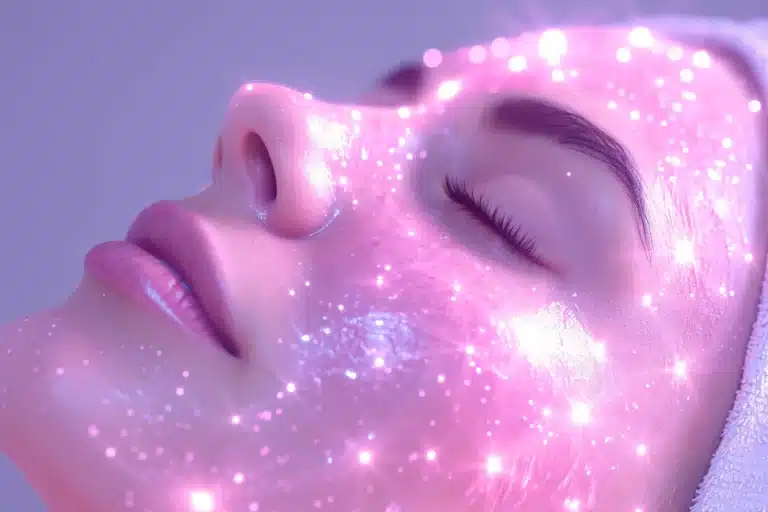
The Erbium Glass laser belongs to the family of non-ablative fractional lasers. Its wavelength ranges from 1,540 to 1,550 nm, allowing it to pass through the epidermis and deliver its energy directly into the dermis. Unlike resurfacing lasers, its purpose is not to remove skin, but to create thousands of microscopic zones of controlled heat that trigger a natural tissue repair process.
The energy delivered by the laser activates fibroblasts, the cells responsible for synthesising collagen, elastin and many components of the extracellular matrix. This stimulation gradually improves dermal density, skin firmness and appearance.
Fractionation is an essential feature of this technology. Each micro-impact is surrounded by intact tissue that accelerates skin repair, limits recovery effects and allows large areas to be treated with an excellent safety profile.
The Erbium Glass laser is therefore part of a skin biostimulation approach.

Benefits of the Erbium Glass laser
The main benefit of the Erbium Glass laser lies in its ability to sustainably stimulate the skin’s natural repair mechanisms without causing ablation. This allows skin quality to improve with a very short recovery period.
The treatment acts simultaneously on several aspects of ageing. It gradually improves firmness, refines skin texture, reduces enlarged pores and certain superficial scars, and softens early fine lines. The skin becomes more even, denser and more radiant.
The Erbium Glass laser also has an excellent tolerability profile. Recovery effects are generally limited to temporary redness and slight swelling, allowing a rapid return to everyday activities.
This technology can also be incorporated into skin ageing prevention protocols or combined with other aesthetic treatments to achieve an overall improvement in skin quality.
Indications for the Erbium Glass laser
The Erbium Glass laser may be offered to:
- Improve early signs of skin ageing.
- Stimulate natural collagen production.
- Treat facial fine lines.
- Improve mild skin laxity.
- Refine skin texture.
- Reduce enlarged pores.
- Improve acne scars.
- Soften certain stretch marks.
- Improve the overall quality of the skin on the face, neck, décolletage or hands.
Which areas can be treated with the Erbium Glass laser?
The Erbium Glass laser is primarily indicated for facial treatment, where it can correct early signs of skin ageing and improve skin quality over time without significant social downtime. It is particularly effective on the cheeks, forehead, eye contour and around the mouth, where it stimulates skin renewal and makes the skin smoother, more even and more radiant.
This technology can also be used on the neck, décolletage and hands to treat early skin laxity, pigmentation irregularities related to photoageing and a gradual loss of tone. In certain indications, the Erbium Glass laser also has a role in treating superficial scars or stretch marks.
How does an Erbium Glass laser session work?
Treatment always begins with a consultation to assess skin quality, signs of ageing and the patient’s expectations. This step determines the number of sessions and the most appropriate settings.
Recommendations before treatment
- Avoid significant sun exposure and tanning beds during the 2 to 4 weeks before the session. The skin must not be tanned at the time of treatment.
- Peels, irritating skincare, topical retinoids and any treatment that may cause skin irritation or inflammation should be stopped approximately one week before the session, according to the doctor’s recommendations.
- In the days before treatment, maintaining good skin hydration is recommended to promote faster recovery.
During the session
After the skin has been cleansed, a topical anaesthetic cream may be applied depending on the patient’s sensitivity and the area being treated. The laser beam is then swept evenly across the treatment area. Energy is delivered through thousands of thermal micro-impacts that stimulate fibroblasts without removing the epidermis. A session usually lasts 20 to 45 minutes, depending on the surface area treated.
A sensation of warmth or tingling is usually felt during treatment. This generally remains moderate and disappears quickly.
Recommendations after treatment
A soothing cream is applied after the session. Regular skin moisturising, daily high-factor sunscreen and avoiding significant heat sources, such as saunas, steam rooms and very hot baths, for a few days are recommended. Exfoliating products, retinoids and irritating cosmetics should be stopped for 3 weeks.
Sun exposure is possible one month after the session.

How many Erbium laser sessions will be needed?
Erbium Glass laser treatment is delivered as a course of several sessions.
Depending on the indication, 3 to 5 sessions, spaced 3 to 6 weeks apart, are recommended to achieve optimal stimulation of collagen production.
Maintenance sessions may then be offered, most commonly once a year, to preserve the benefits obtained and slow the effects of skin ageing.
Recovery
Recovery after Erbium Glass laser treatment is generally straightforward and minimally disruptive. Redness resembling mild sunburn appears immediately after the session and usually disappears within 24 to 72 hours. Slight swelling may also occur, particularly in areas where the skin is thin.
Unlike ablative lasers, the Erbium Glass laser preserves the skin’s surface and does not cause significant peeling. This allows rapid recovery and an immediate return to social and professional activities.
In the following months, dermal regeneration mechanisms continue beneath the surface.
Possible side effects of the Erbium Glass laser
The Erbium Glass laser has an excellent tolerability profile when treatment is performed correctly.
The most common side effects are redness, warmth, mild swelling or skin sensitivity. These reactions are expected and usually resolve within a few hours to a few days.
In rare cases, post-inflammatory hyperpigmentation may occur, particularly after early sun exposure or in certain skin phototypes. Infections, scarring and persistent pigmentation changes are exceptional when medical recommendations are followed and treatment is performed by an experienced doctor.
Results of an Erbium Glass laser session
The result of an Erbium Glass laser session is not immediate. Initial effects appear gradually over the 3 to 4 months following treatment, as stimulated fibroblasts produce new collagen and elastin fibres.
Dermal remodelling then continues for 3 to 6 months after the final session, leading to a gradual improvement in skin quality.
The results observed include:
- Refined skin texture.
- Less visible pores.
- Softer fine lines.
- Improved skin firmness.
- More radiant skin.
Erbium Glass laser prices
In Geneva, Erbium Glass laser treatment costs between CHF 250 and CHF 800, depending on the surface area treated, session duration and the personalised protocol established during the consultation.
- Face: CHF 600 per session.
- Neck: CHF 500 per session.
- Décolletage: CHF 800 per session.
- Hands: CHF 300 per session.
- Small area: from CHF 250 per session.
A detailed quotation is provided after the clinical examination.
The number of sessions is determined during the consultation according to skin quality and the indication.
A study involving 87 patients with moderate to severe acne scars assessed six sessions of non-ablative 1,540 nm Erbium Glass laser, three weeks apart. Six months after the final session, 80 patients, or 92%, showed marked improvement and the other seven moderate improvement. Confocal microscopy examinations also showed collagen renewal within treated areas. These observations illustrate the value of this technology for gradually improving depressed scars.
A randomised comparative trial involving 58 patients compared four fractional CO₂ laser sessions with four non-ablative 1,540 nm Erbium Glass laser sessions for acne scars. Three months after treatment, both groups showed clinical improvement and good satisfaction. In the Erbium Glass group, 24 of 29 patients achieved improvement of at least 25%. The non-ablative treatment involved less pain and shorter recovery than CO₂ laser in this protocol.
Source: Elsaie et al., Journal of Lasers in Medical Sciences, 2018.
A retrospective study assessed three to four sessions of fractional 1,540 nm Erbium Glass laser for facial rejuvenation. Sixteen patients completed treatment and follow-up. Three months after the final session, two dermatologists who analysed photographs blinded observed moderate to substantial wrinkle improvement, particularly on the face and around the eyes. Patient satisfaction was high. This study documents aesthetic benefits of the protocol assessed, with mild temporary redness after sessions.
Source: Solomon-Cohen et al., Journal of Cosmetic Dermatology, 2021.
Frequently asked questions about the Erbium Glass laser
What is the difference between an Erbium Glass laser and an Erbium laser?
Although their names are similar, these two technologies work on very different principles. The Erbium (Er:YAG) laser is an ablative laser that removes a thin layer of skin in a controlled way to achieve skin resurfacing. In contrast, the Erbium Glass laser is a non-ablative fractional laser that stimulates collagen production without removing the epidermis. The choice between these two treatments depends on the indications, desired recovery time and aesthetic goals.
Is the treatment painful?
The Erbium Glass laser is generally well tolerated. A sensation of warmth or tingling is felt during the session, but it remains moderate and disappears quickly after treatment. A topical anaesthetic cream may be applied when necessary.
When do results become visible?
The skin often looks more radiant a few days after the session. Benefits linked to the stimulation of collagen synthesis appear gradually over the following weeks and continue to improve for several months.
Can I resume my activities immediately?
Yes. Everyday activities can generally be resumed immediately after the session. Slight redness may persist for one to three days, but it is usually compatible with normal professional activity.
Can the Erbium Glass laser be combined with other treatments?
Yes. It is frequently incorporated into an overall treatment plan combining Skinboosters, hyaluronic acid injections, botulinum toxin, radiofrequency or regenerative medicine treatments to improve skin quality, volume and signs of ageing simultaneously. The treatments are not performed on the same day.