Initial consultation for hyaluronic acid injections to treat marionette lines
The initial consultation is essential before any hyaluronic acid injection for marionette lines. It identifies the mechanisms behind their development and defines a therapeutic strategy adapted to each patient.
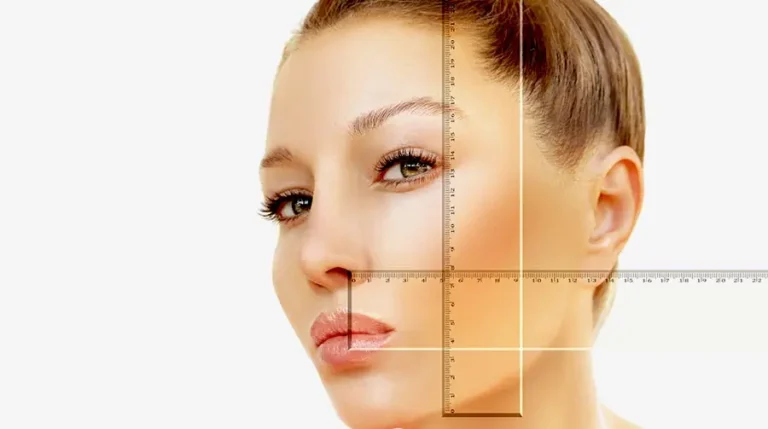
Clinical examination assesses the face at rest and in movement. Dr Romano evaluates fold depth, mouth corner position, skin tone and volume loss in supporting structures. It is fundamental to establish whether the fold mainly results from tissue sagging, volume loss or muscle overactivity, as this directly guides care.
The consultation also assesses overall harmony of the lower face. Marionette lines must never be treated in isolation, which risks imbalance or local heaviness. The entire lower third is assessed, considering the facial contour, chin and jawline, within a comprehensive, coherent approach.
Time is devoted to explaining correction principles, expected results and treatment limitations. The patient is informed of the gradual, personalised nature of injections and the need for a measured approach.
Indications for hyaluronic acid in marionette lines
Hyaluronic acid injections are offered when visible marionette lines result from insufficient support of the lower face. This most often concerns patients from their forties, but may occur earlier depending on facial structure and individual ageing.
Hyaluronic acid particularly suits moderate to pronounced folds without excessive skin laxity. It reduces wrinkle depth, visually raises the mouth corner and softens expression. It is indicated for patients seeking natural improvement without changing their appearance.
It is also appropriate when marionette lines accompany overall lower facial ageing. Injections can then form part of wider care to restore facial balance.
With very significant laxity or sagging mainly caused by excess skin, hyaluronic acid gives mild results; substantial improvement requires surgery.
Advantages of hyaluronic acid injections in marionette lines
The main advantage of hyaluronic acid injections is gradual, natural correction of a negative facial expression. Restoring support to sagging tissue softens features without altering identity.
A key benefit is indirect action. Rather than simply filling the fold, the product is used with the medical facelift technique to restore structural support in areas responsible for downward traction on mouth corners. This limits local heaviness and allows harmonious tissue integration.
Precision is another important advantage. Volumes can be finely adjusted to fold depth and facial structure, allowing tailored correction, immediate assessment and a staged approach if necessary.
Injections are very well tolerated in a rigorous medical setting. The absorbable, biocompatible product offers a high level of safety and allows treatment adjustment over time.
Instructions before hyaluronic acid injections to reduce marionette lines
Following instructions before marionette line injections is essential to reduce complications and optimise treatment conditions, principally by limiting bruising, inflammation and adverse reactions.
In preceding days, avoid medicines or supplements that may increase bleeding risk. Non-steroidal anti-inflammatory drugs, aspirin, certain anticoagulants and natural substances may favour bruising. Any treatment change must be approved by the doctor.
Alcohol is discouraged during the 24 to 48 hours beforehand, as it may increase vasodilation and post-injection swelling.
Report all medical history, previous aesthetic injections and current treatments. This allows Dr Romano to adapt the protocol and ensure safe care.
What happens during hyaluronic acid injections for marionette lines
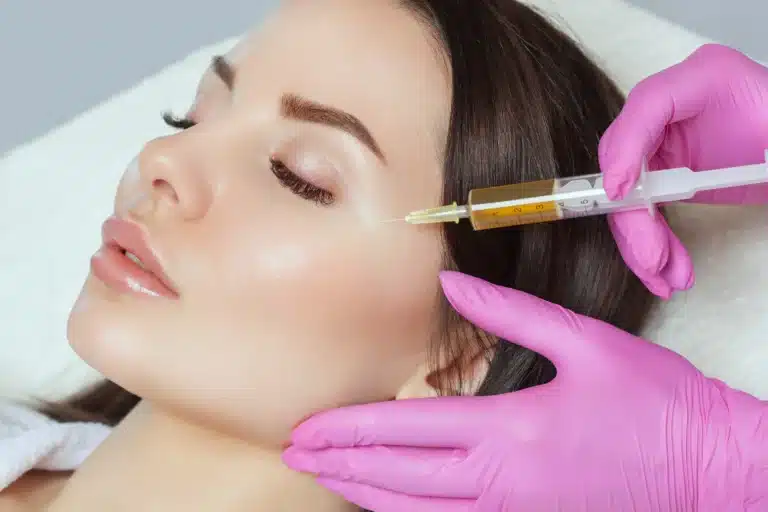
Injections follow a precise medical protocol under strict aseptic conditions. The aim is measured correction adapted to anatomy and respecting facial harmony.
After positioning the patient, the area around the mouth is thoroughly disinfected. Marking may identify strategic injection points and improve safety in this highly vascular area. An anaesthetic cream beforehand may improve comfort according to sensitivity.
A fine needle or cannula is used depending on technique. Hyaluronic acid is deposited gradually at precise levels to restore support without overcorrection.
The session generally lasts between 20 and 30 minutes. Results are assessed immediately. Daily activities can resume quickly, provided aftercare instructions are followed.
Which hyaluronic acid should be injected for marionette lines ?
Product choice follows precise criteria linked to anatomy and fold formation. The aim is subtle, effective support, rather than excessive volume, to reduce depth and correct downward traction on the mouth corners.
Dr Romano favours intermediate-density hyaluronic acids that provide sufficient structure while integrating perfectly. An overly fluid product could absorb quickly or move, while an overly rigid gel could weigh down the lower face or cause palpable irregularities.
Gel cohesivity is decisive for even integration and limiting migration. The selected hyaluronic acid must adapt to movement around the mouth while giving lasting support. Depending on strategy, the same product may be injected at several levels or, more rarely, products with complementary properties may be combined.
Choice cannot be standardised. It depends on fold depth, skin quality, overall lower facial sagging and facial structure. Medical expertise is essential to selecting and precisely using the most suitable product.
Instructions after hyaluronic acid injections in marionette lines
Aftercare promotes good integration and limits temporary side effects, directly contributing to result quality and safety.
Avoid excessive pressure on the area during the first 48 hours. Unprescribed massage, repeated manipulation of the lower face and excessive expressions may disturb distribution and should be avoided.
Avoid intense heat such as saunas, steam rooms or very hot baths in the following days. Heat promotes vasodilation and may worsen swelling or bruising. Intense exercise should also be postponed to limit inflammation.
Moderate local reactions may include slight swelling, tenderness or small bruises. These usually resolve spontaneously within days. Unusual pain, persistent asymmetry or abnormal skin changes require prompt medical consultation.
Hyaluronic acid injections for marionette lines : which protocol ?
The protocol is indirect and gradual, correcting structural causes rather than merely filling the surface fold.
First, areas causing downward traction on mouth corners are identified. Injection at precise, often deep or intermediate levels restores support without heaviness. Product is deposited in controlled increments for measured, harmonious correction.
A fine needle or cannula is used according to technique and anatomy. Placement is slow with continual result assessment, essential in this mobile, highly vascular region.
The protocol always includes aseptic practice, knowledge of risk areas and product traceability. Follow-up is offered to assess results. This comprehensive approach ensures safe, individually adapted medical care.
What results can be expected from filling marionette lines with hyaluronic acid ?
The expected result is a clear but measured improvement in the lower face. The primary aim is to reduce drooping mouth corners and fold depth without altering identity or expression.
The face appears more rested, with softer, less stern expression. Filling aims to make the fold less visible rather than erase it entirely by restoring harmonious support. It rebalances the lower face and restores natural continuity between the mouth area and chin.
Results must remain subtle and consistent with age and facial structure. Good injection respects mobility and avoids rigidity or excess volume. Results depend on initial sagging. Moderate cases improve significantly and durably, while folds caused by substantial skin laxity improve only to a limited extent.
Duration of hyaluronic acid effects for marionette lines
Effects last between nine and twelve months, varying with patient and injection protocol.
The mouth area moves constantly during speech, chewing and expression. This accelerates natural absorption. Individual metabolism also matters, with faster degradation in some patients.
Durability also depends on product and depth. Correct selection and placement improve integration, while overly superficial injection leads to faster absorption.
Annual maintenance sessions are offered to preserve improvement.
Recovery after hyaluronic acid injections in marionette lines
Recovery is straightforward and well tolerated. This minimally invasive medical procedure requires no social downtime.
In the hours or days afterwards, mild to moderate swelling may occur, sometimes with tenderness. Small bruises are possible. These temporary reactions resolve spontaneously within days.
The treated area may be slightly tender without significant pain, gradually improving within days.
Follow-up is recommended to assess the final result and confirm good tolerance.
Hyaluronic acid injections for marionette line filling : patient experience
Patient feedback frequently describes a gradual change consistent with their face. Improvement is perceived as better overall lower facial balance rather than isolated filling.
Patients often mention subtle correction preserving expression and identity. Absence of excessive fullness or rigidity and retained natural mobility around the mouth are regularly highlighted.
Several accounts emphasise the value of initial assessment for understanding fold formation and realistic treatment goals. Patients describe a measured medical procedure integrated into broader consideration of facial ageing. Satisfaction rests less on a visible change than on improved facial harmony consistent with age and facial structure.
Prices of hyaluronic acid injections for marionette lines
In Geneva, hyaluronic acid injections for marionette lines cost 600 CHF per syringe.