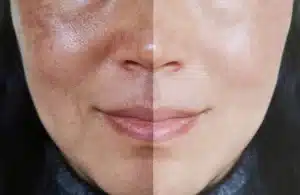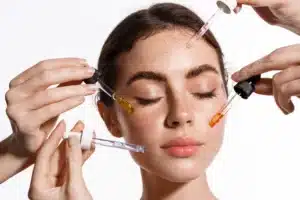
What are fine lines ?
Fine lines are shallow lines on the skin surface, most often in delicate areas where the skin is naturally thinner, such as the eye contour, lip contour, forehead or cheeks. They are among the first visible signs of skin ageing and can appear from the age of 25, when hydration declines and cell renewal slows.
Fine lines are often caused by skin dehydration. Dehydrated skin creases more readily and reflects light less effectively, making fine lines more visible. Over time, oxidative stress, pollution, UV rays and hormonal changes can accentuate them by gradually weakening collagen and elastin fibres.
Two types are generally distinguished : dehydration fine lines, which create a “crumpled skin” appearance and mainly occur around the eyes, on the cheeks or forehead. ; and expression fine lines, linked to repeated facial movements, particularly visible in crow's feet or between the eyebrows.

What is the difference between fine lines and
wrinkles ?
Fine lines and wrinkles reflect different skin changes. Fine lines remain superficial : they affect the outermost skin layers and mainly indicate insufficient hydration. They are easier to treat because they do not result from deep deterioration of skin structure.
Wrinkles, by contrast, become established as dermal ageing becomes more pronounced. Over the years, collagen and elastin — two essential components of firmness — decline in quantity and deteriorate. The skin then loses resilience and density, causing deeper wrinkles.
Sun exposure, smoking, alcohol, chronic stress and a high-sugar diet accelerate this deterioration and encourage wrinkles.
Two categories are also distinguished : dynamic wrinkles, initially visible only during expressions ; and static wrinkles, visible even when the face is at rest.
Why does skin wrinkle ?
Intrinsic ageing is the primary cause of wrinkles. It involves a programmed cellular slowdown with gradually declining fibroblast activity. Collagen fibres become fewer and less organised, elastin fibres fragment and the extracellular matrix loses hyaluronic acid. This loss of structural cohesion makes the skin thinner, less resilient and more vulnerable to external aggressors.
Photoageing, caused by ultraviolet radiation, is a major factor and accelerates wrinkle formation far more than chronological age. UV rays generate oxidative stress responsible for subtle but persistent inflammation, damage cellular DNA, fragment elastic fibres and gradually destroy collagen. This process, called solar elastosis, is a principal cause of wrinkles on the face, neck and décolletage.
Repeated facial movements also contribute to dynamic wrinkles. Over time, expression fine lines become permanent wrinkles because the skin loses its ability to relax after repeated muscle contractions.
External factors play an essential role. Smoking powerfully accelerates skin ageing and reduces tissue oxygenation. Air pollution contributes to chronic low-grade inflammation. Lack of sleep, stress, chronic dehydration and a diet low in antioxidants worsen wrinkle formation.
How can fine lines be removed
Visibly and lastingly reducing fine lines requires deep hydration, cellular stimulation, complexion luminosity and structural dermal quality to be addressed together. Aesthetic medical techniques now achieve excellent results while respecting skin physiology. The following treatments are particularly suitable for smoothing fine lines, improving radiance and preventing their return.
Skinboosters : injections into fine lines
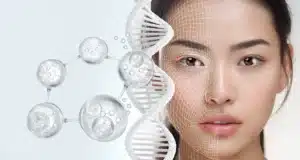
Skinboosters are among the most effective treatments for dehydration fine lines. They involve injecting lightly cross-linked hyaluronic acid into the dermis to restore skin water reserves. This deep hydration immediately improves facial suppleness, elasticity and luminosity. Superficial fine lines gradually smooth as the skin becomes denser and more even. Results last one year. Initial treatment requires two to three sessions one month apart. Maintenance involves an annual session.
Facial mesotherapy (mesolift) to hydrate the skin
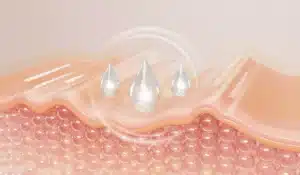
Mesolift involves injecting a mixture of vitamins, antioxidants, amino acids and non-cross-linked hyaluronic acid into the dermis. This treatment intensely nourishes the skin, stimulates microcirculation and improves cell renewal. It is particularly indicated when fine lines are linked to stress, fatigue or devitalised skin. The face looks more radiant and hydrated, and fine lines gradually become less visible through overall skin tissue revitalisation.
The biorevitalising PRX-T33 peel to reduce fine lines
The PRX-T33 peel is an innovative peel combining TCA and hydrogen peroxide. It stimulates dermal synthesis without visible peeling, making it popular with patients seeking quick results without social downtime. PRX-T33 improves elasticity, firmness and complexion clarity. Fine lines diminish through better collagen quality and more even texture. It provides an immediate “radiance boost” and improves skin structure.
Photorejuvenation laser to smooth fine lines
The photorejuvenation laser works on the skin surface and deeper dermal layers. It stimulates collagen production, improves luminosity, reduces pigmentation irregularities and refines texture. Fine lines become less visible over successive sessions through improved skin density. This treatment is ideal for dull, dehydrated or sun-aged skin.
How can wrinkled skin be treated ?
Treating wrinkles effectively requires action at several levels : muscle dynamics, dermal quality and density, lost volume and surface irregularities. The treatment choice depends on wrinkle type (dynamic, static or deep) and skin structure.
Botulinum toxin to treat expression lines

Botulinum toxin is the standard treatment for expression lines : forehead wrinkles, (frown lines) and crow's feet. By reducing contraction of the responsible muscles, it allows the face to relax and the skin to smooth gradually. Dynamic wrinkles become less visible and certain early wrinkles may disappear. Results remain natural when injection is adapted to each patient's morphology.
Hyaluronic acid to restore volume and smooth wrinkles
Hyaluronic acid plays an essential role in managing static wrinkles and volume loss. Used in a medical lifting technique, it repositions descended tissues and restores natural facial balance. Hyaluronic acid can also be injected directly into certain wrinkles, such as nasolabial folds or marionette lines.
Medium peel to erase established wrinkles
A medium peel exfoliates superficial skin layers and part of the dermis, triggering a true regeneration process. In response to this controlled stimulation, skin cells reorganise and produce better-quality collagen. The skin gradually becomes denser, smoother and more even.
Fractional ablative laser to treat deep static wrinkles
Fractional ablative laser treatment is one of the most effective techniques for correcting static wrinkles, particularly when deep or associated with laxity. By creating microscopic columns of ablation within the dermis, it stimulates new collagen production and denser skin. Wrinkles noticeably diminish and firmness gradually improves. This treatment fits particularly well within a comprehensive skin rejuvenation strategy.
Results
Results in wrinkle management are extensively documented. Botulinum toxin injections have demonstrated significantly reduced dynamic wrinkle depth and high patient satisfaction, as shown by Rzany et al. (Dermatologic Surgery, 2004). Hyaluronic acid, used for static or deep wrinkles, has been assessed in numerous clinical trials, particularly by Narins and colleagues, demonstrating lasting volume improvements and reduced folds over several months.
Fractional ablative lasers are among the most scientifically supported techniques. Hantash et al. (Dermatologic Surgery, 2007) demonstrated significantly increased dermal collagen after fractional laser sessions, with results visible after a few weeks and gradual improvement over several months.
Photorejuvenation technologies have also proved effective. Bitter et al. showed improved skin quality and luminosity and reduced fine lines after several sessions.
Skinboosters improve skin hydration and suppleness, as confirmed by Micheels and Sparavigna, whose research shows increased dermal elasticity objectively assessed through instrumental measurements.
How much does wrinkle treatment cost ?
The price of wrinkle treatment depends on the method chosen, wrinkle depth, location and intended result. Each technique works at a different depth and requires a number of sessions adapted to skin condition, explaining price variations. Skinboosters cost 400 CHF per syringe, facial mesotherapy 300 CHF per session and photorejuvenation laser 500 CHF per session. A PRX-T33 peel costs 250 CHF per session.
For deeper wrinkles, hyaluronic acid injections cost 600 CHF per syringe, while botulinum toxin starts from 250 CHF per area. A fractional ablative laser session costs 900 CHF. Finally, a medium peel starts from 500 CHF per session.
Each treatment forms part of personalised care for natural, gradual results adapted to the patient's skin and facial structure.
In a study involving 25 women, three fractional CO₂ laser sessions reduced wrinkles in several facial regions. Skin surface measurements showed a particularly marked improvement on the cheeks. Results and recovery time depend on the area treated and laser settings.
In a two-year randomised trial, a tretinoin cream improved wrinkles and certain sun-related pigmentation irregularities. This prescription treatment works gradually and can complement procedures performed in the clinic. Its use should be tailored to skin tolerance and contraindications.
In a study involving fifty patients, three non-ablative fractional laser sessions improved wrinkles and sun-related skin irregularities. The improvement remained visible at nine months in follow-up photographs, and patients reported being satisfied. These results concern the laser and protocol studied.
Frequently asked questions about wrinkled skin in Geneva
When should an anti-ageing routine begin ?
Around the age of 25, to prevent the gradual decline in collagen and elastin production.
Why do I have wrinkles when I am young ?
Sun exposure, repeated expressions, stress, pollution and dehydration can cause ageing before 30.
Where do the first wrinkles appear ?
They most often appear around the eyes and on the forehead, where skin is thinner and subjected to repeated expressions.
How can skin age well ?
Daily hydration, thorough sun protection and sufficient essential fatty acids and antioxidants promote harmonious skin ageing.
Can wrinkles disappear ?
They do not disappear completely, but treatments such as botulinum toxin, hyaluronic acid and lasers can significantly and lastingly reduce them.
How can you rejuvenate at 30 ?
A targeted routine, regular sun protection and gentle medical treatments if needed generally suffice to preserve facial freshness.
What is the most powerful natural anti-wrinkle ingredient ?
Antioxidants such as vitamin C and plant-derived retinol precursors effectively support skin regeneration and limit oxidative stress, a principal driver of ageing.
Which wrinkle is most ageing ?
Deep wrinkles around the mouth and glabellar lines are often perceived as the most ageing.
Why do some women have no wrinkles ?
Genetics, limited sun exposure, good skin hydration and suitable skincare significantly delay wrinkles.
When should anti-wrinkle cream be started ?
As soon as the first fine lines appear, generally around 25, to slow their progression.
What accelerates wrinkles ?
Repeated sun exposure, smoking, chronic stress and insufficient hydration weaken dermal fibres and clearly accelerate wrinkles.
Is it normal to have wrinkles at 25 ?
Yes. Strong facial expressions, stress, lack of sleep and significant sun exposure can cause early fine lines.
At what age do the first wrinkles appear ?
The first expression lines generally appear around 25 to 30, depending on sun exposure and skin quality.
How can you have a beautiful face without wrinkles ?
Thorough hydration, daily sun protection and a suitable skincare routine are essential to preserve skin quality.
Are wrinkles reversible ?
They are not spontaneously reversible. Their depth can be significantly reduced through lasers, injections or stimulation of collagen synthesis.