Key points
Retinol peels in Geneva
Retinol peels are ideal for rejuvenating skin while treating various concerns. They are safe, effective and offer rapid visible results, provided the instructions before and after treatment are followed.
Consider a personalised consultation to learn more or determine whether this peel suits your skin.
Benefits of
retinol peels
Retinol peels offer many benefits:
• Gentle action: unlike more aggressive peels, retinol acts gently without significant irritation or redness.
• Results from the first session: skin is brighter and smoother within days.
• Progressive improvement: benefits continue over subsequent weeks through collagen stimulation.
• Suitable for different skin types: sensitive, oily and mature skin, and all phototypes.
This treatment suits patients seeking revitalisation without invasive methods.

When is the ideal time for a retinol peel?
Retinol peels can be performed year-round, preferably in autumn or winter when sun exposure is limited. Retinol increases UV sensitivity, making daily sunscreen essential afterwards in every season.

Indications: why choose
a retinol peel?
Dr Romano uses a superficial retinol peel suited to most skin types. It suits younger skin seeking to prevent ageing as well as mature skin seeking to correct age-related imperfections.
Indications include:
• Wrinkles and fine lines: retinol peels soften skin ageing signs.
• Dullness: retinol peels restore radiance to tired skin.
• Pigmentation: retinol peels help fade sun- or age-related spots.
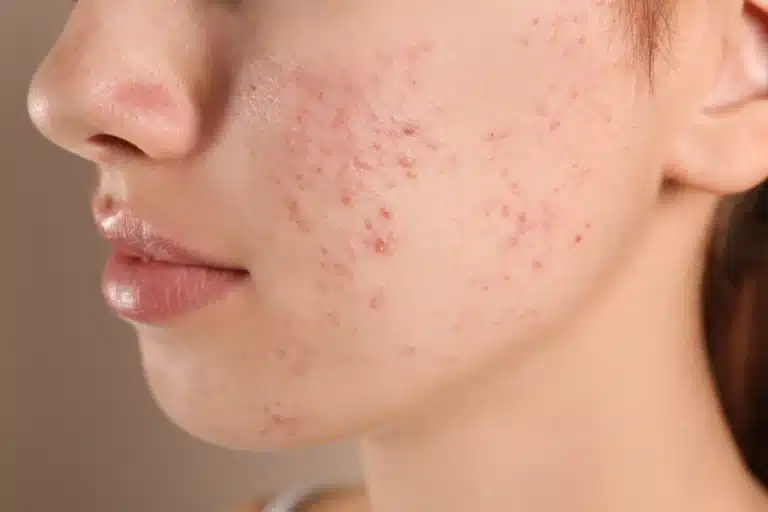
• Acne: retinol peels reduce inflammatory lesions and prevent future breakouts.
• Enlarged pores: retinol peels refine texture and tighten pores.
This peel is indicated for the face but can also treat other areas, such as the neck, décolletage, breasts, shoulders, back, hands and feet.
What happens during a
retinol peel session
A consultation precedes treatment, during which Dr Romano checks medical history and analyses the skin.
Skin is cleansed to remove make-up. Pre-Peel is applied with cotton or gauze to remove residual sebum and balance pH.
Using a cotton bud, petroleum jelly protects cuts, abrasions, piercings, upper and lower lips, mouth and nose folds, eye corners and other areas where solution could collect.
Product is applied evenly: one layer for a light peel, several for a more intense peel.
For about 10 minutes, Dr Romano watches for redness and asks about discomfort. If either occurs, she rinses the peel.
After 10 minutes, if well tolerated, she massages in excess product. Neutralisation is unnecessary.
The patient rinses it off 8 hours later or the following day. It can be removed earlier if irritation occurs.
For sensitive skin or a reduced exfoliation effect, rinse after 3 hours.

Instructions before a
retinol peel

Certain precautions ensure optimal effectiveness and minimise side effects.
• Avoid excessive sun exposure in the days beforehand.
• Stop irritating treatments: discontinue exfoliating acids and retinoid products one week beforehand.
• Hydrate skin well to optimise results.
Dr Romano provides further recommendations tailored to your skin.
Instructions after a
retinol peel
Follow aftercare instructions to accelerate healing and avoid complications.
• Apply moisturiser several times daily; Dr Romano will recommend one.
• Use high-factor broad-spectrum sunscreen (SPF 50) daily.
• Avoid direct sun for several days afterwards.
• Do not exfoliate or use irritating products for at least one month.
• Avoid facial hair removal, hair bleaching, perming or straightening, light therapy, lasers and IPL until skin fully heals, around one month.
• Do not peel off, scratch or scrape skin.
• Ideally, avoid smoking for one week.
Contraindications

Although generally safe, retinol peels have contraindications that must be respected.
• Pregnancy and breastfeeding.
• Allergy to vitamin A derivatives.
• Irritated or damaged skin: wait until fully healed before considering treatment.
• Warts in the area, because the virus could spread.
• Treatments or procedures that sensitise skin, such as scrubs.
• Anticoagulants or immunosuppressants.
• Stop oral retinoids 6 months beforehand and topical retinoids and exfoliants 1 to 2 weeks beforehand.
What are the adverse effects
of a retinol peel?
Possible reactions include redness, peeling, sensitivity, tingling, itching, burning, tightness, mild inflammation and sun sensitivity.
Mild peeling may start 2 to 3 days afterwards and continue for about a week. Reactions generally resolve gradually during the following week.
Superficial peels can cause perioral dermatitis and acne or herpes outbreaks. Herpes prevention is therefore prescribed for patients with a history of herpes simplex infection.
Some patients develop hyper- or hypopigmentation, generally resolving within months.
Results before / after a retinol peel
Results appear within days. During the first week, skin becomes smoother and brighter, with fewer imperfections. Benefits increase over subsequent weeks, particularly through collagen stimulation. Wrinkles and fine lines gradually soften, pigmentation lightens and texture evens. Skin becomes denser and less lax.
Several sessions optimise results. Individual outcomes vary, but most patients notice markedly improved skin quality after 2 to 3 sessions.
Peels are performed 6 to 8 weeks apart if skin has fully healed. Otherwise, the interval is 10-12 weeks or longer if necessary.
Retinol peel: prices in Geneva
Retinol peels cost 300 CHF per session, including the medical procedure, skin preparation and controlled application by Dr Romano. This specific procedure requires particular expertise. No surcharge applies for phototype or skin sensitivity.
Retinol peel reviews
Patient reviews are very positive. Many appreciate visible results from gentle treatment without an aggressive peel's drawbacks. They report improved skin quality, radiance and texture. Patients with acne scars or mild wrinkles also notice improvement.
Patients also value the absence of social downtime. Redness and mild peeling may occur but are generally manageable and disappear within days.
In a study involving 24 women, two to four 3% retinol peels combined with home skincare improved fine lines, visible pores and certain pigmentation irregularities. Participants with sun-damaged skin also reported a clearer complexion. Peeling frequently occurred in the days following the session.
In a randomised trial involving sixty adults with melasma, six sessions of 4% retinol peels were compared with a glycolic acid peel. Both treatments improved pigmentation and quality of life, without a significant difference in effectiveness. Mild temporary local reactions were more frequent in the retinol group.
In a study involving fifteen women, three sessions of 4% retinol peels were combined with other active ingredients and daily skincare. Measurements showed improved pigmentation, and participants reported satisfaction with their skin appearance. No significant improvement in elasticity was observed. These results concern the whole protocol and cannot isolate the effect of the retinol peel.
Are retinol peels effective?
Yes. They stimulate cell renewal, refine texture, reduce imperfections and improve radiance. They are also valued for reducing ageing signs and evening skin tone.
When should retinol not be used?
Avoid retinol during pregnancy, breastfeeding or on irritated or damaged skin. Avoid it during intense sun exposure too, because it increases UV sensitivity.
Do retinol peels remove pigmentation?
Yes, they effectively fade pigmentation related to sun exposure, ageing or hormonal disturbances, creating more even, luminous skin.
Do retinol peels remove wrinkles?
They help reduce fine lines and wrinkles by stimulating collagen and accelerating skin-cell renewal, improving firmness and quality.
How can I tell whether a retinol peel is effective?
An effective peel produces smoother skin, a radiant complexion and visibly fewer imperfections after a few days of peeling. Optimal results generally follow several sessions according to the protocol.
Are retinol peels suitable for every skin type?
Yes, but concentration and frequency must match sensitivity. Prior medical assessment is required.
How long is recovery after a retinol peel?
Recovery generally takes between 5 and 7 days, with possible redness, peeling and mild tightness.
Can I expose my skin to the sun after a retinol peel?
Sun exposure is strongly discouraged because skin is temporarily more UV-sensitive. Use SPF 50 sunscreen and stay in shade throughout healing.