Home » Skin enhancement » Skin rejuvenation
Skin aging corresponds to all the morphological, functional and biological changes that progressively affect the skin. It is based on two components.
The first, intrinsic aging, is linked to age, genetics and hormonal variations ; it results in a slowing of cell division, a decrease in the level of collagen and elastin, as well as a loss of natural hyaluronic acid.
The second, extrinsic aging, depends on environmental factors, in particular ultraviolet radiation, pollution and smoking.
These external aggressions generate oxidative stress which accelerates the degradation of dermal fibers, alters microcirculation and modifies pigment distribution. In both cases, the epidermis becomes thinner, the skin barrier weakens, and the skin loses its ability to maintain deep hydration.
Skin aging is a complex biological phenomenon resulting from the interaction between programmed internal mechanisms and repeated external aggressions. Over the years, the skin gradually loses its ability to renew itself, to maintain its natural hydration and the dermis changes. This evolution is inevitable, but its intensity and speed vary considerably from one person to another. A precise understanding of these mechanisms makes it possible to provide truly effective solutions, adapted to the individual characteristics of each patient. In Geneva, the climate, the reflection of the sun on the lake and the urban pace of life put more strain on the skin than in other regions.
The visible signs of skin aging generally appear progressively.
The first manifestations concern the quality and radiance of the skin : the skin texture becomes less homogeneous, the complexion less luminous and skin suppleness decreases.
Expression lines, linked to repeated contraction of the facial muscles, become marked on the forehead, glabella and around the eyes. Over time, these wrinkles become established and permanent. Skin laxity is an important sign of aging : as collagen decreases, tissues lose their natural support, which makes the facial oval less defined and leads to progressive sagging.
At the same time, pigment spots may appear, particularly on areas exposed to the sun such as the face, neck or hands. The skin may become drier, more fragile and thinner, which accentuates its aged appearance.
Premature aging corresponds to the appearance of skin signs earlier than the natural rhythm of aging would suggest. Several manifestations should draw attention : visible wrinkles before the age of 30, an uneven complexion despite a healthy lifestyle, or early pigment spots. The loss of tone of the facial oval and unusual skin dryness are also indicative of excessive exposure to external aggressions.
Among these factors, UV rays, and more particularly UVA, play a major role. They directly alter collagen fibers, oxidize cell membranes and accelerate skin laxity. To this are added other aggravating elements : smoking, urban pollution, certain medical treatments or chronic lack of sleep. Together, they create oxidative stress that causes premature aging.

Certain areas are more sensitive than others to aging, due to their thinness or constant exposure to external aggressions. The eye contour, where the skin is particularly thin and poor in sebaceous glands, quickly shows fine lines and early laxity. The lip contour is also a fragile area, subjected to repeated movements. The forehead, often exposed to the sun, quickly presents marked expression lines. The neck and décolleté, often neglected in skincare routines, undergo significant pigmentary and structural aging. Finally, the hands, constantly exposed to external aggressions, develop pigment spots with age as well as an increasingly visible loss of volume.
The mechanisms of skin aging are now clearly established.
The skin gradually undergoes a decrease in the number and activity of fibroblasts. These cells, essential for maintaining skin firmness and elasticity, naturally produce collagen, elastin and hyaluronic acid. Over time, their synthesis slows down, leading to a loss of density, decreased hydration and an alteration of the mechanical resistance of the skin. Hormonal variations — particularly from menopause onwards — accentuate this phenomenon : the activity of the sebaceous glands decreases and the hydrolipidic film becomes more fragile.
The sun remains the primary cause of premature aging. UV rays damage supporting fibers, slow collagen production and promote the appearance of brown spots. Pollution causes subtle but constant inflammation, which accelerates skin aging. Smoking reduces tissue oxygenation by constricting blood vessels ; the skin then renews itself more slowly and loses its radiance.
Finally, a diet poor in antioxidants, chronic dehydration or lack of sleep contribute to durably weakening the structure of the skin and promoting the appearance of the signs of aging.
Several factors can accelerate skin aging.
The first of these is sun exposure without protection. UVA rays, present even in cloudy weather and throughout the year, penetrate deeply into the dermis where they progressively degrade collagen and elastin fibers, leading to irreversible skin laxity.
Climatic conditions also play an important role. The dry cold of the Geneva winter, combined with air dried out by indoor heating, promotes significant loss of hydration and weakens the skin barrier. To this are added inappropriate skincare habits, such as overly abrasive cleansing, repeated use of products containing alcohol or irritating agents, which damage the epidermis in the long term.
Lack of sleep and an overworked lifestyle disrupt cell renewal. Chronic stress, by stimulating cortisol production, reduces the skin’s natural repair capacity. Finally, a diet poor in essential fatty acids and antioxidants deprives cells of the nutrients essential for their protection and regeneration.
The management of skin aging is based on the combination of treatments that have a synergistic action and that are selected according to skin type, age, the patient’s objectives and the nature of the signs of aging. A global approach makes it possible to obtain harmonious results without changing facial expression.
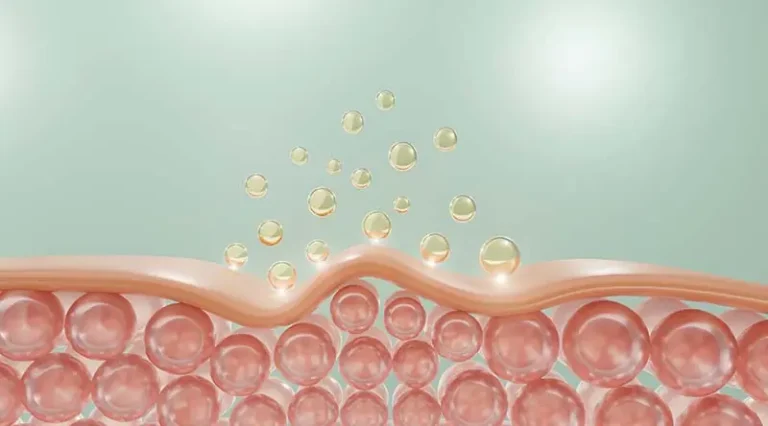
Skinboosters play an essential role in deep hydration and dermal thickening. This lightly cross-linked hyaluronic acid improves the density, suppleness and radiance of the skin. They are particularly suitable for thin, dry or sun-damaged skin, to which they restore a more homogeneous consistency and lasting glow.
To correct established wrinkles, two techniques complement each other. Hyaluronic acid makes it possible to fill static wrinkles or to lift certain areas of the face using medical lifting techniques. It restores volumes and improves contours. Botulinum toxin acts mainly on certain expression lines by reducing excessive muscle contraction.
Medium peels are an effective solution for improving the quality of the skin surface. They promote cell renewal, even out the complexion, reduce fine lines and correct pigment irregularities. They make it possible to obtain rapid results, but they cause social downtime. One to two sessions are sufficient.
The fractional ablative laser is one of the most effective treatments for acting on skin aging. By creating microscopic areas of controlled regeneration, it intensely stimulates collagen production and significantly improves dermal density. It reduces superficial wrinkles and corrects pigmentation. A protocol of four sessions spaced two months apart makes it possible to obtain global and long-lasting rejuvenation.
Prevention plays an essential role in the management of skin aging. It helps delay the appearance of visible signs of age and maintain good-quality skin over the long term. Its purpose is to sustain cellular activity, strengthen tissues and maintain sufficient hydration so that the skin remains supple, firm and radiant.
Mesotherapy provides the skin with vitamins, minerals, amino acids and non-cross-linked hyaluronic acid. This treatment improves tissue oxygenation, revives radiance and optimizes tone. Combined with PRX-T33 peel (referred to as mesopeel), which intensely stimulates the synthesis of dermal components without causing social downtime, it represents a particularly effective preventive approach. Two sessions per year are generally sufficient to maintain more resistant and radiant skin.
The Hydrafacial treatment ensures deep cleansing, removes impurities and provides immediate hydration. It facilitates the penetration of active ingredients, improves skin quality and restores radiance. Performed twice a year, it contributes to maintaining healthy and hydrated skin.
Laser photorejuvenation is a technique that stimulates collagen production and significantly densifies the dermis. It can be performed once or twice a year.
Skinboosters also play a preventive role. They ensure deep hydration, improve dermal suppleness and help delay the appearance of wrinkles. One to three syringes injected each year make it possible to preserve skin quality over the long term.
The results obtained thanks to the different procedures are supported by scientific data. Several international publications have demonstrated the effectiveness of Skinboosters in improving skin hydration and elasticity, particularly in the Journal of Cosmetic and Laser Therapy. Hyaluronic acid has also been the subject of in-depth studies that have highlighted its role in restoring volume and reducing wrinkles, as shown by work published in the Aesthetic Surgery Journal. Botulinum toxin has, for its part, several decades of clinical follow-up and a particularly extensive literature confirming its effectiveness in the long-lasting reduction of certain expression lines. Peels have also proven their benefit in reviving radiance, reducing fine lines and correcting pigment irregularities, results regularly reported by the Journal of the American Academy of Dermatology. Finally, fractional ablative laser is recognized by the journal Lasers in Surgery and Medicine as a reference treatment for improving dermal density and reducing superficial wrinkles. Together, these techniques achieve progressive, natural rejuvenation supported by solid scientific evidence.
The prices of skin rejuvenation treatments depend on the technique used, the area to be treated and the extent of skin aging. Skinboosters, whose objective is to improve skin quality, are billed 400 CHF per syringe. Hyaluronic acid injections, intended to fill static wrinkles or support certain facial structures, are offered at 600 CHF per syringe. Botulinum toxin, indicated to reduce expression lines, is billed from 250 CHF for one area. Medium peels start at 500 CHF per session, the price depends on the extent of the area to be treated. Fractional ablative laser sessions, which aim to densify the dermis and correct superficial wrinkles, are offered at 900 CHF per session. Mesotherapy and PRX-T33, used in a preventive approach or to improve radiance, are billed 500 CHF. One Hydrafacial session costs 200 CHF, while photorejuvenation sessions are billed 500 CHF.
Prevention can begin as early as the thirties, when the production of collagen and elastin decreases and the first fine lines appear. Acting early helps slow the progression of aging and maintain more resilient skin.
They are generally not very painful. Injections are performed with fine needles or cannulas. For laser sessions, local anesthesia is often applied.
The results of botulinum toxin last 4 to 6 months, those of hyaluronic acid 9 to 12 months. The effects of Skinboosters are visible for one year, those of medium peels and lasers for several years.
Yes, after most treatments such as botulinum toxin, hyaluronic acid, mesotherapy, Skinboosters or Hydrafacial. Medium peels and fractional ablative laser cause social downtime that varies between a few days and one week.
No, when they are performed with precision. Botulinum toxin softens contracted areas without freezing them, and hyaluronic acid restores volumes in a natural way. The features and facial expression remain preserved.
Yes. Combining different techniques makes it possible to act on several mechanisms of aging and to obtain harmonious and long-lasting rejuvenation while maintaining a natural result.
Some results are immediate, particularly those of hyaluronic acid injections. Botulinum toxin acts within a few days, while Skinboosters, mesotherapy, peels and lasers offer a progressive result over several weeks.
It cannot be stopped, but it can clearly be slowed down. Regular treatments, daily photoprotection, a healthy lifestyle and medical follow-up help maintain skin quality and preserve its youthful appearance for longer.