Home » Skin enhancement » Oily skin
Oily skin is a common skin condition, observed in both adolescents and adults. It is characterized by excessive production of sebum by the sebaceous glands, mainly located on the face, the scalp, the décolleté, and the back. On the face, the area most affected is the so-called T-zone (the forehead, the nose, and the chin).
From a biological standpoint, sebum plays an essential role. It contributes to protecting the skin barrier, limits dehydration, and has a natural antimicrobial action. The problem arises when this production becomes excessive. The skin then appears shiny, pores become enlarged, skin texture becomes irregular, and imperfections may appear.
Oily skin is not a pathology in itself, but a specific skin type that requires appropriate management. The objective is not to completely suppress sebum production, which would be harmful, but to rebalance it.
Excessive sebum production results from the interaction of several biological, genetic, and environmental factors :
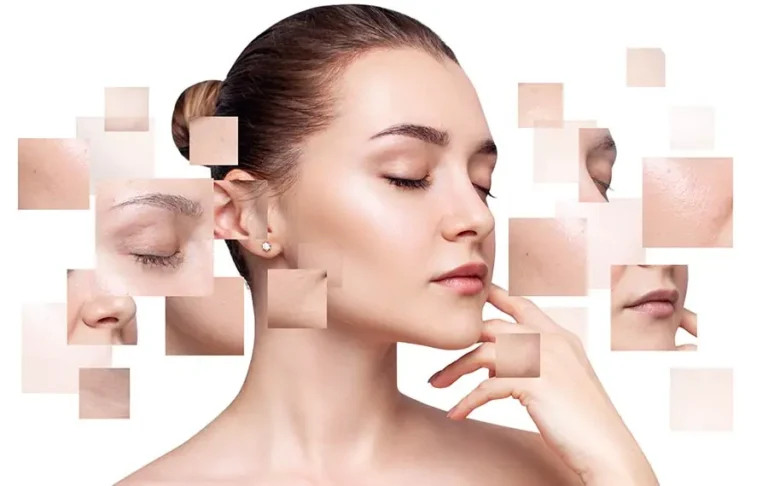
When oily skin is not properly managed, several complications may appear.
Enlarged pores are one of the most frequent complaints. They result from the accumulation of sebum and keratin in the pilosebaceous canal, leading to a progressive dilation of its opening.
Inflammatory imperfections may then develop. Open or closed comedones, microcysts, papules, and pustules reflect local inflammation often maintained by bacterial proliferation.
In the longer term, poorly balanced oily skin may present an irregular skin texture, a dull complexion, and skin thickening. Contrary to popular belief, oily skin can also become dehydrated, which paradoxically accentuates sebum production.
From an aesthetic standpoint, these manifestations have a real impact on self-confidence and quality of life, justifying personalized medical management.
The first step consists of a precise assessment of the skin type, the degree of seborrhea, and associated lesions (comedones, pustules, scars, residual spots). This analysis makes it possible to distinguish simple oily skin from oily skin with an acne tendency, from rosacea, or from an underlying hormonal disorder that would require additional management.
A detailed medical history makes it possible to identify hormonal, dietary, and environmental factors influencing the skin condition.
During the medical consultation, the skin is examined under direct light and sometimes using imaging devices or specific lamps in order to assess pore depth, scars, and surface irregularities. The patient’s expectations (reduction of shine, smoothing of skin texture, reduction of breakouts, improvement of scars) guide the choice of management, which combines daily skincare with targeted medical procedures.
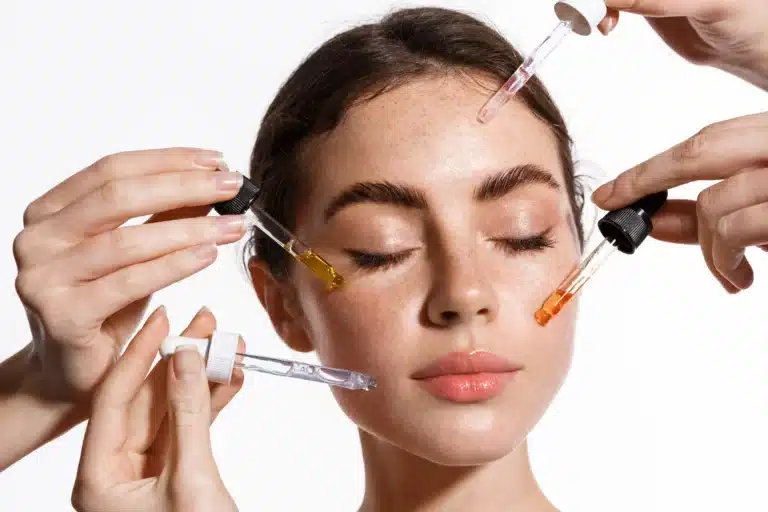
Home care constitutes the foundation of any management of oily skin. Gentle but effective cleansing, morning and evening, with non-comedogenic products specifically formulated for excess sebum, limits pore obstruction without damaging the skin barrier.
A routine may include sebum-regulating active ingredients (salicylic acid, niacinamide, certain retinoids) and light textures, fluids, or gels. Hydration remains essential, even for oily skin, in order to preserve the barrier function and reduce seborrheic rebound phenomena induced by overly drying products.
Each case of oily skin presents its own clinical profile, ranging from simple shine without lesions to more pronounced forms with active acne and deep scars. The therapeutic strategy must therefore be personalized, taking into account age, phototype, skin sensitivity, lifestyle, and any professional or social constraints (recovery time, desired discretion).
The thoughtful combination of suitable daily skincare, regular peelings, anti-acne mesotherapy, and Hydrafacial makes it possible to achieve a harmonious overall result : less oily skin, a more even complexion, and a lasting improvement in psychological comfort. A medical consultation in Geneva offers the opportunity to establish a precise assessment and define a tailored protocol integrating the most recent validated techniques for oily skin.
The objective of management is twofold. On the one hand, to sustainably regulate the activity of the sebaceous glands, and on the other, to improve overall skin quality by acting on pores, skin texture, and inflammation.
Unlike standard cosmetic care, aesthetic-oriented medical procedures make it possible to act in depth, in a targeted and progressive manner, with objective and lasting results.
Chemical peels play a central role in the medical management of oily skin. They consist of applying an acidic solution in order to induce a controlled chemical exfoliation of the superficial layers of the skin. For oily skin, certain acids are preferred for their keratolytic and sebum-regulating action (peeling for oily skin). They help to unclog pores, reduce the thickness of the stratum corneum, and limit the formation of comedones. They also stimulate cell renewal, giving the skin a brighter appearance.
The choice of the type of peel, its concentration, and its frequency depends on the clinical examination and the patient’s aesthetic objectives.
To treat oily skin with medical peels, a course of three to six sessions is generally planned, spaced a few weeks apart, in order to allow the skin time to regenerate between each treatment. The exact number of sessions is then adjusted by Dr. Romano according to the intensity of seborrhea, the possible presence of acne, and skin tolerance, in order to obtain a lasting result.
Dermatological lasers and certain light-based technologies represent a major advance in the treatment of oily skin. Their action is based on targeted energy capable of acting on the sebaceous glands and on dermal quality.
These treatments make it possible to reduce sebaceous activity, tighten pores, and improve skin texture. They are particularly interesting for patients with oily skin associated with enlarged pores or surface irregularities.
The sessions are carried out with precise adjustment of the energy delivered by the laser in order to respect skin physiology. Post-treatment effects are generally mild, with a rapid return to daily activities.
Oily skin can paradoxically be dehydrated. In this context, mesotherapy and Skinboosters are fully indicated.
These techniques consist of injecting, into the superficial dermis, complexes combining lightly cross-linked hyaluronic acid, vitamins, minerals, and antioxidants. They help restore skin hydration without stimulating sebum production.
Improved skin hydration indirectly contributes to better regulation of sebaceous production. The skin becomes more balanced and visibly healthier.
The Hydrafacial is a treatment particularly well suited to oily skin. This non-invasive aesthetic-oriented medical technique combines deep cleansing, gentle exfoliation, and controlled suction of impurities, making it possible to effectively eliminate excess sebum, dead skin cells, and debris responsible for pore obstruction. In patients with oily skin, Hydrafacial helps unclog pores, reduce skin shine, and visibly improve skin texture, without damaging the skin barrier. The simultaneous infusion of specific serums with sebum-regulating and hydrating properties helps rebalance the skin without drying it out, thereby limiting compensatory overproduction of sebum. When performed regularly, this medical treatment improves overall skin quality, evens out the complexion, and represents an excellent maintenance base in combination with other aesthetic-oriented medical procedures intended for oily skin.
Treatments dedicated to oily skin most often lead to a noticeable reduction in skin shine, a spacing out of imperfection flare-ups, and a visibly refined skin texture.
The complexion gains in clarity, surface irregularities diminish, and makeup shows better hold, provided that the sessions are carried out regularly and combined with a rigorously adapted skincare routine.
After a medical peel on oily skin, the skin’s appearance evolves in stages : immediately afterwards, the skin may appear pink, slightly warm, then show mild peeling depending on the intensity of the treatment. Over the days and weeks, a reduction in shine is usually observed, pores become visibly less dilated, skin texture is refined, and imperfections are less frequent, resulting in more even and more regular skin.
Oily skin is by no means protected against skin aging, even if superficial fine lines often appear later. Over the years, it tends to develop a certain tissue laxity, a more visible dilation of pilosebaceous openings, and an irregular skin surface.
Early management through aesthetic-oriented medical procedures, thoughtfully planned and adapted to the specificities of oily skin, contributes to more harmonious aging.
The prices of aesthetic-oriented medical treatments for oily skin vary depending on the technique used, the extent of the treated area, the number of sessions required, and the personalized protocol defined during the medical consultation. A medical peel, indicated to regulate excess sebum, refine skin texture, and unclog pores, is offered at 200 CHF per session. Medical laser treatments, intended to reduce the activity of the sebaceous glands, tighten pores, and sustainably improve skin quality, are billed at 450 CHF per session, with the number of sessions adapted to the severity of seborrhea and aesthetic objectives. Facial mesotherapy, used to rebalance oily skin that is often dehydrated and to improve overall skin quality, is billed at 300 CHF per session. Hydrafacial, a non-invasive deep cleansing treatment particularly suited to oily and comedone-prone skin, is offered from 200 CHF per session ; this treatment has a major role in regular skin maintenance.
Skinboosters, indicated to improve deep hydration, quality, and radiance of unbalanced oily skin, are billed at 400 CHF per syringe.
A prior medical consultation makes it possible to establish a personalized treatment plan and a precise quote.
Yes, hydration is essential. Poorly hydrated oily skin produces even more sebum in an attempt to protect itself.
A light, non-comedogenic cream, such as a gel or fluid, is ideal for hydrating without weighing down the skin.
The sun can temporarily improve the appearance of oily skin, but it subsequently stimulates sebum production and thickens the skin.
Chemical peels, lasers, medical purifying treatments, and mesotherapy are particularly effective.
Yes, peeling helps regulate sebum production, refine skin texture, and improve complexion radiance.
Oily skin is often linked to hormonal and genetic factors, stress, or the use of unsuitable skincare products that stimulate sebum production.
No, oily skin is not a disease. It is a skin type, but it can promote certain issues such as acne or enlarged pores.
The signs include persistent shine, visible pores, blackheads, imperfections, and makeup that does not last.
Excess sebum can clog pores, promoting bacterial proliferation and the appearance of pimples or acne.
Yes, oily skin tends to age better because sebum protects the skin from dehydration and delays the appearance of wrinkles.
It is recommended to use a gentle, purifying, and non-aggressive cleanser, morning and evening, to remove excess sebum without stripping the skin.