Home » Conditions » Skin & hair » Wrinkled skin
Wrinkled skin corresponds to skin whose collagen and elastin fibers have weakened over time, leading to a loss of firmness, volume and tone. wrinkles can be superficial or deep, linked to natural skin aging, external aggressions (sun, pollution, tobacco) or repeated muscle contractions. Wrinkled skin may be accompanied by a dull complexion, dehydration and a progressive sagging of the features. Precise diagnosis makes it possible to distinguish expression lines, static wrinkles and dehydration fine lines in order to propose a personalized protocol (botulinum toxin, Skinboosters, lasers, peels, mesotherapy, etc.). Thanks to appropriate management, it is possible to visibly improve the appearance of wrinkled skin and make it smoother, firmer and more radiant.
Fine lines are small, shallow lines that appear on the surface of the skin, most often in fragile areas where the skin is naturally thinner, such as the eye contour, lip contour, forehead or cheeks. They are among the first visible signs of skin aging and can appear as early as age 25, when skin hydration decreases and cell renewal becomes slower.
Fine lines are often caused by skin dehydration. When the skin is dehydrated, it creases more easily and reflects light less well, which makes fine lines more visible. Over time, they may become more pronounced due to oxidative stress, pollution, UV rays or hormonal fluctuations, factors that gradually weaken collagen and elastin fibers.
Two types of fine lines are generally distinguished : dehydration fine lines, which give a “creased” appearance to the skin and appear mainly around the eyes, on the cheeks or the forehead . ; and expression fine lines, linked to repeated facial movements, visible particularly at crow’s feet or between the eyebrows.

Fine lines and wrinkles reflect different changes in the skin. Fine lines remain superficial : they affect only the very outer layers of the skin and mainly indicate a lack of hydration. They are easier to treat because they are not caused by a deep alteration of the skin structure.
Wrinkles, on the other hand, develop when aging of the dermis becomes more pronounced. Over the years, collagen and elastin — two essential components for maintaining firmness — decrease in quantity and deteriorate. The skin then loses its strength and density, leading to the appearance of deeper wrinkles.
Sun exposure, tobacco, alcohol, chronic stress or a sugar-rich diet accelerate this degradation and promote the formation of wrinkles.
Two categories are also distinguished : dynamic wrinkles, initially visible only with facial expressions ; and static wrinkles, which are visible even when the face is at rest.
Intrinsic aging is the primary cause of wrinkle formation. It corresponds to a programmed cellular slowdown, with a progressive decrease in fibroblast activity. Collagen fibers become fewer and less organized, elastin fibers fragment, and the extracellular matrix becomes depleted in hyaluronic acid. This loss of structural cohesion makes the skin thinner, less resistant and more vulnerable to external aggressions.
Photo-induced aging, linked to ultraviolet radiation, is a major factor and accelerates wrinkle formation much more than chronological age. UV rays generate oxidative stress responsible for subtle but persistent inflammation, alter cellular DNA, fragment elastic fibers and progressively destroy collagen. This process, known as solar elastosis, is one of the main causes of wrinkles on the face , neck and décolleté .
Repeated facial movements also contribute to the formation of dynamic wrinkles. Over time, expression fine lines turn into permanent wrinkles, as the skin loses its ability to relax after repeated muscle contractions.
Extrinsic factors play a key role. Tobacco is a powerful accelerator of skin aging and reduces tissue oxygenation. Air pollution contributes to low-grade chronic inflammation. Lack of sleep, stress, chronic dehydration and a diet low in antioxidants worsen wrinkle formation.
To visibly and sustainably reduce fine lines, it is necessary to act on deep hydration, cellular stimulation, skin radiance and the structural quality of the dermis. Aesthetic-oriented medicine techniques now allow excellent results while respecting the skin’s physiology. The following treatments are particularly suitable for smoothing fine lines, improving radiance and preventing their reappearance.

Skinboosters are one of the most effective treatments for reducing dehydration fine lines. They involve the injection of lightly cross-linked hyaluronic acid into the dermis to restore the skin’s water reserve. This deep hydration immediately improves the suppleness, elasticity and radiance of the face. Superficial fine lines gradually smooth out as the skin becomes denser and more even. The results last for one year. For an initial treatment, two to three sessions at one-month intervals are recommended. Maintenance is done with an annual session.
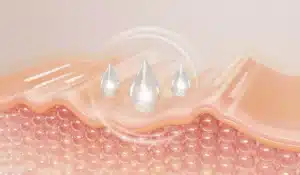
Mesolift involves injecting a mixture of vitamins, antioxidants, amino acids and non-cross-linked hyaluronic acid into the dermis. This treatment intensely nourishes the skin, stimulates microcirculation and improves cell renewal. It is particularly indicated when fine lines are related to stress, fatigue or devitalized skin. The face appears more radiant, more hydrated and fine lines gradually become less visible thanks to a global revitalization of the skin tissue.
PRX-T33 peel is an innovative peel combining TCA and hydrogen peroxide. It stimulates dermal synthesis without causing visible peeling, making it a highly appreciated treatment for patients seeking quick results without social downtime. PRX-T33 improves elasticity, firmness and skin clarity. Fine lines fade thanks to better collagen quality and a more even skin texture. It provides an immediate “glow” and enhances skin structure.
Photorejuvenation laser works on the skin surface as well as the deeper layers of the dermis. It stimulates collagen production, enhances skin radiance, reduces pigment irregularities and refines skin texture. Fine lines become less visible over the sessions thanks to improved skin density. This treatment is ideal for dull, dehydrated or sun-damaged skin.
To effectively treat wrinkles, it is necessary to act on several levels : muscle dynamics, dermal quality and density, lost volumes, as well as surface irregularities. The choice of treatment depends on the type of wrinkles (dynamic, static or deep) and the structure of the skin.

Botulinum toxin is the reference treatment for expression wrinkles : forehead lines, (frown line) and crow’s feet. By reducing the contraction of the muscles responsible for these wrinkles, it allows the face to relax and the skin to gradually smooth out. Dynamic wrinkles become less visible, and some early wrinkles may even disappear. The result remains natural when the injection is tailored to each patient’s morphology.

Hyaluronic acid plays an essential role in the management of static wrinkles and volume loss. Used in a medical lifting technique, it allows repositioning of sagging tissues and restoring the natural balance of the face. Hyaluronic acid can also be injected directly into certain wrinkles, such as nasolabial folds or marionette lines.
Medium-depth peel exfoliates the superficial layers of the skin as well as part of the dermis, triggering a true regeneration process. In response to this controlled stimulation, skin cells reorganize and produce higher-quality collagen. The skin gradually becomes denser, smoother and more even.
Fractional ablative laser is one of the most effective techniques for correcting static wrinkles, especially when they are deep or associated with skin laxity. By creating micro-columns of ablation within the dermis, it stimulates the production of new collagen and denser skin. Wrinkles are noticeably reduced and skin firmness gradually improves. This treatment fits particularly well into a comprehensive skin rejuvenation strategy.
The results achieved in the management of wrinkles are well documented. Botulinum toxin injections have shown a significant reduction in the depth of dynamic wrinkles, with high patient satisfaction, as demonstrated by the study of Rzany et al. (Dermatologic Surgery, 2004). Hyaluronic acid, used for static or deep wrinkles, has been the subject of numerous clinical trials, notably those by Narins and collaborators, showing a lasting improvement in volumes and a reduction of folds for several months.
Fractional ablative lasers are among the most scientifically validated techniques. The study by Hantash et al. (Dermatologic Surgery, 2007) demonstrates a significant increase in dermal collagen after fractional laser sessions, with visible results after a few weeks and progressive improvement over several months.
Photorejuvenation technologies have also proven their efficacy. Bitter et al. showed an improvement in skin quality and radiance and a reduction in fine lines after several sessions.
Skinboosters improve skin hydration and suppleness, as confirmed by the work of Micheels and Sparavigna, showing an increase in dermal elasticity measured by instrumental assessments.
The cost of a treatment aimed at reducing wrinkles depends on the chosen method, the depth of the wrinkle, its location and the desired result. Each technique works at a different depth and requires a number of sessions adapted to the skin’s condition, which explains the price variations. Skinboosters are offered at 400 CHF per syringe, facial mesotherapy is charged 300 CHF per session, and photorejuvenation laser 500 CHF per session. The PRX-T33 peel is offered at 250 CHF per session.
For deeper wrinkles, hyaluronic acid injections are charged 600 CHF per syringe, while botulinum toxin starts at 250 CHF per area. A fractional ablative laser session is charged 900 CHF. Finally, a medium-depth peel is available from 500 CHF per session.
Each treatment is part of a personalized care plan designed to achieve a natural, progressive result adapted to the patient’s skin and facial structure.
Around 25 years old, in order to prevent the progressive decrease in collagen and elastin production.
Sun exposure, repeated facial expressions, stress, pollution or dehydration can be responsible for aging before 30.
They most often appear around the eyes and on the forehead, areas where the skin is thinner and subjected to repeated expressions.
Daily hydration, strict sun protection and an adequate intake of essential fatty acids and antioxidants promote harmonious skin aging.
They do not disappear completely, but treatments such as botulinum toxin, hyaluronic acid or lasers can significantly and durably reduce them.
A targeted routine, regular sun protection and, if necessary, mild medical treatments are usually enough to maintain a fresh-looking face.
Antioxidant agents such as vitamin C and plant-derived retinol precursors effectively support skin regeneration and limit oxidative stress, the main driver of aging.
Deep wrinkles around the mouth and glabellar lines are often perceived as the most aging.
Genetics, limited sun exposure, good skin hydration and appropriate care all help significantly delay the appearance of wrinkles.
As soon as the first fine lines appear, generally around 25 years old, to slow their progression.
Repeated sun exposure, smoking, chronic stress and lack of hydration weaken dermal fibers and significantly accelerate the appearance of wrinkles.
Yes. Pronounced facial expressions, stress, lack of sleep or significant sun exposure can lead to early fine lines.
The first expression wrinkles generally appear around 25 to 30 years old, depending on sun exposure and skin quality.
Strict hydration, daily sun protection and an appropriate skincare routine are essential to maintain skin quality.
They do not reverse spontaneously. Their depth can be significantly reduced through lasers, injections, or stimulation of collagen synthesis.