Home » Conditions » Skin & hair » Loose skin
Skin sagging corresponds to a loss of tone and firmness of the skin, linked to a progressive alteration of its supporting structures. It is a complex physiological phenomenon involving the deep dermis, the extracellular matrix and the fibers that ensure the skin’s mechanical resistance. Unlike wrinkles, which are localized breaks in the skin, sagging reflects a global modification of cutaneous architecture and is expressed by a visible drooping of the contours of the face or the body. It can affect the cheeks, the facial oval, the neck, the abdomen, the inner arms or the thighs.
Skin sagging is not solely the result of chronological aging. It also depends on genetic, hormonal and environmental factors, as well as on the quality of connective tissue. Its understanding is based on a precise analysis of skin structure, dermal density and the balance between synthesis and degradation of collagen and elastin fibers.
Loose skin is a frequent aesthetic concern, particularly as it alters facial harmony and the perception of youth. In aesthetic-oriented medicine, there are now effective, scientifically validated and customizable treatments to restore skin tension.
Skin sagging is caused by several factors.

Skin sagging can appear earlier than one might think, as it does not depend solely on chronological age but on the intrinsic quality of the tissues and cumulative exposure to extrinsic factors. The first signs are sometimes noticeable as early as the thirties, particularly in patients whose skin is naturally thin, poorly elastic, or heavily sun-exposed. From the thirties, the slowdown in collagen and elastin production becomes more pronounced, and the loss of deep volume increases the tendency to sag. Hormonal variations, especially during the premenopausal period, further accelerate this process by directly affecting dermal density. Thus, the age at which sagging appears varies, but it always results from a combination of biological and environmental mechanisms that accumulate over time.
Skin sagging develops progressively and is expressed both through changes in skin quality and alterations in facial architecture. It is not merely a loss of tone; this phenomenon results from the deterioration of supporting fibers, changes in deep volumes, and a decrease in the mechanical tension of the tissues.
Identifying early signs allows for more targeted interventions and achieves more natural and long-lasting results.
The skin can sag on the face, neck, or other areas of the body. The skin then appears less tight, looser, and this effect is accentuated during movements or when leaning. Simple skin traction tests assess the skin’s responsiveness and its ability to return to its original position.
Loss of volume in the cheeks and temples is common. It reflects the resorption of deep fat and sagging of fat compartments. This volumetric change alters the natural support of the face, creating a hollow (hollow face) or tired appearance and contributes to tissue sagging.
The appearance of skin folds or more pronounced wrinkles, especially around the mouth, eyes, or nasolabial folds, is another sign. These folds are a direct consequence of weakened supporting structures and reduced skin elasticity, which recovers less effectively after facial expressions.
The facial contour also tends to lose definition, particularly along the jawline and neck. This change results from the gradual descent of tissues, often associated with a decrease in ligament support and loss of dermal firmness. The facial oval then appears less structured, giving the impression of heavier and less regular contours.
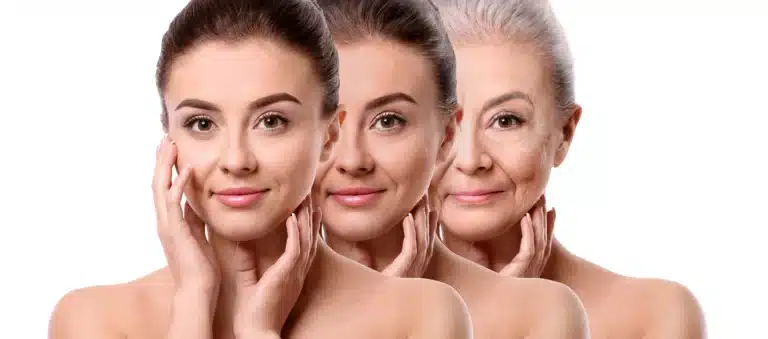
There are several effective measures to prevent or reduce skin sagging.
The management of skin sagging often combines several techniques, chosen based on the cause of the sagging and the patient’s morphology.
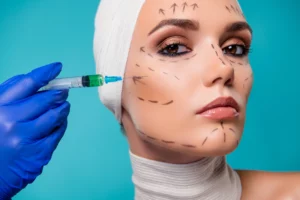
Injections of hyaluronic acid are particularly indicated when loss of support or volume contributes to skin sagging. By reinforcing the anchoring points and deep structures, they redefine contours, support tissues (technique of medical lifting) and improve facial balance. Their indirect lifting effect is documented and results from a harmonious repositioning of volumes.
Medium peels using laser or trichloroacetic acid (TCA) are a technique of choice for mild to moderate skin laxity. By penetrating the superficial dermis, they induce deep tissue regeneration, fiber reorganization and an increase in dermal density. The study by Hettiarachchi et al. (Journal of Cosmetic Dermatology, 2011) showed a measurable improvement in skin firmness and quality after a medium peel, with visible tightening and a reduction in fine lines.
Collagen inducers, such as Sculptra, are now widely appreciated for their effectiveness in the treatment of skin laxity. Sculptra is formulated with poly-L-lactic acid, a molecule capable of stimulating the natural production of collagen within the dermis. Unlike hyaluronic acid injections, which provide an immediate result, Sculptra acts progressively : it restores skin density and structure over the weeks, durably improving skin firmness and elasticity. This treatment is particularly suitable for patients seeking a natural, discreet and long-lasting rejuvenation.
The stimulation of collagen synthesis by photorejuvenation laser or fractional ablative laser constitutes a particularly effective approach to skin laxity. These technologies induce an objectifiable neocollagenesis, making it possible to progressively increase dermal density and improve overall skin firmness.
The radiofrequency technique is complementary : by generating controlled heat within the dermis, it ensures an immediate contraction of existing collagen fibers and durably activates fibroblasts. This dual mechanism improves skin tightness and proves particularly relevant in cases of moderate laxity.
Mesotherapy and Skinboosters can be combined when laxity is associated with an alteration in skin quality. Although they are not skin-tightening treatments, they improve hydration, skin quality and suppleness, thereby enhancing the overall perception of firmness.
Botulinum toxin can be integrated into a combined therapeutic strategy when certain muscular contractions interfere with the quality of the result. By relaxing the muscles responsible for certain expressions — those causing forehead lines, glabellar lines or wrinkles around the eyes — , it improves tissue harmony and can enhance the lifting effect achieved by other treatments.
The results obtained in the treatment of skin laxity are today solidly supported by an abundant scientific literature, confirming the effectiveness of volumizing injections, collagen inducers and laser technologies. With regard to hyaluronic acid, several studies – notably the study by Eccleston et al. published in the Journal of Cosmetic Dermatology in 2021 – demonstrate a measurable improvement in structural support associated with a progressive lifting effect linked to volume restoration. This harmonious repositioning promotes tissue tightening, redefines the oval of the face, reduces cheek sagging and improves laxity of the lower face.
The effectiveness of Sculptra, based on poly-L-lactic acid, has also been documented for more than two decades. The study by Beer et al., published in Dermatologic Surgery in 2007, highlights a significant increase in dermal collagen and a gradual improvement in firmness after several spaced sessions. More recent research, such as that by Vleggaar (2014), shows that poly-L-lactic acid leads to an objectifiable dermal thickening, responsible for a durable tightening effect, with results that may be maintained for several years when maintenance sessions are continued.
For fractional ablative lasers, the publication by Manstein et al. (Lasers in Surgery and Medicine, 2004) demonstrated the ability of these technologies to intensely stimulate neocollagenesis while preserving part of the healthy skin, allowing for faster recovery compared with a medium peel. The observed improvement concerns firmness, quality and dermal density, with a clearly perceptible tightening in the months following the procedure. These lasers are particularly suitable for moderate laxity, when a natural and durable tightening effect is sought.
The effectiveness of non-ablative photorejuvenation lasers is also well documented. The pioneering study by Bitter (Dermatologic Surgery, 2000) highlighted an improvement in skin firmness and radiance after a series of sessions. More recent publications, such as those by Negishi et al. (Lasers in Surgery and Medicine, 2018), confirm a measurable improvement in dermal quality and a moderate stimulation of collagen synthesis. As their tightening effect is more moderate, non-ablative photorejuvenation lasers are mainly indicated for early skin laxity or when they are integrated into a combined protocol with other more powerful treatments.
The cost of treatments intended to improve skin laxity varies according to the technique used and the protocol established during the initial consultation. Cross-linked hyaluronic acid injections are offered from 600 CHF per syringe, Sculptra is charged at 900 CHF per vial. The price of a fractional ablative laser session is 900 CHF. Photorejuvenation laser sessions are offered at 500 CHF per session, Skinboosters at 400 CHF per syringe, mesotherapy at 300 CHF per session. Depending on the degree of laxity and the objectives sought, several sessions are necessary. A regular maintenance plan to stabilize the results obtained is also established during the initial consultation.
No. It also results from extrinsic factors such as sun exposure, smoking, pollution, hormonal fluctuations or weight variations, which accelerate the loss of firmness.
Yes. By restoring deep support points, hyaluronic acid redefines volumes and improves tissue tension, with an indirect lifting effect.
Yes. Poly-L-lactic acid progressively stimulates collagen production, improving firmness, dermal thickness and overall tissue support.
They act more deeply and provide a more pronounced tightening effect. Photorejuvenation mainly improves skin density and quality.
Yes, for mild to moderate laxity. Medium peels stimulate dermal regeneration and visibly improve firmness.
Depending on the technique, two to three sessions may be necessary. The results are progressive, and annual or semi-annual maintenance is recommended.
Yes. Fractional ablative lasers, Sculptra, certain radiofrequency techniques and medium peels improve firmness without a volumizing effect.
Daily photoprotection, an antioxidant-rich diet, sufficient sleep and an adapted routine significantly delay tissue sagging.
Yes, provided that a complete protocol and maintenance sessions are carried out. The effects of injections and stimulation of collagen synthesis can last from several months to several years depending on the technique.