Home » Conditions » Skin & hair » Dry skin
Dry skin is one of the most common reasons for consultation in aesthetic-oriented medicine and general dermatology. It is defined by an alteration of the skin barrier function, a decrease in the hydrolipidic film on the surface and a reduced ability to retain water within the epidermis. Dry skin is a skin type characterized by a deficiency in lipids, particularly sebum, which is essential for maintaining the hydrolipidic film. Unlike combination or oily skin, dry skin naturally lacks hydration and can become uncomfortable, rough or prone to irritation. It may be present permanently or appear only occasionally, for example in winter or after prolonged sun exposure. All areas of the body may be affected, although the face, hands and legs are the areas most frequently concerned.
Healthy skin performs three essential functions : a mechanical barrier against external aggressions, regulation of internal hydration, and a crucial immune role. When its hydrolipidic film – a mixture of sebum, sweat and epidermal lipids – becomes sparse, the skin loses its ability to retain water. Dry skin then develops gradually, often in an insidious manner.
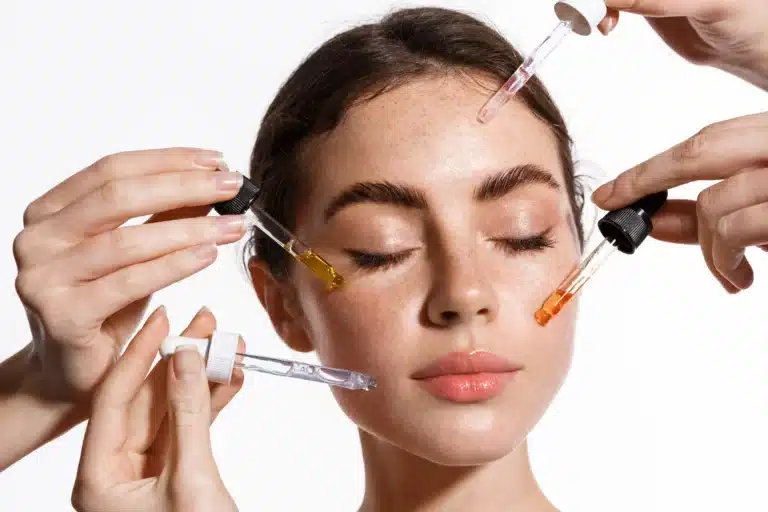
Dry skin corresponds to a lack of lipids, particularly ceramides and fatty acids, which alters the hydrolipidic film and increases transepidermal water loss. It manifests as diffuse roughness, constant tightness and heightened sensitivity to climatic variations. Dehydrated skin, on the other hand, lacks water but maintains overall sebaceous function. It can therefore affect all skin types, including combination or oily skin. It is characterized by a dull complexion, dehydration fine lines and a temporary discomfort that worsens after washing or exposure to cold. Understanding this difference allows for the selection of appropriate care, based either on lipid supplementation to restore dry skin or on increasing epidermal water content to correct dehydration.
Dry skin presents a set of characteristic signs : tightness after showering, discomfort throughout the day, roughness and loss of elasticity. Pores appear tightened, the skin surface looks dull, sometimes flaky. The most affected areas are usually the cheeks, arms and legs. Increased sensitivity to environmental variations : the skin reddens more easily, reacts to cold, or to certain cosmetics. This reactivity is the consequence of an altered skin barrier, allowing external irritants to penetrate more easily.

Dry skin has several levels of severity.
In aesthetic-oriented medicine, the management of very dry skin relies on a comprehensive strategy, combining appropriate topical care, medical rehydration techniques and personalized preventive advice. The first goal is to restore the skin barrier to limit transepidermal water loss. The second is to improve skin quality and suppleness.

The Skinbooster, a lightly cross-linked hyaluronic acid, is one of the most effective treatments to restore deep hydration in dry skin. Injected in small amounts into the superficial dermis, it attracts and retains water over the long term, thereby improving skin suppleness and quality. This technique does not aim to alter volume but to enhance skin quality. Skinboosters are particularly indicated for patients with persistent dryness due to aging, cold climate, or impaired skin barrier. Results are progressive but long-lasting, leaving the skin more supple, even-toned and less prone to tightness.
Hyaluronic acid is a molecule naturally present in the skin. It plays a key role in maintaining hydration, suppleness and skin tone. Thanks to its ability to retain water, it helps keep the skin comfortable, smooth and plump.
Hyaluronic acid, extremely hydrophilic, attracts and holds water within the skin tissues. A single molecule can capture up to 1,000 times its weight in water, allowing the skin to stay well hydrated even when exposed to aggressions such as cold or wind, common in Geneva. The result is visible quickly : the skin is revitalized within days.
To ensure optimal hydration, the amount of product injected must be appropriate and sufficient. Protocols vary depending on the treated area, the extent of dryness and the condition of the skin, but the volumes used generally range from 2.5 mL to 6 mL per session. This approach allows visible results at the end of the protocol, with improved skin comfort and quality.
The mesotherapy is an ideal treatment for dry and dehydrated skin.
Mesotherapy works complementarily by delivering to the epidermis a set of essential nutrients : non–cross-linked hyaluronic acid, vitamins, peptides and amino acids. These superficial injections directly support cellular metabolism and strengthen barrier function. Unlike other techniques, mesotherapy does not alter facial volume and is particularly indicated for thin, fragile or sun-sensitized skin. It improves radiance, skin softness and overall comfort, while promoting long-lasting hydration. It is a relevant option for patients seeking a gradual, well-tolerated approach suitable for reactive skin.
Photorejuvenation lasers and radiofrequency are complementary solutions when dry skin is associated with early sagging or superficial fine lines. These devices stimulate collagen production and improve dermal density, resulting in better water retention capacity. They do not directly treat lipid deficiency but reinforce skin structure and improve its density. These techniques are particularly relevant when dry skin occurs as part of the aging process. They help improve firmness, thickness and overall skin quality, providing results that are both visible and long-lasting.
A medical consultation becomes essential when dry skin causes significant discomfort, is accompanied by persistent redness, painful cracks, or does not improve despite regular use of appropriate care.
In some cases, very dry skin requires a more in-depth assessment to rule out dermatological conditions, deficiencies or systemic diseases that may mimic or worsen xerosis.
The consultation allows for a personalized protocol combining gentle medical procedures, highly tolerated topical care and tailored hygiene advice. The goal is to restore long-lasting skin comfort while improving the appearance and quality of the skin.
The results of medical treatments aimed at improving dry skin are well documented in dermatological literature. Studies published in specialized journals such as Journal of the American Academy of Dermatology or Dermatologic Therapy show that lightly cross-linked hyaluronic acid injections significantly enhance dermal hydration, with a measurable increase in skin water content and quality improvements observed over several months. Mesotherapy, evaluated in various clinical studies, improves barrier function and reduces transepidermal water loss through the combined delivery of vitamins, amino acids and non–cross-linked hyaluronic acid. Radiofrequency technologies have been analyzed in several meta-analyses, highlighting stimulation of dermal collagen synthesis and improved firmness, which indirectly alleviates symptoms. Finally, non-ablative fractional lasers, frequently cited in Lasers in Surgery and Medicine, promote dermal remodeling and improve surface irregularities, making them a relevant option when dryness is associated with fine lines or early skin aging. Overall, the literature shows that the best results are achieved when medical treatments are integrated into a comprehensive strategy combining targeted medical procedures and daily skincare.
The prices of treatments aimed at improving dry skin vary according to the personalized protocol defined after a thorough skin analysis. Skinboosters, offered at 400 CHF per syringe, generally constitute the first step in deep rehydration. Mesotherapy is performed at 300 CHF per session. Photorejuvenation laser, particularly indicated when dryness is accompanied by early skin aging, is available at 500 CHF per session. The overall cost depends on the number of sessions required, determined by the degree of dryness, skin thickness and desired results. If you are unsure which treatment is best suited for your dry skin, Dr. Romano welcomes you to his Geneva clinic for a precise assessment and the development of a customized protocol.
The treatment of dry skin also relies on carefully selected topical care. The goal is to supply lipids to the superficial layers, restore the intercellular cement, and retain water within the epidermis.
Emollients rich in ceramides, essential fatty acids and cholesterol form the basis of treatment. They rebuild the lipid barrier and gradually repair barrier function. Urea, at low concentration, can be used to retain water and smooth superficial roughness.
Soap-free cleansers are essential. They help preserve the integrity of the hydrolipidic film and reduce irritation caused by conventional surfactants. Showers should be lukewarm and brief. Topical antioxidants, such as stabilized vitamin C or vitamin E, protect the skin from external aggressions and limit oxidative damage responsible for premature aging. Regular use improves radiance and strengthens the defenses of dry skin.
Dry skin manifests as persistent tightness, diffuse roughness, increased sensitivity and discomfort that persists even after applying regular moisturizing products. The complexion becomes dull, pores appear tightened, and fine flaking may occur. Unlike dehydrated skin, the main deficit is not water but lipids.
Dermatological studies show that certain techniques, such as lightly cross-linked hyaluronic acid injections or mesotherapy, significantly improve dermal hydration and surface quality. However, the literature emphasizes that these treatments provide more lasting results when integrated into a comprehensive strategy combining targeted medical procedures and daily restoration of the hydrolipidic film.
These technologies do not directly treat dryness but strengthen dermal quality by stimulating collagen synthesis. They improve skin thickness and structure, which indirectly contributes to better water retention. They are particularly relevant when dryness is accompanied by superficial fine lines or early skin aging.
The most effective care consists of emollients rich in ceramides, essential fatty acids and cholesterol, as they restore the lipid barrier. Low-concentration urea smooths superficial roughness and retains water within the corneocytes. Soap-free cleansers and high-tolerance formulations are essential to minimize irritation and preserve the hydrolipidic film.
Yes. Sufficient oral hydration, a diet rich in essential fatty acids, reducing hot showers, using a humidifier in winter, and daily sun protection all contribute to gradually improving skin comfort. Sleep, stress management, and quitting smoking also optimize the skin’s ability to repair itself.