Home » Conditions » Body » Thighs
Thigh slimming is a frequent request. Slim, shapely and toned thighs are the dream of many women.
On this page, we present tips to slim the thighs and describe techniques to lose thigh fat without surgery.
However, it is important to keep in mind that the patient’s morphology is an important and genetically determined factor.
In some women, for example, the upper body is slim while the lower part of the body is rather wide, without any real excess weight.
Thigh slimming is one of the most frequent requests in aesthetic-oriented medicine : patients want to slim, tone and sculpt their silhouette. Thanks to the latest innovations, it is possible to reduce thigh volume without surgery, using advanced techniques such as cryolipolysis and the
radiofrequency. These treatments target localized fat deposits and densify the skin to prevent laxity. The solutions are tailor-made, with the goal of achieving slimmer and more harmonious thighs, without pain or prolonged recovery time, with natural and long-lasting results.

Voluminous thighs may be due to excessive muscle mass (this subject is not addressed on this page), water retention or a fat deposit.
Several factors are responsible.
• Heredity : genetic predisposition determines our morphotype and the areas of the body where fat will be stored.
• Caloric surplus : an energy intake higher than expenditure is responsible for fat storage
• Quality of diet : a diet rich in fast sugars and animal fat promotes storage in the lower body. To slim the thighs, it is preferable to eat proteins, fiber, vegetables and healthy fats (omega 3 and 6). A diet that is too rich in salt and lack of hydration cause water retention and therefore an increase in thigh volume.
• Hormones.
• Lack of physical activity.
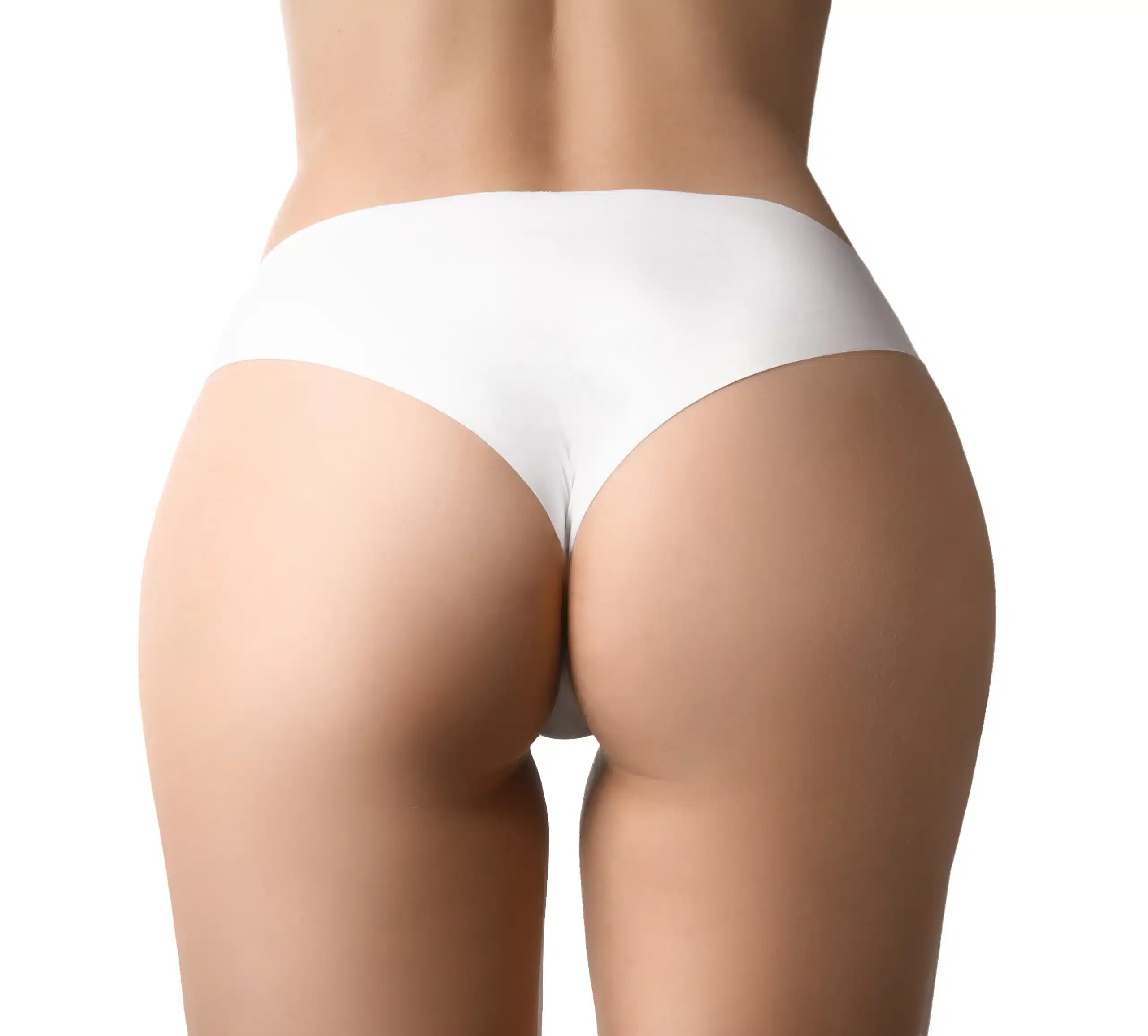
The thigh gap or “gap between the thighs” is a space that forms between the thighs in some women when standing, with feet and knees together.
It is not necessarily related to body weight. Having a thigh gap is not synonymous with anorexia, and not having one is not synonymous with being overweight.
In 2013, it became a beauty standard, a symbol of femininity for some teenagers who measured the importance of this gap by quantifying it in centimeters, sometimes leading to restrictive eating behaviors.
Its presence depends on a woman’s morphology and is therefore genetically determined.
In aesthetic-oriented medicine, there are techniques aimed at creating or accentuating this space between the thighs, but results vary according to each patient’s individual anatomy.
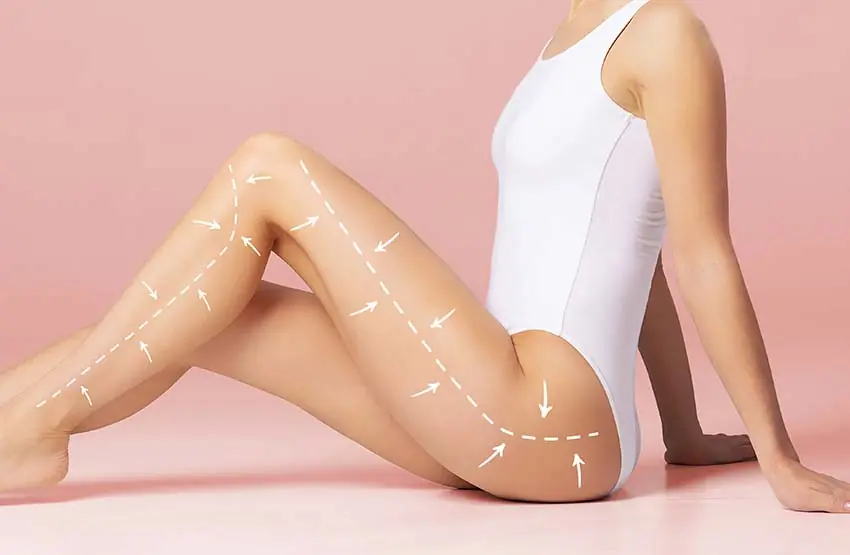
Physical activity remains essential when aiming to lose weight, whether globally or in a targeted manner. However, for the thigh area, diet plays a decisive role. The reduction of localized fat at this level relies above all on an adapted diet. It is recommended to prioritize fiber, vegetables, healthy fats and proteins, without resorting to high-protein diets and while respecting the recommended daily intake according to body weight. It is also advisable to limit salt and alcohol consumption and to ensure sufficient hydration. Fast sugars as well as poor-quality fats should be avoided. Certain foods act as allies to slim the thighs thanks to their draining, fat-releasing and antioxidant properties, such as green tea, pineapple, egg white, lime, apple, spinach and asparagus. Slimming creams for the thighs are complementary treatments : they promote local circulation and drainage, without replacing dietary measures.
To obtain toned thighs, promote volume reduction and reshape them, practicing physical activity is essential. It is preferable to favor exercises that engage and stretch the muscles without causing hypertrophy, within a gentle fitness approach, such as flexion–extension movements, the wall sit, the open lunge, forward lunges, sumo or squats.
The morphotype is the set of physical characteristics defining an individual. There are three types of morphology.
• Ectomorph : the silhouette is slim and elongated with narrow shoulders, metabolism is often fast.
• Mesomorph : muscles are naturally developed, metabolism is very fast.
• Endomorph : the silhouette is short and stocky, muscle mass is low and the body is flaccid. This morphotype tends to store fat.
Slimming the thighs without sport, is it possible ? Slimming the thighs without surgery and without sport is possible, new medical techniques meet this demand. Nevertheless, diet is a fundamental element to obtain satisfactory results and maintain them over time.
Each patient having a different morphology and different mechanisms, several factors may be at the origin of thigh volume. The treatment is therefore personalized and depends on the identified cause : an excess of fat often associated with adipose cellulite, fibrosis generally linked to fibrous cellulite, or water retention corresponding to edematous cellulite.
The cryolipolysis is a localized slimming technique, often presented as an alternative to thigh liposuction without surgery. During the preliminary consultation, Dr Romano explains in detail how the session is carried out, the results that can be expected and rules out unsuitable indications. These concern fat deposits that are too voluminous or diffuse, for which several cryolipolysis sessions may be considered but where surgical liposuction remains the most appropriate solution ; cryolipolysis may nevertheless represent an option for patients who do not wish to undergo surgery. The treatment is also not recommended in cases of marked fibrosis or associated skin laxity, a situation in which skin tightening must be performed before any cryolipolysis session.
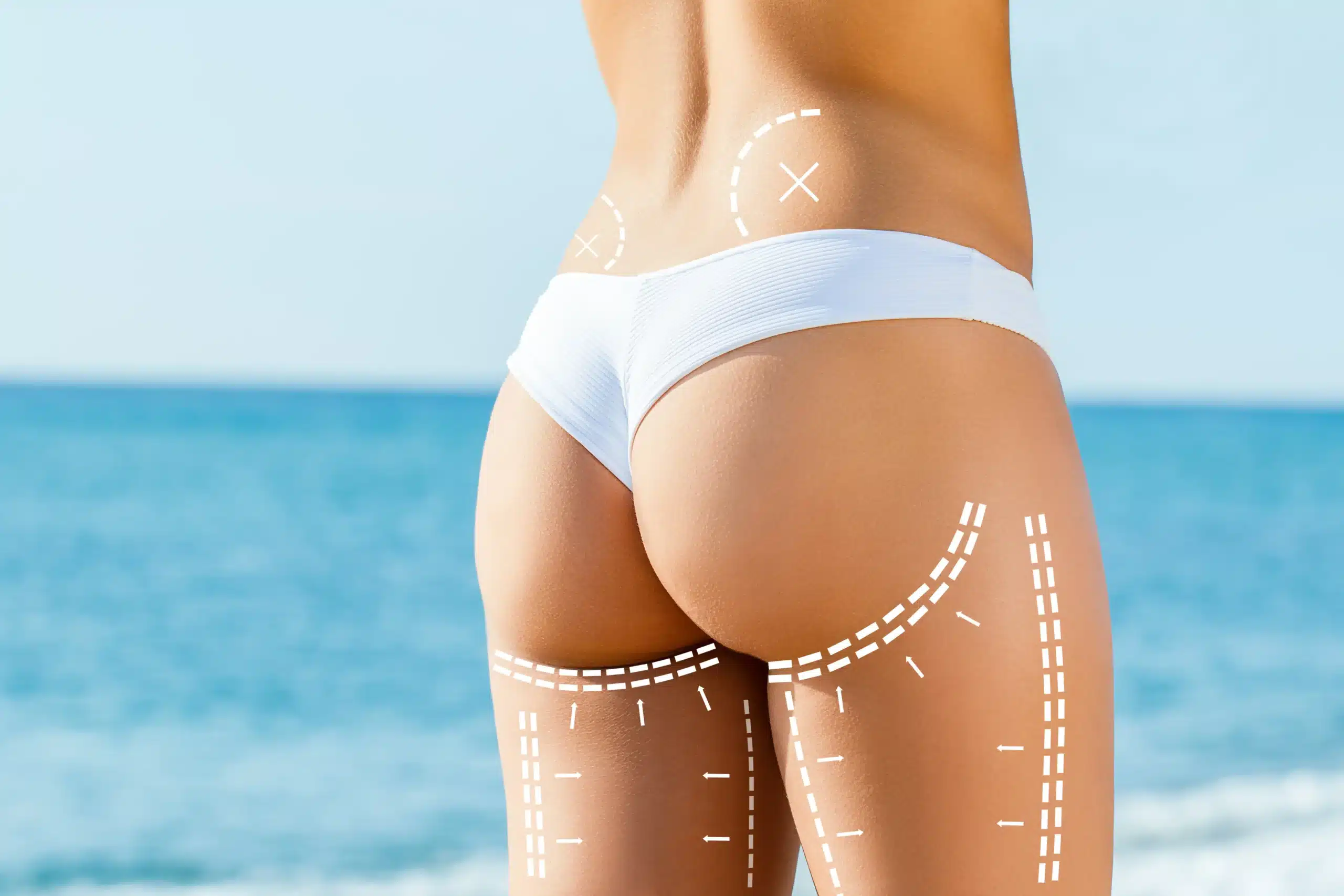
Radiofrequency for the thighs is a skin tightening technique that is particularly effective after a loss of volume. Contrary to popular belief, radiofrequency is not effective for slimming, but it is ideal for firming and toning skin that has become lax following thigh slimming. By stimulating the production of collagen and elastin, this technology restores skin elasticity, improves its quality and reduces the orange-peel appearance, thus making the silhouette more beautiful and harmonious.
The doctor Romano always advises patients to undergo radiofrequency sessions. In fact, even in women who have beautiful, slender legs with toned skin, there is always some water retention and skin firmness is never completely optimal.
The price of a non-surgical treatment to slim the thighs depends on the number of targeted areas (outer, anterior…) and the number of sessions required. One cryolipolysis session for the thighs costs 500 CHF per session and per area. This price corresponds to the placement of two applicators, one on each side. To improve skin tone or treat associated skin laxity, radiofrequency sessions may be recommended as a complement, at a price of 300 CHF per session. As morphology and objectives vary from one patient to another, a preliminary consultation makes it possible to establish a personalized quotation, including a precise estimate of the number of sessions required and the overall cost.
To eliminate fat between the thighs without resorting to surgery, non-invasive techniques such as cryolipolysis can be considered. This method uses cold to destroy fat cells, which are then naturally eliminated by the body. Results generally appear after a few weeks.
Reducing thigh fat requires a combined approach.
Physical activity : practice targeted exercises such as squats, lunges and cardio training to tone muscles and burn fat.
Balanced diet : consume foods rich in fiber, lean proteins and green vegetables to promote fat loss.
To slim the thighs, prioritize :
• Green vegetables : rich in fiber and low in calories, they increase satiety.
• Lean proteins : such as chicken, fish and legumes, they help maintain muscle mass while promoting fat loss.
Although no food can eliminate cellulite on its own, some can help reduce it :
• Antioxidant-rich fruits : such as berries, they improve skin health.
• Omega-3-rich foods : such as fatty fish, they promote skin elasticity.
• Fiber-rich foods : they help eliminate toxins from the body.
The “thigh gap” refers to the space between the thighs when the feet are together. It has become a beauty ideal for some people, although it is mainly determined by genetics and bone structure. This trend has been criticized for the risks it may pose, notably by encouraging dangerous eating behaviors.
The thigh gap is primarily genetic, influenced by pelvic width and bone structure. It cannot be achieved healthily through targeted fat loss, as doing so may lead to eating disorders.
Localized fat in the thigh area is frequently linked to hormonal and genetic factors, which makes it particularly difficult to reduce. An approach combining a balanced diet, targeted exercises and aesthetic treatments may be necessary to achieve satisfactory results.