
Why does skin become dry in winter ?
Winter skin dryness involves well-established physiological mechanisms. Cold causes skin blood vessels to constrict, reducing the supply of nutrients and oxygen to skin cells. At the same time, sebum production decreases, impairing the hydrolipidic film essential for maintaining hydration.
Cold outdoor air combined with dry indoor heating increases transepidermal water loss. The skin loses its ability to retain moisture and becomes more vulnerable to external stressors.
This impairment of the skin barrier makes skin more fragile, less supple and more reactive.
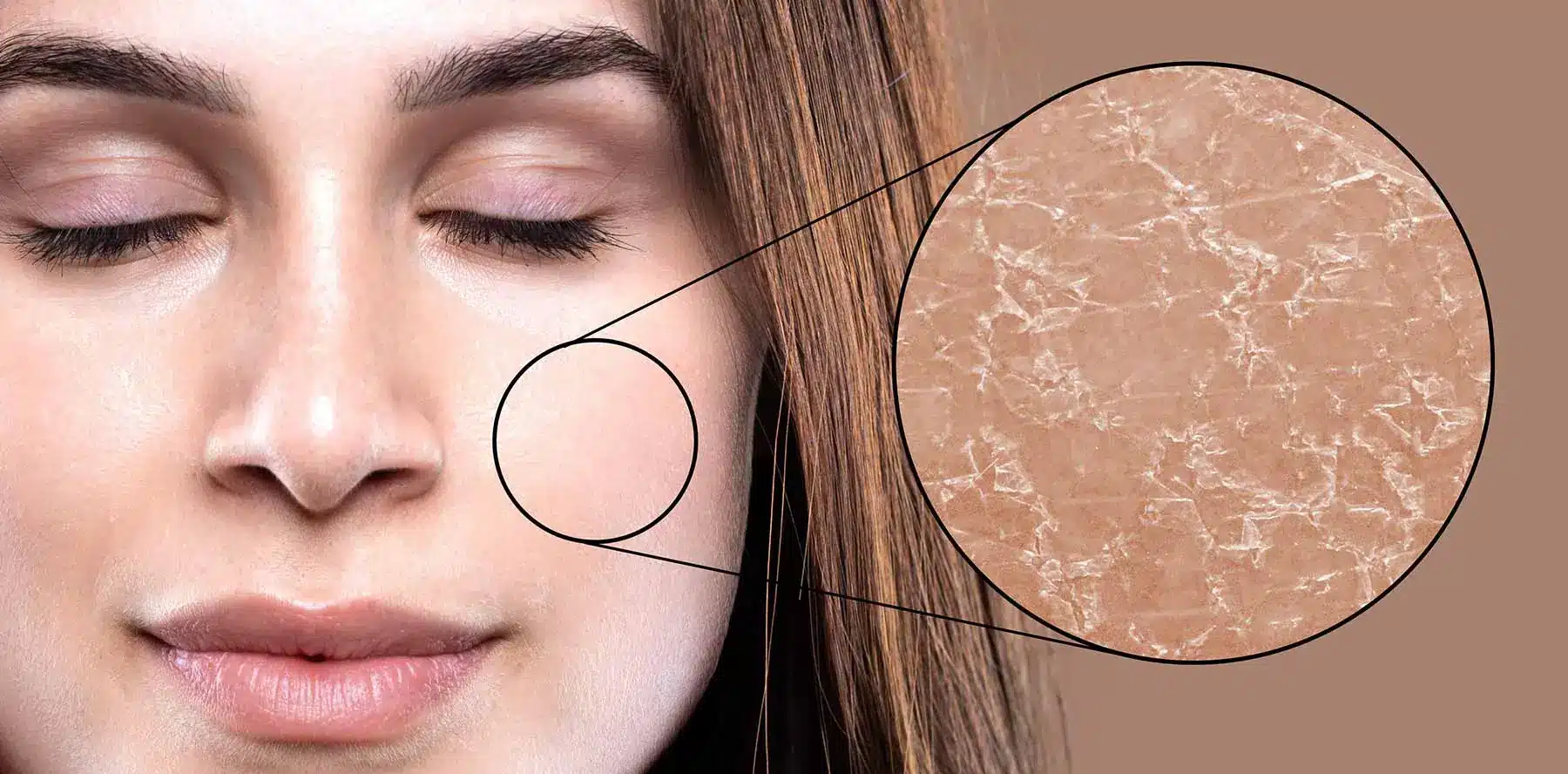
What are the signs of
dry skin in winter ?
Dry winter skin has characteristic clinical signs that vary in intensity between individuals :
- A feeling of tightness, particularly after washing.
- Roughness and reduced softness to the touch.
- Peeling with visible skin flakes.
- Diffuse redness associated with skin irritation.
- Reduced skin elasticity.
- Dullness and lack of radiance.
- Dehydration fine lines.
- Increased sensitivity to cosmetic products.
In more severe cases, skin can become uncomfortable day to day and require specific treatment.
Dry skin and skin ageing
Chronic skin dehydration accelerates skin ageing. Insufficiently hydrated skin loses suppleness and elasticity, encouraging fine lines and then deeper wrinkles.
In winter, these effects are worsened by reduced microcirculation and impaired skin repair. Over time, skin becomes thinner, more fragile and less resistant to stressors.
Preventing and treating dryness is therefore essential both for comfort and for preserving youthful skin.
Aesthetic medicine : solutions for dry skin in winter
Aesthetic medicine offers targeted treatments working deep within the dermis. Suitable techniques can restore lasting hydration, improve skin quality and strengthen the skin's natural protective mechanisms.
The two techniques used are Skinbooster injections and mesopeel.
Skinboosters in winter
Skinboosters are the reference treatment for dry skin in winter. They involve intradermal injections of lightly cross-linked hyaluronic acid, whose ability to attract and retain water restores deep hydration.
Unlike surface skincare, this technique restores lasting skin hydration. Skin becomes more supple, tightness decreases, dehydration lines fade and complexion radiance returns. Gradually, the skin appears denser, brighter and better equipped to withstand cold.
One session is generally sufficient, with annual maintenance. Initial effects appear quickly, followed by gradual improvement over the following weeks, with optimal results in approximately three weeks.


Mesopeel in winter
Mesopeel is a particularly useful complementary approach for strengthening the skin barrier and improving skin quality in winter. It combines a superficial peel or biorevitalising peel (the PRX-T33 peel) with a mesolift session, acting both on the surface and deeper within the skin.
The peel gently exfoliates superficial layers, removes dead cells and stimulates cell renewal. Mesotherapy delivers hydrating and revitalising ingredients directly into the skin. This synergy improves texture, evens out the complexion and optimises skincare penetration.
Clinically, skin is smoother, brighter and better hydrated, with a stronger barrier.
Two sessions are generally recommended during winter. Initial effects appear quickly, in the days after treatment, with a gradually developing “new skin” effect. Skin quality continues to improve over several weeks, with lasting results.
Results
Treating dry skin quickly improves comfort and overall appearance, bringing greater suppleness, increased hydration and a brighter complexion.
However, prolonged cold exposure in winter means regular maintenance is needed to preserve these results.
In practice, one Skinbooster session restores deep hydration, while mesopeel protocols generally involve two sessions over winter.
Adapting treatment to skin type and environmental conditions is essential for optimal results. In some situations, particularly pronounced dryness, additional mesopeel sessions or collagen stimulator injections (particularly Sculptra) may be considered.
Restoring skin hydration :
dermocosmetic solutions
Managing dry skin starts with a suitable dermocosmetic routine.
Gentle, nonaggressive cleansers preserve the hydrolipidic film. Moisturisers rich in humectants (hyaluronic acid, glycerine) and lipids (ceramides, fatty acids) are essential for restoring the skin barrier.
Regular nourishing skincare helps limit water loss and improve comfort.
Avoiding prolonged, very hot showers, which worsen dehydration, is also recommended.
Adapting your lifestyle to
protect your skin
Simple measures can limit the effects of cold on the skin :
- Stay well hydrated by drinking enough water.
- Use a humidifier in heated rooms.
- Protect the skin from cold with suitable clothing.
- Apply moisturiser morning and evening.
- Avoid irritating or drying products.
Combined with appropriate treatment, these measures help preserve skin quality throughout winter.
For skin weakened by cold, a scientific review analyses the effects of cold and low humidity on the skin barrier. These conditions promote dryness and increase sensitivity to irritants. They justify adapting protective and moisturising care during cold periods, after identifying any associated skin condition.
For skin weakened by cold, a review examines the skin’s response to short-term environmental and internal aggressors: climate, pollution, lack of sleep or psychosocial stress. It describes changes in hydration, sensitivity and defence functions. This analysis allows care to be tailored to the signs observed rather than offering one protocol for all weakened skin.
For skin weakened by cold, a randomised trial involving 25 patients compared one cheek treated with stabilised hyaluronic acid with the other, untreated cheek. Skin hydration improved between the second and twelfth week after the session, alongside improved elasticity. These measurements document the action of the product studied on the skin.
Frequently asked questions
Why does my skin become drier in winter ?
In winter, outdoor cold combined with dry indoor air (heating) impairs the skin barrier. Sebum production decreases, reducing natural protection. As a result, water evaporates more easily, causing dryness, discomfort and tightness.
Why does my skin feel tight after showering in winter ?
Hot water worsens dehydration by removing protective skin lipids. This effect is amplified in winter when skin is already weakened. Lukewarm showers followed immediately by moisturiser are recommended.
What is the difference between dry and dehydrated skin ?
Dry skin is a skin type characterised by insufficient lipids, whereas dehydrated skin is a temporary condition caused by insufficient water. Even oily skin can become dehydrated in winter.
Which cream should be used for dry skin in winter ?
Creams rich in moisturising ingredients (hyaluronic acid, glycerine) and lipids (ceramides, plant butters) are recommended. Textures should be richer than in summer to compensate for water loss.
Is drinking water enough to hydrate the skin ?
Drinking water is essential but not sufficient to hydrate the skin. Effective hydration also requires topical skincare and, if needed, aesthetic medicine treatments.
Are Skinboosters useful for dry skin in winter ?
Yes, Skinboosters provide deep hydration by delivering hyaluronic acid directly into the dermis. They are particularly effective when creams no longer correct dryness sufficiently.
How long do Skinbooster effects last ?
Results can last several months, generally between 6 and 12 months depending on the patient and skin type. Regular maintenance prolongs the benefits.
Is mesopeel suitable in winter ?
Yes, mesopeel is particularly suitable in winter. It gently exfoliates skin, stimulates cell renewal and improves hydration. It is an excellent option for restoring radiance and strengthening the skin.
Can you have peels in cold weather ?
Yes, winter is an ideal time for peels because sun exposure is generally lower. This limits the risk of pigmentation complications.
Why does my skin become red in winter ?
Cold causes vasoconstriction followed by reactive vasodilation, producing redness. Because skin is more sensitive in winter, these reactions are often more visible.
How can the skin be protected from cold day to day ?
Apply a rich moisturiser morning and evening, avoid harsh cleansers, protect the skin with clothing in intense cold and maintain good overall hydration.
Should your skincare routine change in winter ?
Yes, adapting your winter routine is essential, prioritising richer, more protective and more hydrating skincare than in summer.
Does cold accelerate skin ageing ?
Yes, indirectly. Cold impairs the skin barrier and promotes dehydration, accentuating fine lines and potentially accelerating skin ageing without appropriate care.
When should you consult a doctor about dry skin ?
When dryness becomes persistent, uncomfortable or resistant to normal skincare, a consultation can identify suitable, more effective treatments.